
ISLAMABAD, Nov 11 (APP):National Book Foundation (NBF) on Wednesday organized an Orientation and guidance session for publishers and authors on the development of textbooks in the context of Pakistan's National Curriculum 2026. The session was attended by representatives of the National Curriculum Council Wing (NCCW), educationists, experts associated with curriculum and textbooks development, and other relevant institutions. The objective was to guide publishers and authors in developing quality, modern and …
NBF organizes orientation, guidance session for publishers authors on textbooks development
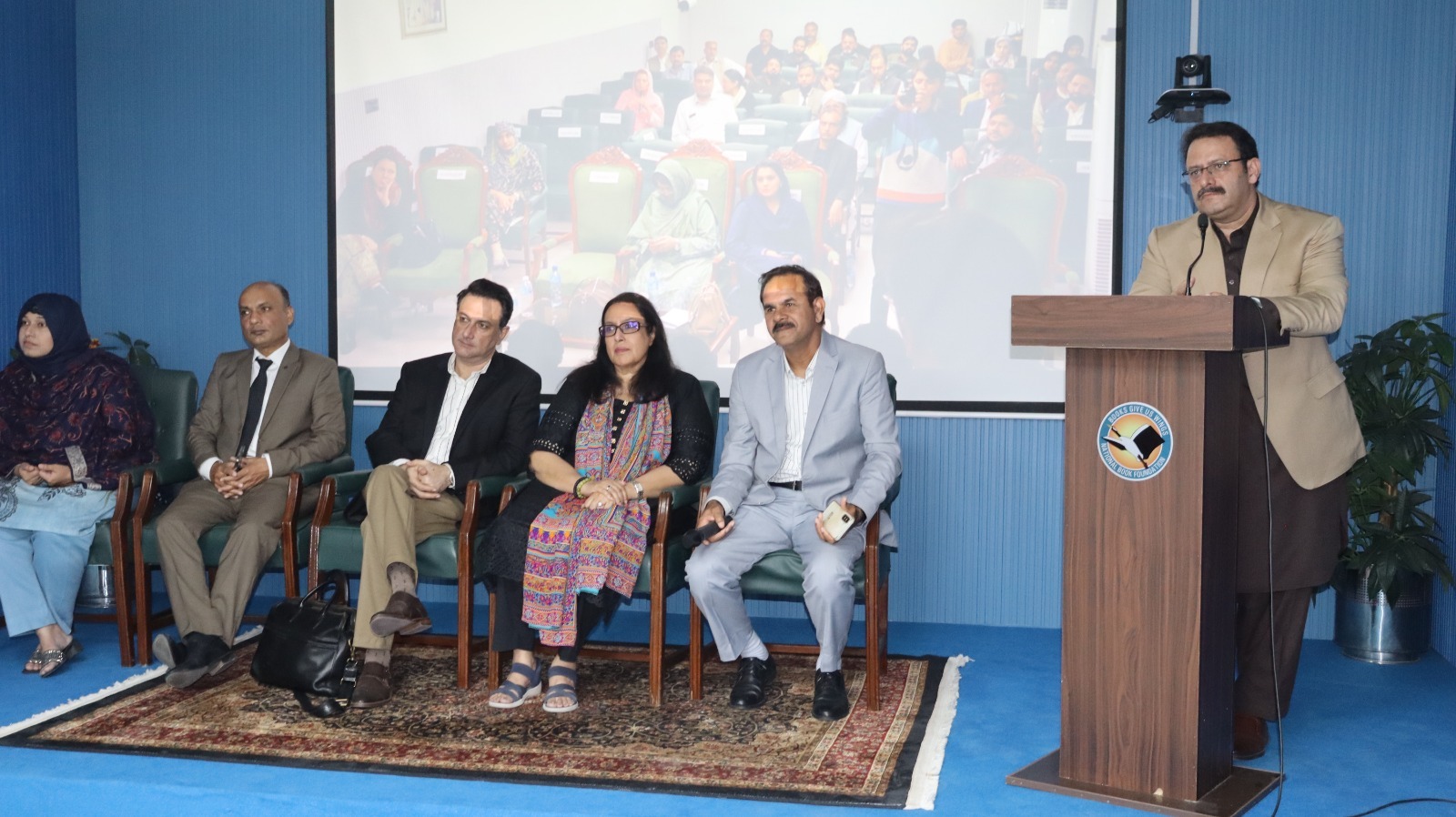
ISLAMABAD, Nov 11 (APP):National Book Foundation (NBF) on Wednesday organized an Orientation and guidance session for publishers and authors on the development of textbooks in the context of Pakistan’s National Curriculum 2026.
The session was attended by representatives of the National Curriculum Council Wing (NCCW), educationists, experts associated with curriculum and textbooks development, and other relevant institutions.
The objective was to guide publishers and authors in developing quality, modern and learner-centred textbooks in accordance with the National Curriculum.
In his opening remarks, Managing Director, National Book Foundation, Dr Kamran Jahangir, said that developing quality textbooks in line with modern educational requirements and future needs was essential.
He stated that NBF would play its role in achieving national educational objectives and developing quality learning materials in collaboration with the National Curriculum Council and other relevant institutions.
He further stated that the initiative would be pursued in accordance with the guidance and directions of Federal Minister for Education and Professional Training Dr Khalid Maqbool Siddiqui, Minister of State Wajeeha Qamar, Parliamentary Secretary Rabia Naseem Farooqi, and Federal Secretary for Education Nadeem Mahboob.
In the keynote address, Director, National Curriculum Council, Dr Tabassum Naz, elaborated on the vision, underlying philosophy, priorities and future educational objectives of Pakistan’s National Curriculum 2026.
She discussed various stages of curriculum reforms, the need to reduce unnecessary curriculum overload, and the importance of designing educational content according to students’ age, mental abilities and learning needs.
She also highlighted the significance of transforming teaching and learning from the mere transmission of information into a process based on understanding, research, creative thinking and practical activities.
Dr Tabassum Naz further explained that the success of the National Curriculum required coordinated consultation at federal and provincial levels.
Educationist and Consultant Nighat Lone briefed participants on the fundamental principles of textbooks development, content organisation, learning objectives and the preparation of educational material in accordance with students’ age, intellectual capacity and learning requirements.
She also discussed various aspects of developing effective textbooks that meet contemporary educational standards.
During the session, Consultant Asfandyar Khan and Imran Ahmed Khan from the NCC Wing explained the use and significance of textbooks review forms.
Dr Fatima Dar and Dr Tajammal Hussain provided guidance on the principles of developing English and Urdu textbooks.
Dr Tooba from Allama Iqbal Open University briefed participants on the development of Early Childhood Care and Education (ECCE) learning packages.
Similarly, Dr Khalid Mahmood and Tayyaba Saqib of APSACS discussed the fundamental principles and pedagogical requirements for developing Mathematics textbooks, while Dr Muhammad Idrees, Director, Pakistan Institute of Education (PIE), highlighted the importance of assessment and the use of a style guide during textbooks development.
Participants were also briefed on the key features of modern Federal textbooks and the educational approaches adopted in their development.
It was explained that the new textbooks had been designed to make learning more effective and engaging through stories, exercises, practical experiences and activity-based learning, rather than relying solely on conventional rote-learning methods.
It was further explained that the textbooks had been aligned with Pakistan’s National Curriculum. QR codes incorporated into the books would provide teacher’s with access to lesson plans and supplementary educational resources available through a centralised Learning Management System (LMS).
The provision of QR codes in printed textbooks, enabling students to access additional online educational resources, was also highlighted as an important step towards expanding access to learning opportunities.
At the conclusion of the session, participants’ questions were answered, followed by an interactive discussion on various aspects of textbooks development, review procedures, quality assurance and compliance with the National Curriculum.
The Director, National Curriculum Council, delivered the concluding remarks, while Director Headquarters, National Book Foundation, Murad Ali Mohmand, extended a vote of thanks to the speakers and participants. The session was attended by representatives of various publishing houses, publishers, booksellers and educational institutions.

