ISLAMABAD, Feb 11 (APP): The National Vocational and Technical Training Commission trained a total of 71,000 students during 2025, out of which 6,200 students belonged to Balochistan and 43,000 to Punjab, a Senate panel was informed on Wednesday. This was briefed as Senate Standing Committee on Federal Education and Professional Training under the chairmanship of Senator Bushra Anjum Butt took up the agenda forwarded by Senator Rana Mahmood-ul-Hassan. The agenda …
NAVTTC trained 71,000 students in 2025 including 6,200 from Balochistan, Senate panel told
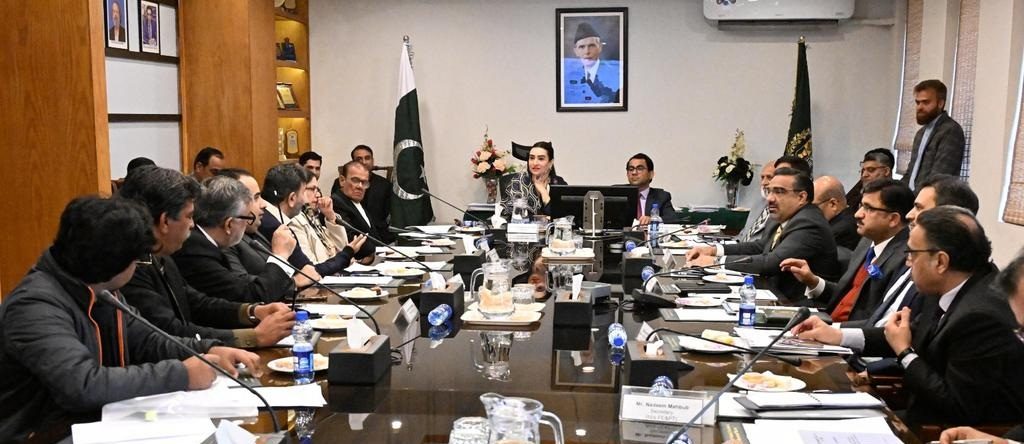
ISLAMABAD, Feb 11 (APP): The National Vocational and Technical Training Commission trained a total of 71,000 students during 2025, out of which 6,200 students belonged to Balochistan and 43,000 to Punjab, a Senate panel was informed on Wednesday.
This was briefed as Senate Standing Committee on Federal Education and Professional Training under the chairmanship of Senator Bushra Anjum Butt took up the agenda forwarded by Senator Rana Mahmood-ul-Hassan.
The agenda referred to the functioning, transparency, financial management, selection criteria, third-party evaluation mechanism and performance outcomes of the NAVTTC during the past five years.
During the briefing, NAVTTC informed the Committee that its primary mandate is qualification development and framework implementation.
Upon inquiry about any fixed quota for South Punjab, it was stated that no such quota exists.
Regarding financial allocations, NAVTTC informed the Committee that its annual budget stands at Rs7 billion.
On average, the expenditure per student ranges from Rs80,000 to Rs140,000. It was further briefed that a joint account was established between NAVTTC and the concerned institution after approval from the steering committee, and that the budget was disbursed directly to institutions for training courses.
However, a student representative from South Punjab, present during the meeting, claimed that only Rs1,500 per student is being provided for training courses.
After hearing both parties, the Chair decided to constitute a sub-committee headed by Senator Kamran Murtaza to investigate the matter, identify institutions allegedly involved in embezzlement under the name of NAVTTC and trace those responsible.
On another matter, the Committee directed that the meeting held at Pakistan Institute of Fashion and Design (PIFD) be considered null and void, declaring it to have been conducted with malafide intention, against the prescribed rules.
Senator Butt questioned how a Vice Chancellor, against whom an inquiry had already been opened for allegedly governing above the rules and who had remained in office for more than 25 years, could continue to function and allegedly plan to treat the position as an inherited right, including reported intentions of facilitating the appointment of her sister as Vice Chancellor.
She stated that the Committee declares her retired and the meeting as malafide in intention, adding that such actions ridicule the sanctity of this august House where an inquiry was already underway. She maintained that no post or seat should have been given to her until clearance of the inquiry.
The Committee also objected to her absence from a previous meetings and referred the matter to the Privilege Committee to seek an explanation regarding her non-attendance.
She further questioned under what capacity a hostel had been opened when only six months were left before the Vice Chancellor’s retirement.
The Chair referred the case to the Senate Standing Committee on Finance to examine the matter and determine whether the action was taken beyond lawful authority.
Senator Butt emphasized that these steps were not directed against any individual but against the practice of running public institutions as private businesses.
As a future measure, she announced that the Committee would undertake provincial visits to universities within its domain to personally assess whether institutions are functioning in accordance with the rules.
Addressing concerns regarding fake degrees, she reiterated that a permanent help desk would be deputed at the Higher Education Commission for assessment and verification.
“Students will not pay for our negligence. I will get to the root of all the institutions which were unverified. We will collect exact data on the number of fake degrees issued and will not allow fake degrees to pass through such lenience, while ensuring that students get their due right,” she said. The Secretary assured the establishment of the desk with immediate effect.
The committee that took place to deliberate on key issues concerning higher education governance, transparency, financial management and institutional accountability.