
ISLAMABAD, Feb 03 (APP): The Research Society of International Law (RSIL), in collaboration with the Pakistan Bar Council’s Directorate of Legal Education (PBC-DLE), convened a National Conference titled “The Future of Legal Education and Practice in Pakistan: Innovation, Excellence, and Impact” here on Tuesday. The conference brought together over 200 participants from across Pakistan’s legal community, including representatives from judicial academies, former judges, bar councils, senior and junior lawyers, legal …
National conference unites Pakistan’s Legal Community to strengthen legal education & professional standards
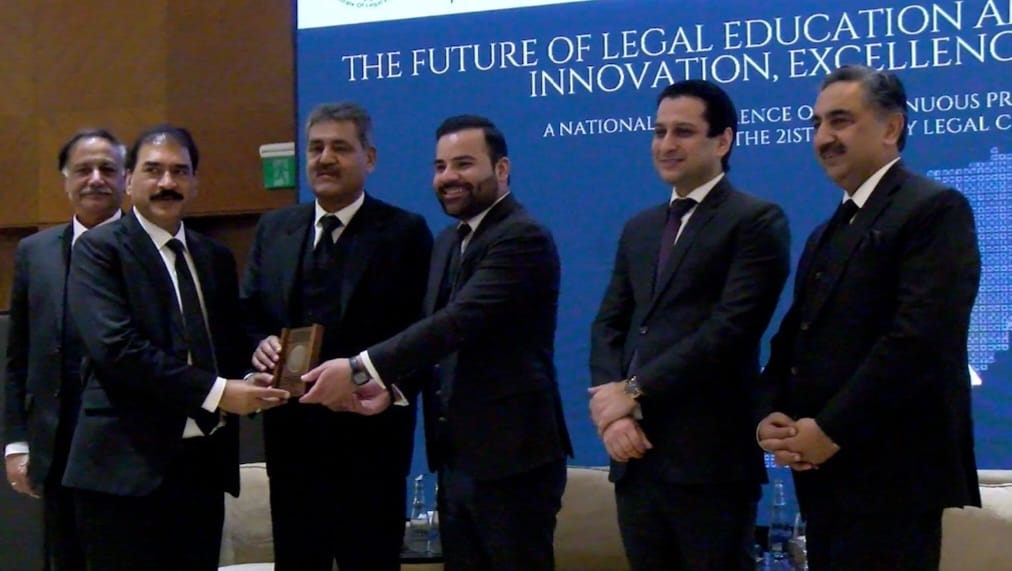
ISLAMABAD, Feb 03 (APP): The Research Society of International Law (RSIL), in collaboration with the Pakistan Bar Council’s Directorate of Legal Education (PBC-DLE), convened a National Conference titled “The Future of Legal Education and Practice in Pakistan: Innovation, Excellence, and Impact” here on Tuesday.
The conference brought together over 200 participants from across Pakistan’s legal community, including representatives from judicial academies, former judges, bar councils, senior and junior lawyers, legal academics, law students, reform specialists, and legal technology innovators.
The conference focused on three key areas: improving law school training, strengthening continuing professional development for lawyers and judges, and addressing contemporary challenges such as legal ethics, court decorum, workplace harassment, and the integration of technology into legal practice.
Mr Pir Masood Chishti (Advocate Supreme Court; Vice Chairman, Pakistan Bar Council) reflected on the evolution of legal education in Pakistan. He noted that earlier two-year English LLB programs produced competent lawyers despite limited resources, while later expansion to three- and five-year programs, rapid privatisation, and affiliated law colleges led to declining standards.
He highlighted recent reforms, including restrictions on new law colleges and the shift to a four-year LLB, aimed at improving affordability and quality. He emphasized the need for stronger curricula, professional training, legal ethics, fee regulation, and effective mentorship of young lawyers.
The opening plenary brought together senior judges, Bar Council members, and practicing lawyers to discuss institutional collaboration for raising professional standards. The panel included Mr Naveed Ahmed Soomro (District & Sessions Judge; Senior Faculty Member, Sindh Judicial Academy), Mr Amir Saeed Rawn (ASC; Member, Pakistan Bar Council), Mr Asad Rahim Khan (ASC; Partner, Ashtar Ali & Rahim LLP), and Ms. Sahar Bandial (Advocate High Court).
Speaking on Raising the Bar, Judge Naveed Ahmed Soomro highlighted gaps between legal education and modern judicial competencies, calling for greater emphasis on practical training, research, and specialization. Amir Saeed Rawn stressed structured apprenticeships, enforcement of professional standards, and expanded Continuing Legal Education, particularly for young lawyers.
Sahar Bandial addressed ethical challenges posed by artificial intelligence and ongoing barriers faced by women in the legal profession. Asad Rahim Khan pointed to weaknesses in legal education, mentorship, and economic access, supporting reforms such as strengthening the Law-GAT and introducing minimum stipends for junior lawyers.
A major highlight of the conference was the technology showcase, where the Ministry of Law and Justice and legal technology companies demonstrated how artificial intelligence and digital tools are transforming legal practice.
The Ministry presented the Pakistan Code and Document Retrieval System, while Shahzar Elahi, Founder of EnablifyAI, showcased practical AI applications for lawyers. Live demonstrations were also conducted by DigiLawyer, AI Attorney, and Pakistan Law Bot, illustrating how technology can enhance legal research, case management, and document drafting.
Participants also engaged in focused group discussions to develop practical recommendations for modernizing law school curricula, improving Bar Vocational Courses and Continuing Legal Education, and providing specialized, technology-enabled training for judges. These recommendations will be compiled and shared with relevant institutions for implementation.
Mr Raja Naeem Akbar, Federal Secretary, Ministry of Law and Justice, outlined the government’s justice system digitization initiatives, including the Digital Reporting System (DRS) for real-time case tracking and the Pakistan Code platform, which provides updated legislation online, including in Urdu.
The closing panel featured Mr Raja Naeem Akbar, Mr Ahmer Bilal Soofi (ASC; former Federal Law Minister), Ms Asma Hamid (ASC; former Advocate General Punjab), and Mr Munir Ahmed Malik (ASC; Chairman Executive Committee, Pakistan Bar Council). Speakers emphasized coordinated reform, technology adoption, and inclusion.
Barrister Aqeel Malik, Minister of State for Law and Justice, concluded the conference by stressing the need for continuous adaptation, innovation, and responsible integration of technology in Pakistan’s evolving legal profession.