A National Assembly (NA) committee reviewing women’s participation in the workforce has rejected two official presentations, raised concerns over a 30 percentage gender pay gap, and called for a comprehensive national policy on the care economy.
NA committee rejects 2 official briefings, highlights 30% gender pay gap, calls for national care economy policy
ISLAMABAD, Jul 9 (APP): A National Assembly (NA) committee reviewing women’s participation in the workforce has rejected two official presentations, raised concerns over a 30 percentage gender pay gap, and called for a comprehensive national policy on the care economy.
The committee also reviewed measures aimed at increasing women’s employment, including the reduction of the minimum age for female overseas workers from 35 years to 25 years.
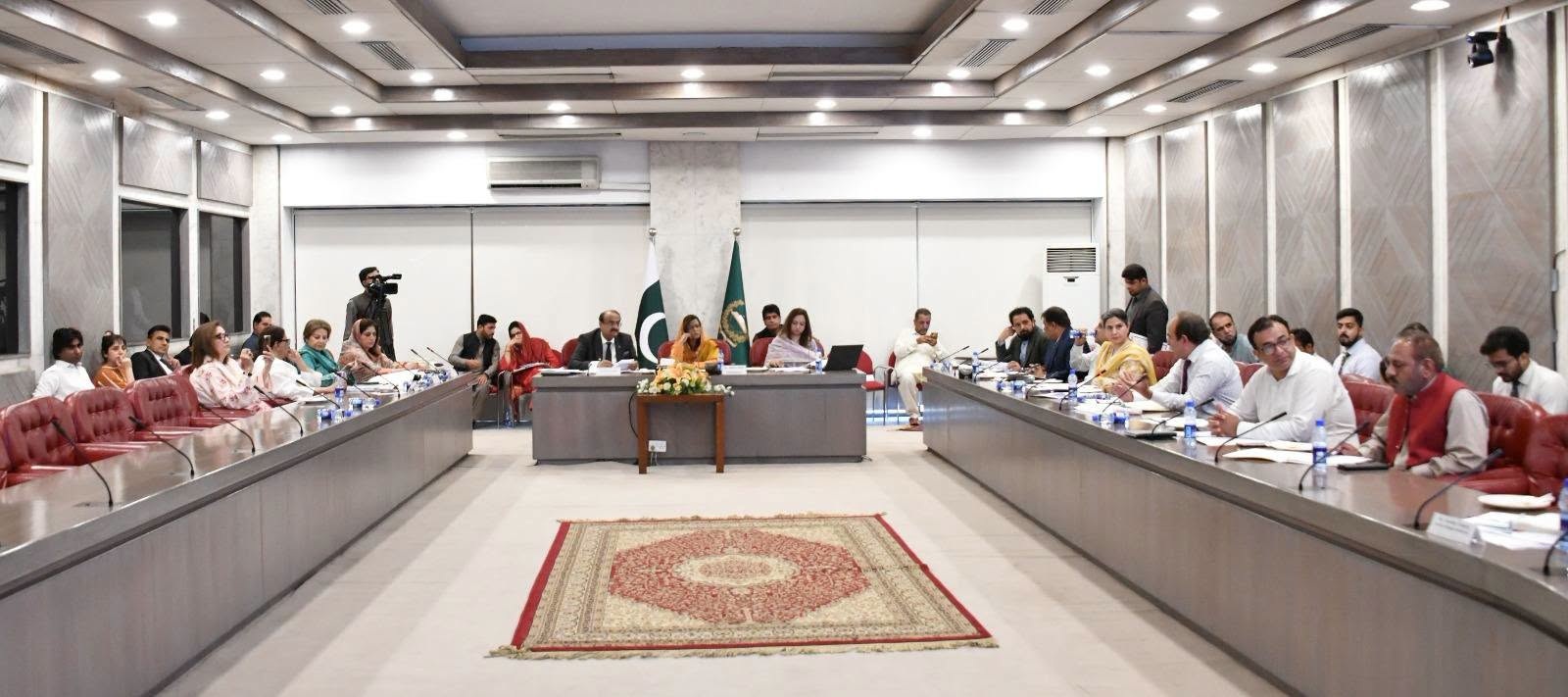
The Special Committee on Gender Mainstreaming met at Parliament House here on Thursday under the chairmanship of Member National Assembly (MNA) Dr. Nafisa Shah. The meeting focused on female labour force participation, unpaid care work, domestic work, and policy reforms needed to improve women’s economic participation.
Committee members discussed the role of paid and unpaid care work in the economy and examined existing support systems and policy measures. Members stressed that Pakistan should develop its own national framework for the care economy instead of relying heavily on international organizations for policy direction.
The committee expressed concern over the absence of federal secretaries from the Ministry of Overseas Pakistanis and Human Resource Development, the Ministry of Human Rights, and the Ministry of Planning and Development. Members said representation by junior officials weakened parliamentary oversight and accountability. The chairperson stated that senior officials must personally attend meetings dealing with national policy issues.
During the session, presentations were delivered by the Pakistan Bureau of Statistics (PBS), the Ministry of Overseas Pakistanis and Human Resource Development, and development partners. Members questioned inconsistencies in female labour force participation data and sought explanations regarding survey methods, unpaid care work, domestic work, and women working in informal agriculture, including those engaged under the sharecropping system.
The committee was informed that investment in the care economy could create jobs, increase labour force participation, and contribute to economic growth. Members also reviewed the implementation of the Protection of Domestic Workers Act, 2022, and voiced concern over weak enforcement despite the notification of rules.
Discussions also covered the lack of legal recognition for care workers, insufficient registration systems for domestic workers, limited childcare facilities, and risks linked to unregulated domestic work.
Following deliberations, the committee recommended amendments to the Industrial Relations Act, 2012, to adopt gender-neutral language and formally recognize care workers. It also proposed a Care Worker Scorecard to monitor integration into the formal economy, a registration system for domestic workers, and expansion of daycare services.
The Ministry of Human Rights was directed to coordinate a joint policy briefing involving relevant ministries. PBS was instructed to clarify its statistical methodology and provide distinctions between unpaid work, domestic work, and care work.
The Ministry of Overseas Pakistanis and Human Resource Development was asked to prepare policy proposals for training and overseas placement of female care workers, while the Planning Commission was tasked with developing a national policy framework for the care economy.
Expressing dissatisfaction with the quality of information provided, the committee formally rejected the presentations by PBS and the Ministry of Overseas Pakistanis and Human Resource Development. Further discussion on the agenda was postponed until the next meeting, and the committee directed the concerned federal secretaries to attend personally with complete policy proposals.
The committee was also informed that the Pakistan Gender Pay Gap Report 2025 found women earn 30 percent less in monthly wages and 25 percent less in hourly wages than men. Officials highlighted ongoing initiatives under national and international labour programmes aimed at improving social protection, skills development, and formal employment opportunities.
Members were further briefed on overseas employment opportunities for women. Officials stated that reducing the minimum age requirement for female domestic workers seeking overseas jobs from 35 to 25 years is intended to expand regulated employment opportunities and increase women’s participation in the workforce.
The committee approved the minutes of its previous meetings before concluding the session. The meeting was
attended by senators, members of the National Assembly, and representatives from relevant ministries and government departments.