The National Assembly on Sunday witnessed an extensive budget debate, with lawmakers across party lines discussing fiscal priorities, economic challenges and public relief measures, while also acknowledging government efforts amid difficult financial and security conditions.
NA Budget debate: lawmakers call for relief, equity, long-term economic stability
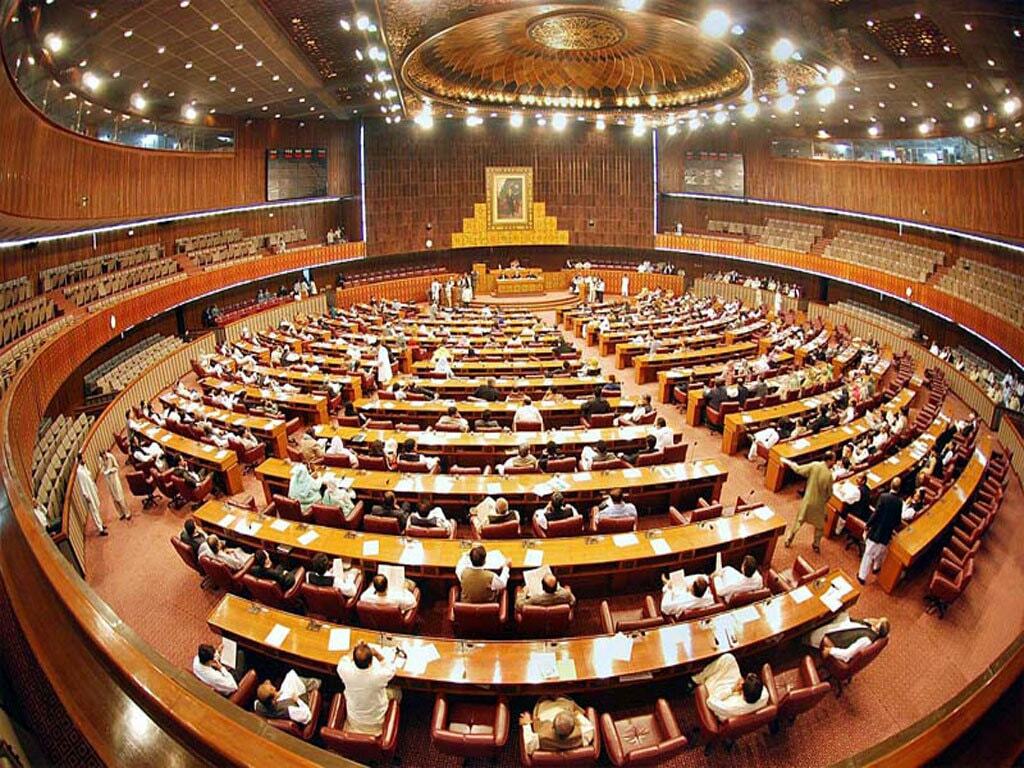
ISLAMABAD, Jun 14 (APP): The National Assembly on Sunday witnessed an extensive budget debate, with lawmakers across party lines discussing fiscal priorities, economic challenges and public relief measures, while also acknowledging government efforts amid difficult financial and security conditions.
Participating in the budget debate, Pakistan People’s Party Parliamentarians (PPPP) MNA Syed Hussain Tariq said it was a positive development that the entire federal cabinet was present during the budget session, terming it encouraging for parliamentary engagement.
He said a budget was not merely about figures but about balancing debit and credit while setting a long-term direction for the country. He stressed that the real impact of a budget should be measured by whether it improves the living conditions of the working class, adding that if lower-income groups were satisfied, it could be termed a truly people-friendly budget.
He said the PPP and its allied parties were engaged in consultations on the budget and would continue deliberations on its various aspects.
He also referred to inflation, stating it stood at around 8 percent, and noted that rising fuel prices had increased transport costs and overall inflationary pressure. Electricity prices, he added, had increased by 54 percent.
He questioned how a person earning between Rs 40,000 and Rs 45,000 could afford electricity bills ranging from Rs 20,000 to Rs 25,000.
Turning to agriculture, he appreciated the efforts of Minister for National Food Security Rana Tanveer Hussain, driving several concrete policies and initiatives to modernize farming and ensure food security.
However, he said agriculture had faced significant neglect over the years, and this year’s allocations and focus on the sector appeared comparatively limited. Only Rs4 billion had been allocated for agriculture, which was the country’s backbone and a sector capable of driving meaningful improvement in the national economy.
He said a large portion—almost 99 percent of this allocation appeared to be absorbed by salaries and administrative expenses, leaving little room for meaningful development work.
He added that the real solution lay in a long-term policy framework focused on modernisation, stressing that such a policy should aim to make businesses economically viable and promote continuous reform across agriculture, services, and industry.
He explained that balanced development meant investment across all sectors so that each area could contribute to national progress, while regional equity required fair investment at provincial, district, and town levels based on local strengths.
Highlighting delayed infrastructure projects, he referred to the Hyderabad–Sukkur motorway project, saying that although funds had been repeatedly allocated in successive budgets over several years, progress on the ground remained limited.
He also mentioned the K-IV water project in Karachi, noting that while significant allocations were shown in the budget, actual fund releases and execution often lagged behind.
He said it was essential to build confidence among farmers, businesspeople, and young people by ensuring stable, predictable long-term policies, including taxation frameworks and regulatory certainty for 15 to 20 years, so that economic actors could work without uncertainty.
He said the budget had been prepared under difficult circumstances and appreciated the government’s efforts.
Mohammad Usman Badini of Jamiat Ulema-e-Islam (F) said the federal budget had failed to address the basic hardships faced by ordinary citizens, arguing that it continued to impose an unbearable burden on households that could not even be calculated on a monthly basis.
Focusing on Balochistan, he said the province had repeatedly been promised development through major projects and mineral resources, including mining potential that was projected to help eliminate national debt. However, despite these claims, basic living conditions in resource-rich districts remained poor.
Residents in districts such as Chagai continued to struggle with basic necessities despite valuable mineral deposits.
He criticised the lack of infrastructure and public services, stating that essential facilities such as roads, healthcare systems, and functioning financial institutions were either missing or severely underdeveloped in many parts of Balochistan.
Referring to repeated proposals from lawmakers, he said basic infrastructure projects such as the Basima–Kharan road were often announced or allocated funds on paper, but progress on the ground remained limited.
He called for regulated trade mechanisms that could benefit local communities along the Pakistan–Iran border.
He said that despite repeated discussions in the National Assembly, border trade points and export-import routes had not been properly developed or regulated, leaving thousands of residents dependent on uncertain livelihoods.
He also highlighted electricity shortages in parts of Balochistan, stating that in some areas, power supply was limited to only a few hours per day or even per week.
PPP MNA Sharmila Faruqui said repeated criticism and rebuttals during budget debates would not help resolve public issues, stressing the need for meaningful dialogue and consensus-building on economic challenges.
She said every year the federal budget raised expectations among the public for relief.
She said the salaried class remained the most burdened segment of society, contributing the largest share of tax revenue, citing that they paid around Rs 850 billion in taxes in the previous year.
Despite this contribution, she said relief announced for salaried individuals in the current budget was minimal, while indirect taxation continued to rise through mechanisms such as petroleum levies.
She also expressed concern over increases in climate-related levies, arguing that such charges affected all segments of society, from daily wage earners to transport workers.
Highlighting changes in the sales tax regime, she said the expansion of the Third Schedule and the addition of 21 new categories would result in taxation on essential household goods, including milk, dairy products, sanitary items, and other basic necessities.
She argued this would further increase the financial burden on ordinary households.
The lawmaker said while the government claimed to broaden the tax base, the actual approach continued to place additional pressure on already compliant taxpayers instead of bringing new segments into the tax net.
Referring to official economic data, she noted that the poverty rate stood at around 29 percent, meaning roughly one in four citizens lived below the poverty line.
She questioned the official threshold defining poverty at Rs 8,483 per month, asking how any individual could realistically meet basic living expenses—including food, utilities, and other essentials—on such an amount.
She urged the government to revise this poverty benchmark and present a more realistic assessment of economic hardship in the country.
She further argued that some proposed relief measures appeared to benefit higher-income groups, including credit card users and those travelling in premium travel classes, rather than lower-income segments of society.
Referring to demographic challenges, she highlighted Pakistan’s rapidly growing population, warning it could reach around 390 million by 2050 if current trends continued. She acknowledged certain tax relief measures linked to population control, but said stronger interventions were needed.
She also noted that around 68 percent of the population is under the age of 30, with unemployment standing at approximately 7.1 percent, and said the budget did not adequately address youth employment or related economic opportunities.
MNA Malik Muhammad Amir Dogar said approximately Rs1,200 billion had been collected under various levies and urged the government to reduce the burden on the public, particularly petroleum-related charges.
He said the budget should be people-friendly, but instead continued to rely heavily on indirect charges, which increased the cost of living.
He raised concerns over water storage and dam-related projects, saying allocated funds were insufficient and progress remained slow.
He said Pakistan suffered losses of around Rs800 billion during the recent floods and stressed greater investment in water infrastructure to prevent future disasters.
He also said industrial activity had slowed due to political uncertainty, with investors reportedly moving capital out of the country.
He said agriculture had also been affected, with farmers facing rising input costs and low returns. He urged the government to reduce production costs and support the farming community.
Representing South Punjab, he said the region had been ignored in the budget, with no major development projects for its 11 districts in health, education, or infrastructure.
MMAP’s Shahida Akhtar Ali urged that parliamentary input during budget discussions be reflected in final policy decisions, saying meaningful recommendations should be accepted to ensure genuine inclusion.
She said lawmakers from both sides were raising constituency-level issues and stressed their suggestions should not only be heard but also implemented.
She lauded the armed forces’ befitting response during Mark-e-Haq and Pakistan’s diplomatic role, including ties with Saudi Arabia, and appreciated national consensus on security matters.
However, she said similar unity should be reflected in economic policymaking to ensure citizens receive tangible relief.
She said provinces such as Khyber Pakhtunkhwa and Balochistan required sustained policies due to security and development challenges.
MQM-P’s Syed Waseem Hussain said elected representatives come from towns, villages, and cities with the mandate to represent their constituencies and ensure that their voters can hold them accountable for development work in their areas.
He said that although he had political associations with MQM supporters and maintained links with Hyderabad, he took pride in representing his constituency and would continue to raise the voice of his local people.
Referring to governance challenges, he said elected members should prioritise their constituencies and work collectively with both government and opposition benches when needed, especially on public welfare issues.
He also drew attention to the worsening civic issues in Karachi, especially the shortage of clean drinking water, saying citizens in the metropolis were facing severe hardships despite repeated discussions in parliament.
The lawmaker urged the government to ensure better coordination between ministries and parliamentarians so that public issues, particularly related to water, electricity, and basic services, could be resolved more effectively.
He stressed that the National Assembly should function as a platform for meaningful debate and practical solutions, adding that the true responsibility of elected members was to serve their constituencies and address the grievances of ordinary citizens.
PML-N’s Mian Khan Bugti lauded Pakistan’s role on the global stage, particularly in the ceasefire between the United States and Iran, saying the world acknowledges Pakistan’s position and the performance of its armed forces in dealing with international challenges.
He highlighted multiple civic and developmental concerns in his constituency, particularly in District Dera Bugti, saying the area continued to face a range of unresolved issues.
The lawmaker said residents in gas-producing areas should be given priority access to gas, arguing that communities where natural resources were extracted must be the first beneficiaries of those resources.
He also pointed to persistent water shortages in parts of his constituency, saying residents, especially in rural areas, were deprived of clean drinking water and deserved immediate government attention.
Referring to the Kachhi Canal project initiated during the Musharraf era, he said that although some progress had been made, the water supply system remained incomplete and inadequate.
He added that the project was not delivering its intended benefits to several districts in Balochistan, including Dera Bugti.
The lawmaker urged the government to ensure completion of the Kachhi Canal project and to address water distribution issues fairly and transparently so that local populations could receive their due share of water resources.
Participating in the budget debate 2026–27, PPP lawmaker Mirza Ikhtiar Baig urged the government to reduce the petroleum levy and ensure that revenue generated from it is utilised for the welfare and benefit of the general public.
He congratulated Prime Minister Muhammad Shehbaz Sharif, President Asif Ali Zardari, PPP Chairman Bilawal Bhutto Zardari, and provincial governments for allocating a substantial budget for defence expenditures.
Baig also welcomed the government’s decision to introduce incentives for the real estate sector, describing the measures as a positive step towards revitalising the industry.
He appreciated the reduction in the super tax, terming it a major relief for businesses and investors.
Highlighting the importance of renewable energy, he called on the government to abolish sales tax on inverters to encourage growth in the solar energy sector.
He added that greater adoption of solar energy would reduce pressure on WAPDA, lower electricity costs for consumers, and help address load-shedding.
PML-N legislator Mir Muhammad Khan Jamali urged the government to allocate additional funds for the agriculture sector so farmers could access inputs at subsidised rates.
He said the proposed increase in salaries for government employees was inadequate in view of rising living costs and called for a more substantial raise.
Jamali also stressed the need for concrete measures to promote development and welfare in Balochistan.
Addressing key infrastructure and energy issues, he called for early completion of the Kachhi Canal Project and said the people of Balochistan had a fundamental right to natural gas, as the resource was first discovered in the province.
Awais Haider Jakhar urged the allocation of development funds for improving road infrastructure in the Dera Ghazi Khan Division.
He called for additional incentives for the agriculture sector, describing it as the backbone of the national economy.
He also recommended reducing taxes on solar panels to promote renewable energy.
Jakhar further stressed the need for the construction of additional healthcare facilities, saying existing infrastructure was insufficient to meet the needs of the growing population.
PPP leader Makhdoom Jamil uz Zaman emphasised the need for long-term and sustainable policies that could provide lasting benefits rather than short-term relief measures.
He said policy continuity was essential for ensuring economic stability and improving public service delivery, adding that consistent planning would help address public challenges and support national development.
Highlighting access to clean drinking water, he urged the federal government to take immediate steps to ensure a safe and potable water supply in Sindh.
He said contaminated water in several areas had led to the spread of waterborne diseases, posing serious health risks.
He stressed that improving water infrastructure and launching effective treatment projects should be prioritised to safeguard public health and improve living standards.
He also underscored the need for employment opportunities for youth, urging federal and provincial governments to formulate joint policies for job creation and skills development.
He called for increased investment in education and healthcare, saying sustainable economic growth depends on access to quality public services.
Senior legislator Sajid Khan called for additional funds for the development and welfare of the erstwhile Federally Administered Tribal Areas (FATA).
He said people in the tribal districts primarily sought lasting peace and stability, urging the government to prioritise measures aimed at improving security and restoring normalcy.
He stressed that sustainable development in the region was closely linked to peace and security, calling for comprehensive policies to address militancy and its root causes.
He urged strengthening law enforcement and development initiatives to create opportunities for local communities and ensure long-term peace.
He expressed hope that the government would take practical steps to ensure prosperity for the people of the former FATA and integrate them into the national development process.
PML-N senior leader Tahira Aurangzeb said political stability was the cornerstone of economic growth and national security, urging all stakeholders to resolve differences through dialogue and democratic engagement.
She said recent contacts between Prime Minister Shehbaz Sharif and opposition leaders reflected a constructive approach towards addressing national issues through consultation.
She added that political stability leads to economic stability, which in turn strengthens national defence, stressing that all institutions must work in coordination for progress and prosperity.
She said Pakistan had faced economic setbacks due to political uncertainty, protests, sit-ins and lockdowns, which had adversely affected investor confidence and economic activity.
She acknowledged that the government had inherited difficult economic conditions and was implementing tough measures under the IMF programme, but said collective efforts were steering the economy towards stability.
Referring to global conditions, she said regional tensions and international uncertainties had also impacted Pakistan’s economy, but praised the resilience of the people and government efforts in managing challenges.
Highlighting social sector spending, she noted increased allocations for health in the federal budget.
She expressed optimism that continued political harmony, national unity and prudent economic management would ensure sustainable growth, stability and prosperity.