The National Assembly Standing Committee on Federal Education and Professional Training on Tuesday expressed serious concern over challenges faced by children with dyslexia and called for ensuring that their educational future is not compromised due to lack of identification, institutional support and remedial interventions.
NA body stresses dyslexia support in schools, briefed on rise of Pakistani universities in world rankings

ISLAMABAD, Nov 03 (APP): The National Assembly Standing Committee on Federal Education and Professional Training on Tuesday expressed serious concern over challenges faced by children with dyslexia and called for ensuring that their educational future is not compromised due to lack of identification, institutional support and remedial interventions.
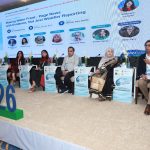
The 27th meeting of the Committee was held under the Acting Chairmanship of Dr. Shazia Sobia Aslam Soomro, MNA, at the Committee Room of the Higher Education Commission (HEC), Islamabad.
The Committee stressed that following the enactment of the Dyslexia Act, its effective implementation has become imperative in both public and private educational institutions. It called for providing appropriate academic facilitation to such children in various subjects, particularly Mathematics, in line with their individual learning needs.
The panel resolved to raise the matter on the floor of Parliament to seek relaxation and accommodations in curriculum, assessment and examination systems so that children with dyslexia are not disadvantaged in admissions to higher education.
It also directed the Ministry of Federal Education to incorporate dedicated budgetary allocations and provisions for recruitment, capacity-building and professional training of remedial therapists, psychologists and specialized teachers.
Conclusively,the National Institute of Psychology (NIP), a Centre of Excellence at Quaid-i-Azam University, briefed the Committee that it is collaborating with the Federal Directorate of Education (FDE) to develop a structured remedial support system for children with dyslexia in Islamabad schools.
The initiative will be implemented in five phases: Mobilization and Vetting; Screening, Assessment and Profiling to be completed by December 2026; Individualized Remedial Therapy from January 2027 to February 2028; Establishment of Sustainable Support Systems from March 2028 to May 2028; and Evaluation and Closeout from May to June 2028.
The Committee was also informed about the National Dyslexia Diagnostic Tool comprising four components — Cognitive and Perceptual-Motor Assessment, Language and Phonological Assessment, Social-Emotional Checklist, and Child Problem Checklist — to identify children and design targeted interventions.
Further more briefing the Committee on higher education, the HEC informed that 18 Pakistani universities have secured positions in the QS World University Rankings 2027, reflecting growing international recognition. Two universities are among the world’s top 500 — Quaid-i-Azam University, Islamabad (381) and National University of Sciences and Technology (NUST), Islamabad (384).
A total of 11 universities are among the top 1,000, including PIEAS, University of the Punjab, LUMS, University of Agriculture Faisalabad, COMSATS University Islamabad, Government College University Faisalabad, UET Lahore, Aga Khan University and University of Peshawar.
To further enhance global standing, HEC has constituted a Committee on International University Rankings to develop understanding of ranking methodologies, identify challenges and recommend institutional strategies to improve performance.
HEC also briefed that it has introduced a fully online and paperless Degree Attestation System, replacing the previous mechanism to ensure streamlined, transparent and user-friendly service, marking a step towards digital transformation.
The Committee was apprised that universities face challenges related to governance, financial constraints, faculty evaluation and shortage of qualified human resources. HEC clarified that establishment of university campuses at tehsil level is not permissible under existing policy.
Moreover,HEC proposed that the Ministry of Foreign Affairs may depute officials at HEC to facilitate coordination and expedite degree attestation matters.
The Committee recommended that the Ministry of Federal Education establish liaison with the Committee constituted by the Minister for Planning, Development and Special Initiatives to explore avenues for financial resources.
It also sought comprehensive details from the Ministry regarding School Management Committees (SMCs) and provision of buses and transport facilities for students through a structured questionnaire.
The meeting was attended by MNAs Anjum Aqeel Khan, Raja Khurram Shahzad Nawaz, Zulfiqar Ali Bhatti, Zeb Jaffar, Farah Naz Akbar, Syeda Amnah Batool, Mahtab Akbar Rashdi, Mussarat Rafique Mahesar, Abdul Aleem Khan, Sabheen Ghoury and Aliya Kamran, besides Secretary Federal Education, Chairman HEC and other concerned officials.