Federal Minister for Climate Change Musadik Malik on Monday said the National Housing Policy 2025 sought to enable people to own homes at instalments comparable to their existing rent, protect poor settlements from demolition and promote climate-resilient housing.
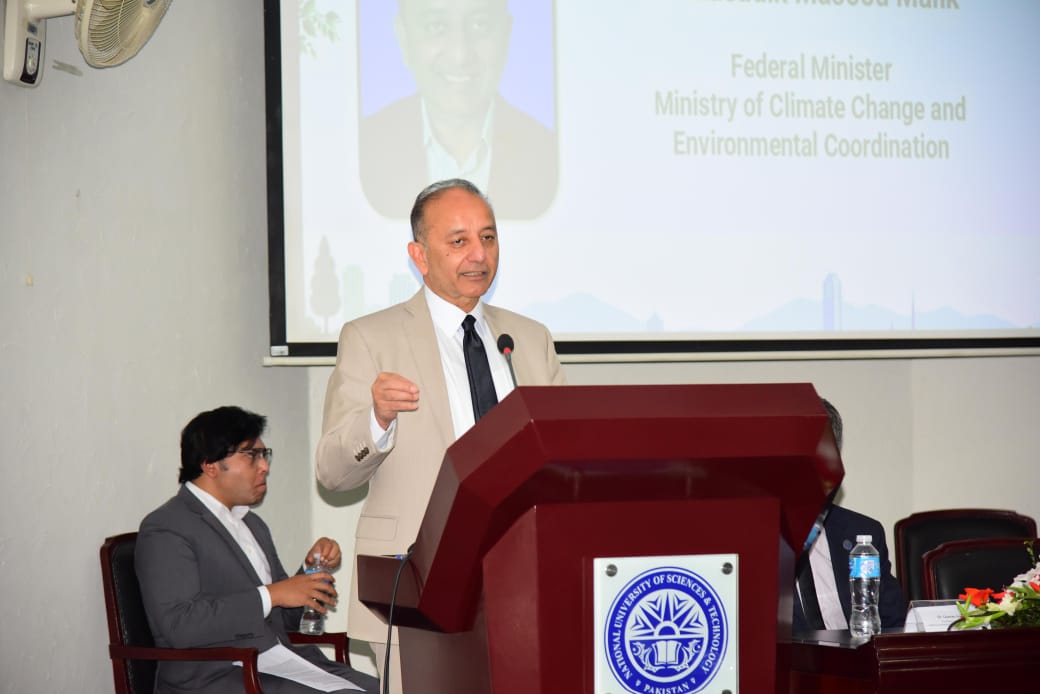
ISLAMABAD, Oct 05 (APP): Federal Minister for Climate Change Musadik Malik on Monday said the National Housing Policy 2025 sought to enable people to own homes at instalments comparable to their existing rent, protect poor settlements from demolition and promote climate-resilient housing.
Speaking at the launch of the National Housing Policy 2025 here at NUST University, the minister said the country needed around 500,000 houses annually but only about 300,000 were being built, leaving around 200,000 people homeless in one way or another each year.
“If 2,00,000 people do not have homes and there are six people in a household, according to your own statistics, 1.2 million people are entering every year without a roof over their heads,” he said, adding that around 10 to 12.5 million people were currently living without adequate shelter.
Musadik Malik said the government’s policy had been framed to address the shortage of housing finance, noting that banks provided only a small proportion of the financing required for house purchases in Pakistan.
Under the “Apna Ghar” scheme, he said, the government had decided that an applicant would contribute 10 per cent of the cost while banks would provide 90pc financing.
He said the 90pc financing would be available at a fixed rate of 5pc for 10 years. A loan of Rs 2.5 million, he said, would carry a monthly installment of around Rs 16,500, while a Rs 5 million loan would entail an installment of around Rs 30,000 to Rs 31,000.
“The idea is that if you are paying Rs 16,000 to Rs 30,000 in rent throughout your life, you should now be able to use that amount to own your own house,” he said.
The minister said the policy also aimed to protect low-income settlements, particularly those where families had lived for generations.
He said such settlements would not simply be demolished, but would instead be provided with infrastructure and basic facilities, including drainage, safe drinking water, schools, clinics and roads.
“If this is not possible at a particular location, you will have to find land within 5 to 10 kilometres so that the community is not displaced,” he said.
Musadik Malik said people who owned a piece of land would also be able to construct their houses gradually, even one room at a time, with access to loan facilities. They would also be allowed to establish a shop on part of their available space to support their livelihoods.
Under the policy, he said, applicants would also be able to purchase a completed flat of up to 1,500 square feet or a house measuring between five and ten marlas, provided its price did not exceed Rs 10 million. Ninety per cent of the cost would be financed by the bank.
The minister said the third major commitment under the policy was to promote climate-resilient housing.
He said two million houses had been destroyed during the previous floods, equivalent to around seven years of the country’s annual housing construction, given that around 300,000 houses were built annually.
Referring to the construction of resilient houses in Sindh, he said around 700,000 of the planned two million houses had been built and their keys handed over to women, particularly mothers and sisters.
He said the objective was to ensure that houses were not destroyed by floods or other disasters and families were not repeatedly displaced.
Musadik Malik also said the policy proposed a regulatory authority to ensure uniform application of housing-related laws.
“The law applicable to a settlement should be the same as the law applicable in Gulberg, Clifton and F-7,” he said, adding that the same law should apply to old and new settlements.
“Power should not be the criterion for the application of law,” he said, stressing the need for one regulatory body, one law and equal rights and justice for all.
The minister said around 500,000 people had so far reached the housing application portal, with 175,000 applications completed and around 70,000 processed and approved by banks.
He urged banks to convert the approved applications into houses and hand over keys to applicants as quickly as possible.
He also urged provincial governments to support the federal policy, saying the federal government had reduced transaction costs and provincial cooperation would help accelerate the process.
Musadik Malik said laws relating to condominiums and mortgages were at their final stages and expressed hope that their passage would further increase the pace of housing applications.