ISLAMABAD, Sep 24 (APP):Minister of State for Interior Talal Chaudhry on Thursday expressed concerns over the new Khyber Pakhtunkhwa (KP) Police Act approved by the provincial cabinet, saying the legislation could affect the police command structure, discipline, morale, and the force’s role in maintaining law and order and combating terrorism. Talking to a press conference, he said policing and law and order are provincial subjects under the Constitution following the …
Minister raises concerns over KP Police Act, says new law affects police command structure
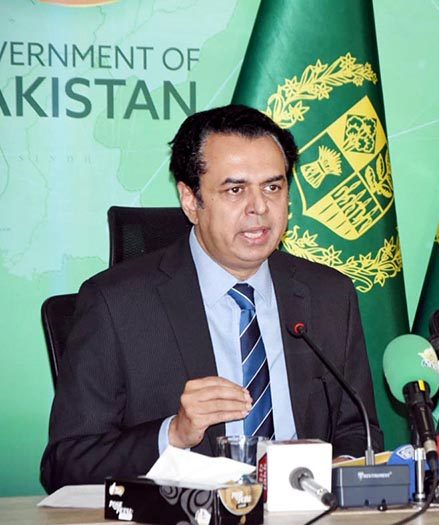
ISLAMABAD, Sep 24 (APP):Minister of State for Interior Talal Chaudhry on Thursday expressed concerns over the new Khyber Pakhtunkhwa (KP) Police Act approved by the provincial cabinet, saying the legislation could affect the police command structure, discipline, morale, and the force’s role in maintaining law and order and combating terrorism.
Talking to a press conference, he said policing and law and order are provincial subjects under the Constitution following the 18th Amendment, but provincial legislation must remain within the constitutional and legal framework governing the Police Service of Pakistan (PSP).
Speaking on the issue, Talal said provinces do not have unrestricted authority to legislate on matters that fall outside the constitutional framework. He noted that just as provinces cannot create separate armed forces, railways, or naval services, they also cannot introduce laws that override established PSP rules and principles.
He said the PSP rules were developed under Pakistan’s federal system and have been upheld through decisions of the High Courts and the Supreme Court. According to him, these rules provide the basis for the command and administrative structure of the police force and cannot be set aside through provincial legislation.
The Minister said the KP Police has been engaged in the fight against terrorism for many years and has made continuous sacrifices. He argued that the new law does not only reduce the authority of the Inspector General (IG) but also affects the wider chain of command within the police force.
He stated that powers relating to the appointment and posting of officers from the rank of DSP and above, which were previously exercised by senior police officers, have now been shifted. According to him, powers relating to officers in grades 17, 18 and 19 have been taken away from the existing police hierarchy, resulting in greater control by the provincial government.
Naqvi said Chief Ministers already possess authority to consult and issue directions regarding postings and transfers. However, he maintained that these powers were traditionally limited to protect the command structure, discipline and morale of the force. He argued that concentrating authority over appointments, postings, promotions and other administrative matters could affect the independence of policing decisions.
Referring to earlier reforms in KP, he said the province had previously promoted the concept of depoliticising institutions. He recalled that the Durrani Commission and subsequent reforms led to a policing model that was enacted into law in 2017. He said the newly approved legislation represents a major departure from that framework.
The Interior Minister said the police force is a disciplined institution responsible for maintaining public order and fighting terrorism. He expressed concern that changes affecting command and control could impact operational effectiveness and internal discipline.
He also questioned how senior positions in grades 19, 20, 21 and 22 would be filled if the role of PSP officers is reduced. He said clarity is needed on future recruitment and appointment mechanisms within the province.
Talal further argued that key issues facing the KP Police relate to resources, equipment and infrastructure. He said the force has long operated under difficult conditions while confronting terrorism.
According to him, KP Police personnel receive lower salaries than police personnel in some other provinces, while compensation packages for martyrs are also lower than those available elsewhere. He said the force requires improved facilities, including bulletproof jackets, bulletproof vehicles, safe city systems, forensic laboratories and better residential infrastructure.
He noted that the Counter Terrorism Department (CTD) in KP has operated from rented buildings despite the province facing terrorism-related threats for nearly two decades. He said several CTD facilities housed in rented premises had previously been targeted in terrorist attacks, resulting in the deaths of police personnel and civilians.
Talal questioned the utilisation of funds allocated for counterterrorism under the National Finance Commission (NFC) award. He said significant resources were available for security-related measures and asked how much of those funds had been spent on strengthening policing capacity.
He referred to the Safe City project in Peshawar and said it was completed after considerable effort. According to him, modern policing requires safe city systems, forensic laboratories, drones and other technology to effectively maintain law and order and combat terrorism.
Drawing comparisons with security facilities elsewhere, he said border check posts in Punjab are equipped with protective infrastructure, surveillance systems, bulletproof vehicles and protective gear. He argued that such investments help improve security and operational capability.
The Interior Minister said terrorists operating in the region often possess modern equipment, including night-vision devices, drones and advanced weapons. He maintained that police personnel confronting such threats require proper training, equipment and institutional support.
He said the responsibility for providing resources, budgets and operational support rests with the provincial government. According to him, strengthening police capabilities should be prioritised before altering command and administrative structures.
Talal also raised concerns about proposed police liaison committees under the new law. He questioned why similar mechanisms were not established under the 2017 framework if they were considered necessary. He further noted that the proposed committees would consist of members of the provincial assembly and questioned the absence of opposition representatives, civil society members, journalists and retired police officers.
The Interior Minister said Pakistan’s federal structure requires a degree of uniformity in policing standards, including training, command arrangements and administrative procedures. While provinces may adopt different operational approaches, he argued that core structures should remain consistent to ensure effective policing across the country.
He said issues relating to transfers, postings and the powers of police leadership have previously been examined by courts, including the Sindh High Court, Peshawar High Court and the Supreme Court. He stated that the new legislation is likely to face legal scrutiny as well.
Concluding his remarks, Talal said the federation reviews all matters through the framework of the Constitution and the law. He stressed that during a period when KP continues to face significant terrorism-related challenges, measures that affect the morale, discipline and command structure of the police force should be carefully considered.