

- Advertisement -
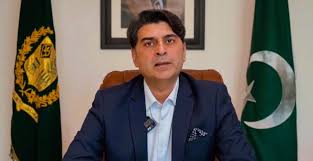
ISLAMABAD, Feb 06 (APP):Minister of State for National Health Services, Regulations and Coordination Mukhtar Ahmad Malik on Friday informed the Senate that low agricultural productivity was the result of decades of insufficient research, outdated harvesting methods and poor water management, alongside demand-and-supply driven pricing issues.
Replying to various questions during Question Hour, the minister acknowledged that Pakistan was a developing country and that critical research—particularly in agriculture and seeds—had not been carried out over a sustained period.
He said this gap had directly contributed to low yields and recurring challenges faced by farmers.
He said that pricing remained a key factor in agricultural markets, as prices were largely determined by demand and supply across commodities. Referring to wheat, he said farmers had faced hardship due to a sharp decline in prices, although the reduced wheat prices had helped stabilise flour prices and provided relief to consumers.
The minister pointed out that agriculture accounted for around 58 percent of Pakistan’s economy, making farmer welfare and productivity improvements critical for overall economic stability.
He said Pakistan continued to rely on outdated harvesting techniques, resulting in losses and inefficiencies. In this regard, he noted that the Punjab government had introduced modern agricultural technologies through its agriculture department to support farmers.
Mukhtar Malik said that the Pakistan Agricultural Research Council (PARC) and the National Agricultural Research Centre were working in collaboration with China on cotton seed development and other crops.
He expressed optimism that the introduction of new seed varieties and modern technologies would significantly improve yields in the coming years.
Highlighting Pakistan’s status as a water-scarce country, the minister stressed the need for better water utilisation.
He said parallel efforts were under way to adopt techniques that would enable higher crop output with less water.
In reply to another question by Senator Rubina Naz, the minister said green areas had been legally protected and “locked,” clarifying that no housing societies or commercial activities were allowed in designated green zones.
He urged provincial governments, including Khyber Pakhtunkhwa and Sindh, to follow similar measures to curb unchecked urban sprawl and housing development.
The minister said controlling unplanned growth of housing societies was essential to protect agricultural land and ensure sustainable development across the country.