Lawmakers in the National Assembly on Saturday called for salary increases, alongside broader demands for economic stability, structural reforms, and stronger relief measures for the public.
Lawmakers call for salary hikes, structural reforms & relief measures
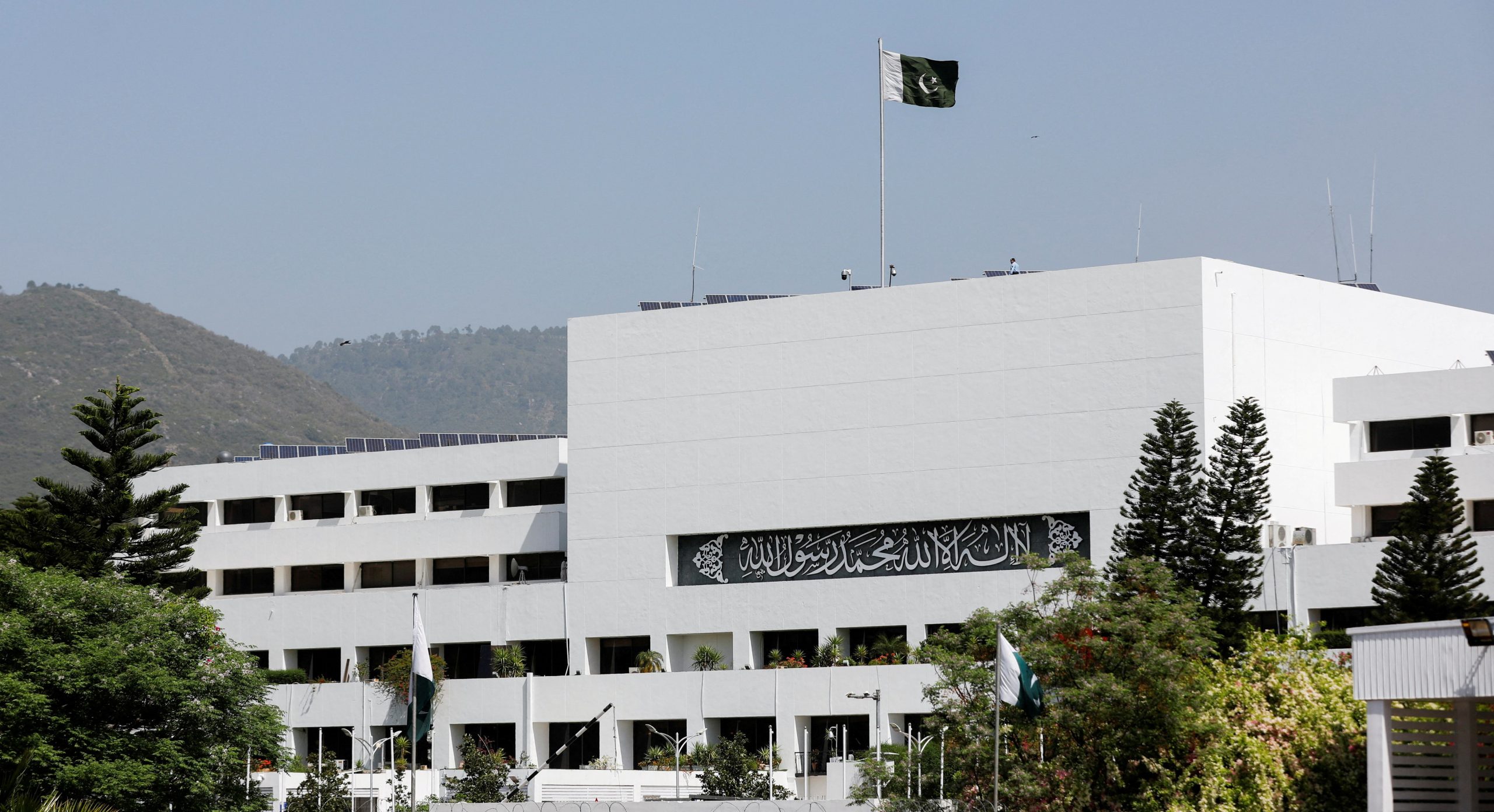
ISLAMABAD, Jun 13 (APP): Lawmakers in the National Assembly on Saturday called for salary increases, alongside broader demands for economic stability, structural reforms, and stronger relief measures for the public.
While members acknowledged certain fiscal adjustments in the federal budget, they also raised concerns regarding agriculture, inflation, salaries, provincial resource distribution, and long-term economic planning.
Pakistan People’s Party Parliamentarians (PPP-P) MNA Samina Khalid Ghurki said the party has consistently supported the state during national crises and has always prioritised stability and unity. Referring to remarks made by Mahmood Achakzai, she appreciated the mention of PPP’s leadership, including Zulfikar Ali Bhutto, former prime minister Benazir Bhutto, and PPP Chairman Bilawal Bhutto Zardari, noting their contributions to national cohesion.
However, she said the budget could not be termed fully people-friendly, particularly highlighting concerns over agricultural allocations. She questioned the adequacy of the announced Rs 750,000 support for farmers, warning that the agriculture sector — the backbone of the economy — was being increasingly marginalised. She also raised concerns over wheat pricing policies, saying they had left farmers economically vulnerable and uncertain.
Jamiat Ulema-e-Islam-Fazl (JUI-F) MNA Naima Kishwar said the traditional annual budget framework has evolved, with fiscal pressures and economic decisions now emerging more frequently. She cited rising poverty, unemployment, and inflation, questioning official poverty benchmarks and noting that utility bills, such as electricity and gas, were consuming a large share of low-income earnings.
She said the proposed 7 per cent salary increase for government employees was insufficient in the face of inflation. While pointing out cash-transfer programmes for potentially creating dependency, she stressed the need for skills development, training, and employment generation — particularly for women — to ensure long-term economic empowerment.
She acknowledged some positive measures in the budget, including interest-free loans and tax relief on women’s health-related expenses, but said these must be supported by structured empowerment initiatives. On provincial matters, she pointed to reduced development allocations, delays in promised transfers, and the overdue revision of the National Finance Commission (NFC) Award, arguing that provinces such as Khyber Pakhtunkhwa were not receiving their fair share. She also raised concerns over rising prices of agricultural inputs, including fertilisers and pesticides.
Muttahida Qaumi Movement-Pakistan (MQM-P) leader Dr Farooq Sattar said Pakistan stood at a critical juncture where the right policy direction could place the country on a path toward self-reliant and sustainable growth. While acknowledging measures such as the abolition of the 7E tax, regulatory simplification, and tax relief adjustments, he said the budget fell short of public expectations and lacked a truly people-centred approach.
He said Pakistan’s growth remained constrained at 2.5 to 3 per cent due to structural weaknesses and stressed the need to raise it to at least 5 per cent through comprehensive reforms. He called for reforms in the NFC framework, a broader tax base, and decentralised development with equitable investment across all districts.
He highlighted regional disparities, noting that major urban centres such as Karachi continue to face infrastructure challenges and inadequate development funding despite their economic contribution. He also pointed to underdevelopment in South Punjab, Saraiki regions, Hazara Division, and other marginalised areas, calling for inclusive planning across all regions, including Gilgit-Baltistan and Azad Jammu and Kashmir.
Emphasising cities as economic engines, he said urban centres, including Karachi, Lahore, Faisalabad, Quetta, and Peshawar, must receive proportional investment. He further called for stronger local government systems, warning that excessive centralisation weakens service delivery and governance.
He urged structural reforms to shift Pakistan from short-term adjustments to long-term stability and investor confidence, and suggested increasing salaries by 30 per cent and raising the minimum wage to Rs 50,000 to provide meaningful relief.
Pakistan Muslim League-Nawaz (PML-N) lawmaker Major (retd) Tahir Iqbal said the proposed 7 per cent salary increase was insufficient and urged it be raised to at least 15 per cent. He said salaried individuals and pensioners were struggling with inflation and needed greater relief.
He also called for reduced property taxes to stimulate construction activity, boost demand for cement and steel, and generate broader economic growth. He stressed greater support for small industries and businesses to strengthen grassroots development.
He suggested that cash-transfer systems should instead help people establish small business units for long-term self-reliance. He also raised concerns over delayed infrastructure projects and demanded accountability for incomplete works and alleged mismanagement.
Senior political leader Ali Muhammad Khan pointed out the budget process, questioning its legitimacy and representation.
He stressed the need to strengthen democratic values and ensure governance reflects public aspirations rather than political arrangements. He also called for reforms aligned with justice and public welfare, warning that failure to do so could deepen public frustration.
PPP’s Syeda Shehla Raza raised concerns over FBR performance, claiming inefficiencies in broadening the tax base and reliance on increasing tax rates instead.
She suggested decentralising revenue collection to provinces and raised concerns over underperformance in key economic indicators, including agriculture, manufacturing, services, and energy. She also pointed to rising inflation, unemployment, public debt, and circular debt, warning of growing economic pressures.
Rana Atif pointed out the government’s fiscal performance, questioning economic claims and the use of borrowed funds. He said rising debt had not translated into visible development outcomes, while industrial decline and unemployment.
He added that reliance on remittances reflected structural weaknesses, arguing that stronger economies depend on domestic production and exports rather than overseas earnings.
Pakistan Peoples Party Parliamentarians (PPP-P) lawmaker Muhammad Shaharyar Khan Mahar said Pakistan’s international standing is closely linked to the strength of its institutions, particularly in the defence sector.
He, however, stressed the need for greater attention to economic policy direction to ensure governance priorities translate into relief for ordinary citizens.
He highlighted rising costs of essential services, including electricity, fuel, and agricultural inputs, and noted their impact on household budgets and rural livelihoods.
He also pointed to challenges faced by farmers in Sindh and other regions due to rising prices of fertilisers and energy, and called for supportive policies for renewable energy, particularly solar systems.
Muhammad Ilyas Choudhary underscored the importance of economic stability as a foundation for political progress, saying long-term national development depends on strengthening the economy.
He drew attention to pressures arising from debt servicing and inflation, and called for a more sustainable approach to fiscal planning.
He also highlighted structural challenges in agriculture and industry, particularly the impact of rising energy costs on production and employment.
Emphasising education, he expressed concern over changes in public school management and the need to ensure equitable access to quality education, especially in rural areas.
He called for meaningful salary adjustments in line with inflation and stressed job creation, industrial growth, and improved investment opportunities.
He also underlined the importance of facilitating overseas Pakistanis and encouraging investment through better incentives.
MNA Naseem Ali Shah stressed the need for equal development across all provinces and regions, including Balochistan, Khyber Pakhtunkhwa, Gilgit-Baltistan, and Azad Jammu and Kashmir.
He said targeted development initiatives and employment opportunities for youth are essential for inclusion and long-term stability.
Senior political leader Sher Afzal Marwat called for practical and region-sensitive economic planning, saying public expectations of relief should be better reflected in budget outcomes.
He highlighted development gaps in underserved areas, particularly in former tribal regions and parts of Khyber Pakhtunkhwa, and stressed investment in infrastructure, education, mobility, and basic services to ensure balanced regional development.
Senior lawmaker Nisar Jutt raised concerns over industrial slowdown and pressures on small traders and the middle class, urging targeted support for small industries and employment generation.
He stressed the need to simplify taxation systems and broaden the tax base to improve compliance and inclusion.
He also highlighted rising production costs, electricity tariffs, and wage pressures, calling for policies that balance labour protection with industrial stability.
Lawmaker Asif Khan said political stability and democratic continuity are essential for sustainable economic progress.
He called for reforms in taxation, energy pricing, and governance to improve efficiency and provide relief to the public, along with stronger allocations for key social sectors.
PPP-P lawmaker Mir Jamal Raisani said the true measure of a budget lies in its impact on everyday life, particularly in underdeveloped regions such as Balochistan.
He highlighted challenges in access to clean water, education, healthcare, and employment, and urged greater focus on human development.
He also called for increased investment in education, digital infrastructure, and emerging technologies, including artificial intelligence, to ensure youth in underserved areas are not left behind.
He further stressed improved connectivity and affordable travel options to support regional mobility and economic participation.
MNA Dr Sadaf Ihsan highlighted development needs in Lakki Marwat, pointing to infrastructure gaps, road conditions, and limited access to education and healthcare.
She called for improvements in transport networks, particularly for emergency medical access, and stressed the importance of establishing local educational facilities for girls.
She also suggested solarisation of water systems to improve water supply and agricultural use, urging targeted development funding to address regional disparities.
Sher Ali Arbab said Pakistan’s total debt has placed sustained pressure on the federal budget, with a large portion of revenues being consumed by debt servicing.
He stressed that without addressing this issue, meaningful economic progress would remain difficult.
He noted that despite successive policy efforts, the tax base has not expanded significantly, with the burden continuing to fall disproportionately on salaried individuals and the formal corporate sector.
He also highlighted inflation trends, saying price pressures had significantly affected household purchasing power in recent years, even as inflation showed some moderation.
He said economic growth remains insufficient to meet long-term needs and pointed to weak structural performance in recent years.
Referring to remittances, exports, and foreign direct investment, he said fluctuations in these areas have not yet delivered sustained macroeconomic stability or investment confidence.
He also raised concerns over poverty levels and said expanded welfare programmes alone are not enough without job creation and economic expansion.