
By: Shams Abbasi ISLAMABAD, Nov 25 (APP):Kyrgyzstan’s ambitious vision of economic modernization and social transformation under President Sadyr Zhaparov is positioning the Central Asian country as an emerging regional economic hub, with sustained GDP growth, major infrastructure investments, administrative reforms and increased focus on human development. This was highlighted during an expert dialogue titled “President of the Kyrgyz Republic H.E. Sadyr Zhaparov’s Vision for Economic and Social Transformation,” jointly organized …
Kyrgyzstan’s economic transformation: President Zhaparov’s vision drives economic growth, investment, social development
By: Shams Abbasi
ISLAMABAD, Nov 25 (APP):Kyrgyzstan’s ambitious vision of economic modernization and social transformation under President Sadyr Zhaparov is positioning the Central Asian country as an emerging regional economic hub, with sustained GDP growth, major infrastructure investments, administrative reforms and increased focus on human development.
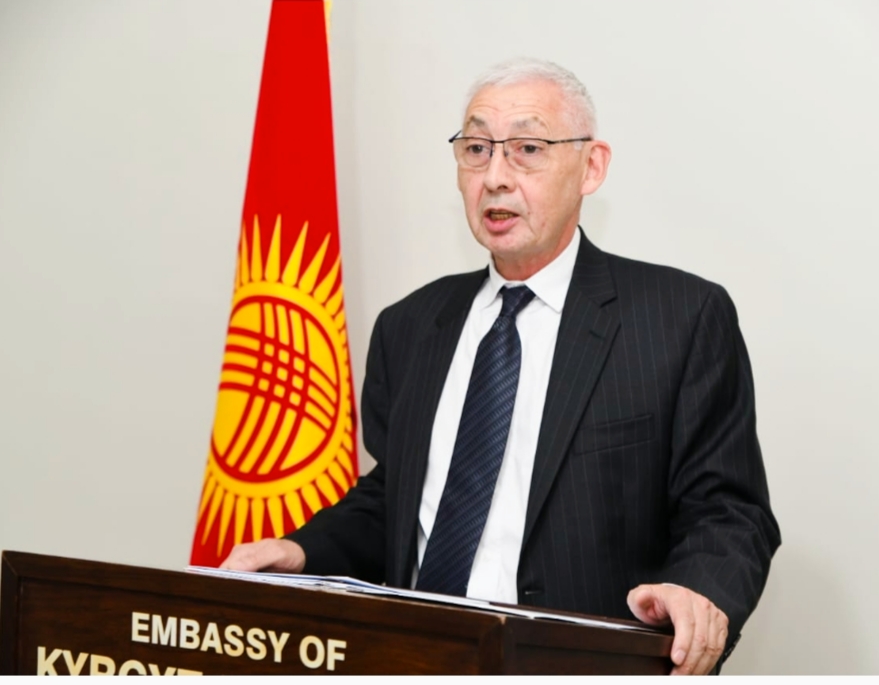
This was highlighted during an expert dialogue titled “President of the Kyrgyz Republic H.E. Sadyr Zhaparov’s Vision for Economic and Social Transformation,” jointly organized by the Embassy of the Kyrgyz Republic in Pakistan and the Institute of Peace and Diplomatic Studies (IPDS) at the Kyrgyz Embassy in Islamabad.
The speakers noted that Kyrgyzstan had maintained strong economic growth, with annual GDP growth ranging between 7 and 11.1 percent over the 2022–2026 period. The country’s nominal GDP, which stood at approximately $8.4 billion in 2020, reached an estimated $26.7 billion in 2025, while GDP per capita increased to around $3,630. Investment, trade, remittances and economic reforms were identified as important contributors to this expansion.
Chargé d’Affaires and Minister Counsellor at the Embassy of the Kyrgyz Republic in Islamabad, Aibek Tilebaliev, said President Zhaparov’s leadership had laid a strong foundation for economic growth, political stability and comprehensive institutional reforms.
He highlighted a major diplomatic breakthrough achieved through the resolution of longstanding border issues with Uzbekistan and Tajikistan. The legal framework for border delimitation was formally agreed upon and signed by the presidents of the three countries, opening new opportunities for regional connectivity and economic cooperation.
Tilebaliev said the government had simultaneously undertaken large-scale public administration reforms, strengthened governance and accelerated digitalization. A decisive campaign against corruption and the shadow economy, digital tax procedures, the introduction of cash registers for businesses and customs reforms had contributed significantly to economic growth.
He said tax revenues had increased approximately fourfold over five years, while Kyrgyzstan was emerging as a new “Snow Leopard” economic growth model, based on an open-door policy and a competitive investment environment.
Highlighting major infrastructure initiatives, the envoy said the $4.7 billion China–Kyrgyzstan–Uzbekistan Railway project would strengthen regional connectivity and reduce cargo transit times between China and Europe by seven to ten days.
He also highlighted the approximately $6 billion Kambar-Ata-1 Hydropower Plant, being developed jointly by Kyrgyzstan, Kazakhstan and Uzbekistan, as a strategic project for regional energy security.
Another major investment is the 1.9-gigawatt ROX Issyk-Kul Solar Plant, developed by Vietnam’s Rox Energy Global, involving an estimated investment of $1.4 billion and targeted for completion by 2028.
Discussing aviation modernization, Tilebaliev said Kyrgyzstan’s removal from the European Union aviation blacklist in June 2026 marked an important milestone after two decades of restrictions. The country is modernizing its civil aviation fleet, with direct scheduled flights to Europe expected to begin next year.
He also highlighted the development of the domestic automobile industry through Tulpar Motors, a joint Uzbek-Kyrgyz automobile assembly venture launched in 2024.
Tourism and hospitality are other priority sectors. The envoy referred to major developments in the Issyk-Kul region, including the Baku Resort and Spa, announced hotel investments by international brands Marriott and Mövenpick, and the opening of an international-standard golf club.
He said the Ala-Too Resort ski tourism cluster was also under construction and, upon completion, was expected to generate around 5,000 jobs and accommodate up to 850,000 tourists annually.
Emphasizing the social dimension of economic transformation, Tilebaliev said 1,075 major social facilities, including schools, kindergartens, hospitals and cultural institutions, had been constructed across the country.
Tilebaliev also underscored three ideological pillars guiding Kyrgyzstan’s national development: the Epic of Manas, the Kyrgyz Jarany concept of civic identity, and the doctrine of “National Spirit, World Heights.” These initiatives, he said, seek to strengthen national unity, civic responsibility, cultural identity and the country’s international standing.
President of the Kyrgyzstan Trade House, Dr. Shahid Hasan, said President Zhaparov’s vision had helped connect the country’s financial sector with the modern global economic system while giving fresh momentum to industrial development, large-scale manufacturing and small and medium-sized enterprises.
He observed that Kyrgyzstan’s emerging economic model reflected the importance of visionary leadership, financial-sector modernization and an enabling environment for businesses and investors.
Dean of the Faculty of Social Sciences at MY University, Dr. Muhammad Muneer, highlighted the importance of investment in human capital, education, healthcare and inclusive social development. He said protection of citizens’ rights, promotion of entrepreneurship, business facilitation and reforms in health and education were essential elements of Kyrgyzstan’s transformation. He also referred to the government’s allocation of approximately $1.5 billion for education in its latest budget.
Businessman in the logistics and transportation sector Rameez Rabbani highlighted opportunities for expanding trade and transport cooperation, while drawing attention to visa-related challenges faced by businesspeople and traders.
Concluding his remarks, Tilebaliev said President Zhaparov’s first phase of leadership had established a solid foundation for economic development and transformations across public, economic and cultural sectors.
Quoting the President, he said: “Today, we have entered a new stage of our country’s development. Even more ambitious tasks now lie ahead of us.”
He emphasized that the next priority was to translate economic growth into improved living standards for every family, ensure sustainable development for decades and build a strong state for future generations.
The dialogue concluded with an emphasis on strengthening Pakistan-Kyrgyzstan cooperation through trade, investment, connectivity, education, tourism and people-to-people exchanges.