
ISLAMABAD, Feb 08 (APP):Pakistan has denounced India’s unilateral suspension of the Indus Waters Treaty (IWT), terming it unlawful and destabilizing, and warning it endangers regional peace and Pakistan’s water security. Pakistan maintains that the 1960 Indus Waters Treaty is a binding accord that cannot be revoked unilaterally, cautioning that turning water into a political weapon erodes trust and destabilizes South Asia. The treaty—brokered by the World Bank and long celebrated …
IWT can’t be unilaterally revoked
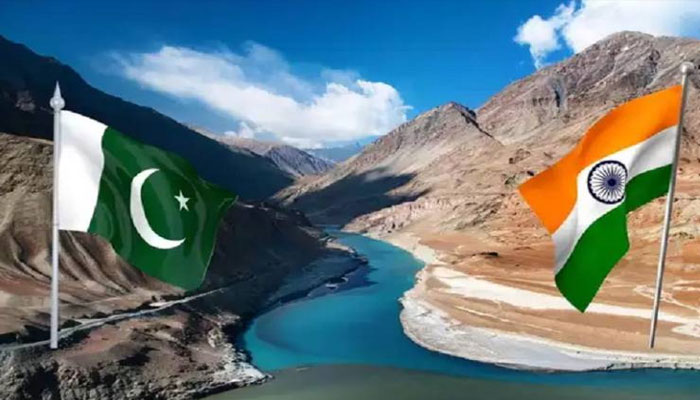
ISLAMABAD, Feb 08 (APP):Pakistan has denounced India’s unilateral suspension of the Indus Waters Treaty (IWT), terming it unlawful and destabilizing, and warning it endangers regional peace and Pakistan’s water security.
Pakistan maintains that the 1960 Indus Waters Treaty is a binding accord that cannot be revoked unilaterally, cautioning that turning water into a political weapon erodes trust and destabilizes South Asia.
The treaty—brokered by the World Bank and long celebrated as one of the world’s most durable water sharing frameworks now faces its gravest challenge.
India’s unilateral suspension has spurred Pakistan to launch an assertive, multi-layered campaign, portraying the move not simply as a bilateral dispute but as an existential threat to regional security and a critical test of international law.
Parliament, legal experts, and the United Nations have echoed this stance, with lawmakers declaring India’s move tantamount to a declaration of war. The National Assembly, in a unanimously adopted resolution, warned that unilateral actions on shared water resources could destabilize the entire region. At the UN Security Council, Pakistan underscored that treaties are binding instruments of stability, while its envoy Asim Iftikhar Ahmad reaffirmed that the IWT remains in force and its dispute-resolution mechanisms are mandatory.
The government has linked water security to national survival, food security, and economic stability, noting that 80 percent of Pakistan’s water comes from rivers already under stress from climate change and glacier melt.
Data show accelerated snow and ice loss in the Hindu Kush–Himalayan region, raising uncertainty in river flows and intensifying risks of droughts, floods, food inflation, and economic pressure. Federal Minister Ahsan Iqbal warned that India’s “water aggression” aims to push Pakistan into crisis.
To confront these challenges, a National Water Security Task Force has been established, including Federal Minister for Water Resources Mian Muhammad Mueen Wattoo. A special working group has submitted recommendations to the Planning Commission, with emphasis on sustainable management and conservation in line with international conventions.
Prime Minister Shehbaz Sharif, marking World Wetlands Day, reaffirmed Pakistan’s commitment to the 1971 wetlands convention, describing wetlands as vital national, environmental, social, and cultural assets.
Legal experts maintain that no party can suspend the treaty unilaterally, and any amendment requires mutual consent.
Observers note that Pakistan’s continuity in narrative—spanning government policy, parliamentary resolutions, and diplomatic engagement — reflects a coherent strategy to safeguard water rights, uphold international law, and promote peace in the region.