The Institute of Strategic Studies Islamabad (ISSI) on Wednesday launched a special report titled “Weaponising Waters: Historical, Legal, and Strategic Dimensions of IWT Suspension,” examining the implications of the suspension of the Indus Waters Treaty (IWT) from historical, legal, technical and strategic perspectives.
ISSI launches report “Weaponising Waters: Historical, Legal & Strategic Dimensions of IWT suspension”
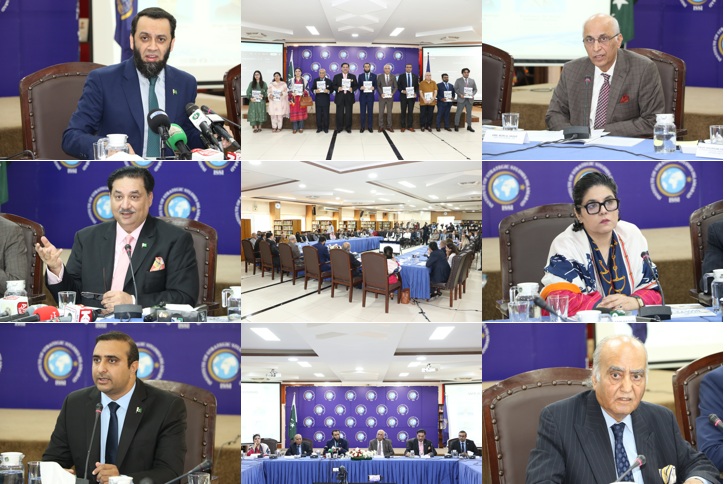
ISLAMABAD, Sep 30 (APP): The Institute of Strategic Studies Islamabad (ISSI) on Wednesday launched a special report titled “Weaponising Waters: Historical, Legal, and Strategic Dimensions of IWT Suspension,” examining the implications of the suspension of the Indus Waters Treaty (IWT) from historical, legal, technical and strategic perspectives.
Speaking at the report launch, former Federal Minister for Foreign Affairs and Defence, Engr Khurram Dastgir-Khan (HI), described India’s evolving water strategy as a real and systemic danger, warning that it goes beyond individual or high-profile hydropower projects and points towards a systematic assault on Pakistan’s water security.
He stressed that the growing risks to the Western Rivers and nearly 200 million people dependent on them should not be viewed merely as a diplomatic issue, but as a serious challenge to Pakistan’s strategic stability.
Prof Dr Arshi Saleem Hashmi, Dean, Faculty of Contemporary Studies (FCS), National Defence University Islamabad, observed that the Indus Waters Treaty was once a “textbook example” of successful water diplomacy, having survived wars and intense political tensions between Pakistan and India.
She stressed that water management had historically been decoupled from political and territorial disputes between Pakistan and India. However, following India’s decision to hold the Indus Waters Treaty in abeyance, actions that increase human vulnerability could have serious implications for Pakistan’s agriculture and food security, as well as for peace and regional stability.
Federal Minister for Information and Broadcasting Attaullah Tarar also addressed the occasion.
The speakers appreciated the India Study Centre at ISSI for undertaking this useful and timely exercise and producing a comprehensive report looking at the IWT from historic, legal, technical and strategic dimensions.