Citizens, urban planners, researchers and civil society representatives on Friday called for urgent protection of Islamabad’s shrinking green spaces, tree cover and ecological systems, warning that rapid population growth and development are threatening the capital’s environmental balance and liveability, and urged authorities to place sustainability, biodiversity and climate resilience at the centre of the city’s revised Master Plan.
Islamabad’s shrinking green cover sparks call for urgent action
ISLAMABAD, Oct 02 (APP): Citizens, urban planners, researchers and civil society representatives on Friday called for urgent protection of Islamabad’s shrinking green spaces, tree cover and ecological systems, warning that rapid population growth and development are threatening the capital’s environmental balance and liveability, and urged authorities to place sustainability, biodiversity and climate resilience at the centre of the city’s revised Master Plan.
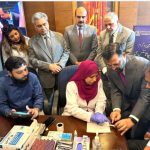
The call was made at a citizens’ dialogue titled “Reclaiming Green Islamabad”, organized by the Institute of Urbanism (IoU), which brought together policymakers, government officials, urban planners, researchers, journalists and civil society representatives to discuss growing concerns over the loss of natural spaces in the capital.
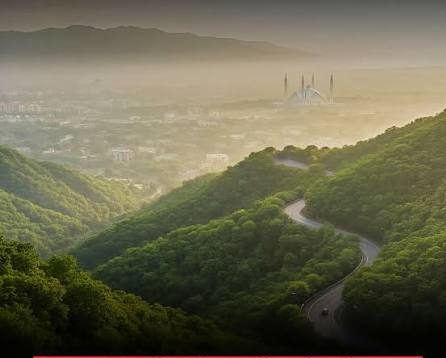
Often described as Pakistan’s “Green Capital”, Islamabad’s population has increased from just over 100,000 in the early 1960s to an estimated 2.4 million in 2023, while the city lost around 1,622 hectares of tree cover between 2020 and 2022, according to data presented at the dialogue.
Chairperson of the IoU Board of Directors Tariq Banuri said the loss of green cover is not merely an environmental issue but also a matter of social equity, as pollution, extreme heat and declining tree cover affected residents differently depending on their ability to cope with environmental pressures.
“Greening isn’t just about nature, it’s about us, and especially about fairness,” he said, stressing that environmental protection should be treated as a core consideration in every future development decision.
He called for restoration of lost green cover, natural management of rainwater and drainage, and protection of ecological corridors connecting parks, trees and waterways across the city.
IoU Executive Director Dr Ejaz Ahmad said urban development and environmental protection should not be viewed as competing objectives, stressing the need for government, communities and technical experts to work together from the planning stage.
“Urban development and environmental protection are too often treated as opposing forces, in reality, they don’t have to be,” he said.
Participants also expressed concern over recent tree removals and gaps in the monitoring, protection and restoration of Islamabad’s natural assets, and proposed practical measures including training students and young volunteers as community organizers and securing formal government support for community led plantation and conservation initiatives.
They stressed that the ongoing revision of Islamabad’s Master Plan provided an important opportunity to embed environmental sustainability, liveability, biodiversity and climate resilience into the capital’s future development rather than addressing ecological damage after it occurs.
Representatives from the Society for Alternative Media and Research (SAMAR), NUST, Ministry of Climate Change and Environmental Coordination, Allama Iqbal Open University, IUCN, Pakistan Climate Change Authority, WWF-Pakistan, International Water Management Institute, Pak Alumni Group network, Islamabad Wildlife Management Board, Asian Development Bank and Friedrich-Ebert-Stiftung also participated in the dialogue.
The participants emphasized that Islamabad’s green spaces should be treated as public assets essential to the quality of life of all residents and called for coordinated action to preserve the natural systems supporting the capital for present and future generations.