The Capital Development Authority (CDA), in coordination with the Islamabad administration and the city’s health department, has intensified dengue prevention and vector-control operations, with mosquito larvae detected and mechanically eliminated in 65,011 homes during surveillance of more than 1.24 million houses.
Islamabad steps up dengue surveillance as over 65,000 homes found with larvae
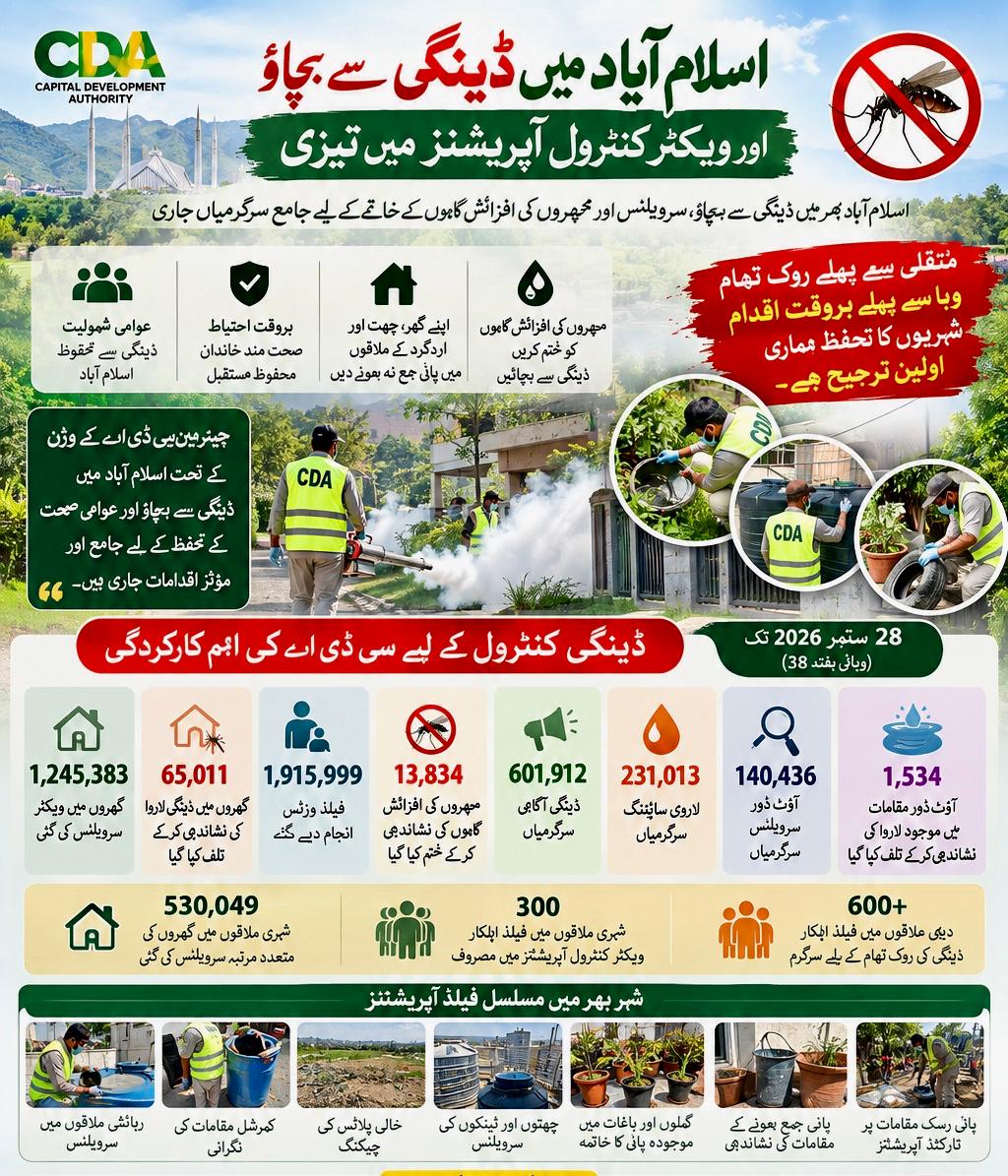
ISLAMABAD, Sep 28 (APP): The Capital Development Authority (CDA), in coordination with the Islamabad administration and the city’s health department, has intensified dengue prevention and vector-control operations, with mosquito larvae detected and mechanically eliminated in 65,011 homes during surveillance of more than 1.24 million houses.
According to figures released by the CDA on Monday, field teams had conducted 1,915,999 visits across the federal capital by the end of epidemiological week 38, while 13,834 mosquito breeding sites had been identified and eliminated.
The authority said the dengue situation in Islamabad remained under control as of Sept 28, with surveillance, larval control and targeted operations continuing in high-risk areas.
The data showed that field teams had carried out 601,912 dengue awareness activities, 231,013 larviciding activities and 140,436 outdoor surveillance operations. Larvae were also detected and eliminated at 1,534 outdoor locations.
In urban areas, around 530,049 houses have undergone repeated surveillance, with follow-up inspections conducted at 15-day intervals to monitor and eliminate potential mosquito breeding sites.
Around 300 field workers are engaged in vector-control operations in urban areas, while more than 600 personnel are working in rural areas, according to the CDA.
Sanitary patrols and field teams are inspecting residential and commercial areas, vacant plots, rooftops, gardens, flowerpots and other places where stagnant water may accumulate.
The authority said the operations focused on identifying and eliminating breeding sites through mechanical source reduction and appropriate larval-control measures to reduce the risk of dengue transmission.
The CDA and the Islamabad health department have urged residents to cooperate with field teams and ensure that water does not accumulate in their homes, rooftops, gardens, flowerpots, containers or surrounding areas.
Residents have also been advised to remove stagnant water promptly, particularly during the high-risk dengue season, to prevent mosquitoes from breeding.
The authorities said surveillance, public awareness campaigns and targeted vector-control operations would continue across the capital.