
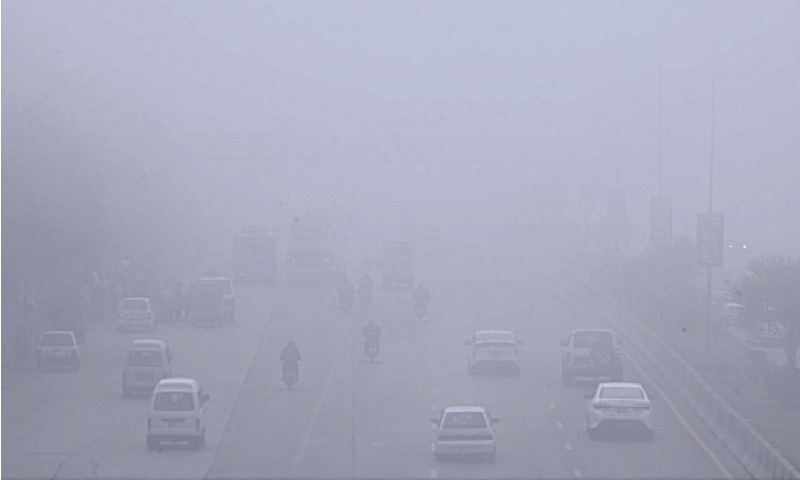
By Maryam shah ISLAMABAD, Jan 06 (APP):Dense fog enveloped Islamabad on Tuesday morning, cutting visibility to less than five metres and plunging the capital’s usually bustling streets into an unsettling quiet. Neurologists describe the effect as White Silence Syndrome, a fog-induced perceptual compression that narrows forward vision, dampens peripheral awareness and distorts surrounding sounds. Core symptoms appeared quickly. Residents reported strained eyes, muffled hearing, wobbly balance, and mental fatigue within …
Islamabad shrouded in dense fog as experts cite ‘White Silence Syndrome’
By Maryam shah
ISLAMABAD, Jan 06 (APP):Dense fog enveloped Islamabad on Tuesday morning, cutting visibility to less than five metres and plunging the capital’s usually bustling streets into an unsettling quiet. Neurologists describe the effect as White Silence Syndrome, a fog-induced perceptual compression that narrows forward vision, dampens peripheral awareness and distorts surrounding sounds.
Core symptoms appeared quickly. Residents reported strained eyes, muffled hearing, wobbly balance, and mental fatigue within minutes.
“Your brain prioritises survival,” explained Dr. Faisal Ahmed, neurologist at PIMS Hospital. “It ignores edges, muffles noise, and doubles reaction times. Drivers misjudge gaps and struggle to navigate safely.”
Scientific studies link this syndrome to low light scattering. Fog droplets overload the visual cortex, slow auditory processing, and subtly spike stress hormones, leaving commuters tense and disoriented.
By 7am, Islamabad felt the fog’s full grip. Jinnah Avenue clogged with slow-moving traffic, Margalla roads disappeared in mist, and sectors F-7 through I-8 became nearly invisible.
Ahmed Raza, a banker in G-9, parked his car after struggling through the fog. “I felt compressed, heavy,” he said. “Horns sounded miles away, and I turned too slowly.”
The syndrome also warps roads visually. Landmarks such as Centaurus Mall vanished first, while potholes and kerbs remained visible, betraying drivers’ instincts.
Health impacts followed rapidly. Inhaled fog droplets carrying pollution inflamed lungs, doubling asthma attacks and increasing bronchitis and flu cases.
Residents reported burning eyes, sore throats, stiff joints, and heightened risk of hypothermia, particularly among street dwellers.
Psychologically, prolonged exposure amplified irritability and low mood, resembling seasonal affective disorder. “Children zone out, and workers report brain fog lasting hours,” warned Dr. Ahmed.
The fog also carried a chemical record of the city. Half a million vehicles spewed exhaust, outskirt kilns released dust, and factories leaked toxins into the atmosphere.
Over the past five years, fog in Islamabad has intensified, becoming thicker and lasting longer, a trend fuelled by climate change and urban sprawl.
Experts say smarter urban defences are necessary to prepare Islamabad before nature strikes again.