
The Advisory Committee of Indus River System Authority (IRSA) on Tuesday unanimously approved 15 per cent water shortfall for Early Kharif (April–10 June) while 5 per cent shortfall for Late Kharif season 2026.
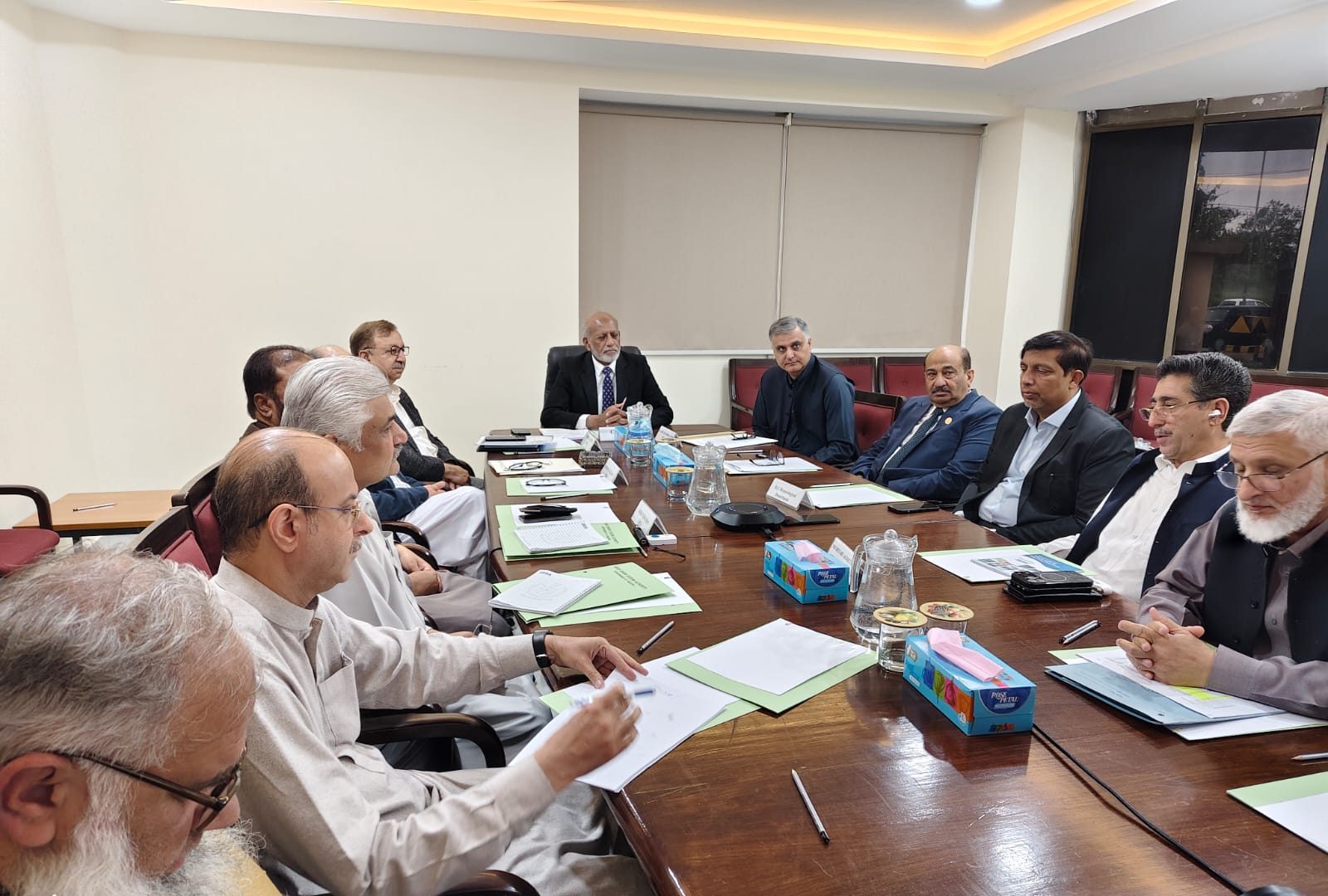
ISLAMABAD, Apr 07 (APP): The Advisory Committee of Indus River System Authority (IRSA) on Tuesday unanimously approved 15 per cent water shortfall for Early Kharif (April–10 June) while 5 per cent shortfall for Late Kharif season 2026.
The committee which met with Chairman IRSA, Amjad Saeed in the Chair approve the Anticipated Water Availability Criteria for Kharif 2026 (April–September), said a statement issued here.
However, the shortfall for Early Kharif will be subject to review in the first week of May 2026. The shortfall for Late Kharif was approved at 5%.
Under the anticipated provincial withdrawals for Kharif 2026, Punjab share will be 33.357 million acre feet (MAF), Sindh 30.403 MAF, KPK (CRBC only) 0.823 MAF and Balochistan 2.868 MAF.
The Committee reviewed the Rabi Season 2025–26 (October–March) and noted that actual inflows remained at 21.782 MAF against the anticipated 22.016 MAF, reflecting a marginal shortfall of 1%, thereby broadly conforming to earlier projections.
The total system storage as on 31.03.2026 was recorded at 2.307 MAF, which is significantly higher compared to last year (0.384 MAF) and the 10-year average (1.351 MAF).
System losses/gains were recorded at -0.172 MAF in the Indus Zone against anticipated -1.143 MAF, while the Jhelum-Chenab (JC) Zone registered gains of +0.037 MAF against the anticipated zero.
During the season, downstream Kotri releases remained at 3.596 MAF. Provincial utilization remained slightly below allocations, primarily due to reduced provincial demands.
The Rim-Station inflows were projected at 103.30 MAF, including 24.48 MAF for Early Kharif and 78.81 MAF for Late Kharif, based on agreed probability scenarios. System losses for the Indus Zone were assessed at 25% for April and 35% for the period 01st May to 10th June, subject to review in the first week of May based on actual reach-wise observations.
For Late Kharif, losses were estimated at 15%. In the JC Zone, losses were agreed at 5% during Early Kharif and ‘nil’ during Late Kharif.
The representative of PMD informed that rainfall during April–June is expected to remain normal to above normal, particularly over western Khyber Pakhtunkhwa, western Punjab, Gilgit-Baltistan and northern Balochistan, with enhanced probability of above-normal rainfall in eastern Sindh. Temperatures are, however, likely to remain above normal across the country, with pronounced anomalies over northern regions.
The Committee was apprised that WAPDA, in a meeting held at the Ministry of Water Resources, provided firm commitments regarding Tarbela operations.
It was assured that the T4 Hydropower Plant (capacity 45,000 cusecs) would be operational after 07th May, 2026, while the T4 Low Level Outlet (LLO) would be available for wet testing around 08th May, 2026 (tentative).
The Auxiliary Spillway shall become available upon attainment of reservoir level RL 1505 ft, and the Service Spillway at RL 1511 ft.
In order to facilitate construction activities at T5 Hydropower Project, WAPDA requested maintaining Tarbela reservoir levels below RL 1470 ft till 31st May and below RL 1482 ft till 30th June, which was agreed to by the Committee with the caution that wet cycle may be kept under consideration to keep these levels within the requisite demand.
WAPDA was directed to timely communicate any system implications arising due to operational constraints at Tarbela to all stakeholders.
The Committee expressed serious concern over the continued depletion of live storage capacity of Tarbela Reservoir. The live storage has reduced from 5.827 MAF in May 2022 to 5.580 MAF in March 2026, as per WAPDA’s latest survey.
It was informed that a significant reduction of 0.148 MAF during 2025 was primarily attributable to increased sediment inflows, exceeding trends observed over the past 15 years. Due to advancement of the reservoir delta, the Minimum Operating Level has been revised to RL 1402 ft. Overall, the live storage capacity of Tarbela has reduced by approximately 48% to date.
The Committee directed WAPDA to submit a comprehensive report on sedimentation trends and mitigation measures to IAC.
The meeting was attended by Members IRSA, representative of Chief Engineering Adviser (CEA), Ministry of Water Resources, Member (Water), WAPDA, Chief Meteorologist, Pakistan Meteorological Department (PMD), Secretaries of Provincial Irrigation Departments (PIDs) of Punjab and Sindh along with their senior officers, senior technical representatives from Khyber Pakhtunkhwa and Balochistan, General Manager Tarbela (WAPDA) along with senior officers, Project Directors of T4 & T5 Hydropower Projects, representatives of Provincial Agriculture Departments, and Director (Operations)/Secretary IRSA along with senior officers of the Authority.