
ISLAMABAD, Jan 31 (APP): The Institute of Regional Studies (IRS) convened an expert webinar titled “Israel’s War on Gaza and Imperatives for Regional Peace”, to examine the evolving dynamics of the Gaza conflict, the 20-point US peace framework, and the diplomatic challenges confronting regional and international stakeholders. Visiting Professor in the Politics and International Relations Program at the Doha Institute for Graduate Studies, Dr. Mahjoob Zweiri, delivered the keynote address. …
IRS hosts webinar on Israel–Gaza conflict, regional peace prospects
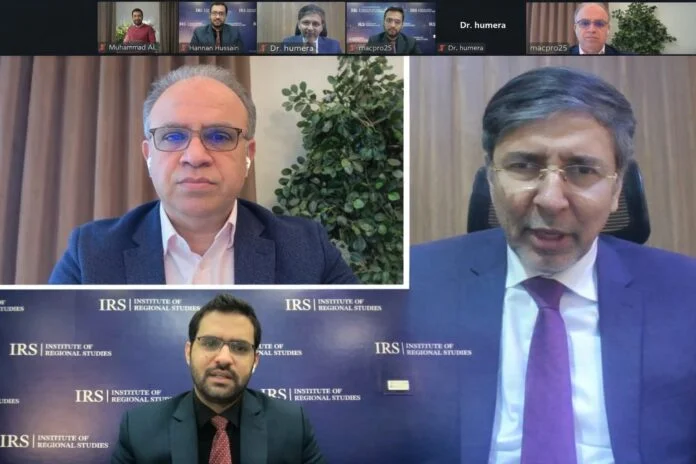
ISLAMABAD, Jan 31 (APP): The Institute of Regional Studies (IRS) convened an expert webinar titled “Israel’s War on Gaza and Imperatives for Regional Peace”, to examine the evolving dynamics of the Gaza conflict, the 20-point US peace framework, and the diplomatic challenges confronting regional and international stakeholders.
Visiting Professor in the Politics and International Relations Program at the Doha Institute for Graduate Studies, Dr. Mahjoob Zweiri, delivered the keynote address.
Opening the discussion, Ambassador Jauhar Saleem, President of IRS, described the 20-point UN-mandated peace framework as a potential pathway forward amid limited alternatives. He noted that while the current ceasefire has yielded partial stabilization, the transition to its second phase is expected to face significant political and security obstacles.
Ambassador Saleem highlighted the absence of an explicit and credible roadmap toward Palestinian statehood within the framework, despite sustained diplomatic engagement by the United States and its partners.
In his remarks, Dr. Zweiri underscored the difficulty of assessing prospects for durable peace in Gaza in the context of ongoing ceasefire violations.
He identified a range of structural and political constraints affecting post-ceasefire recovery, including restrictions on the operations of international and local humanitarian organizations and delays in implementing agreed provisions of the peace framework.
According to Dr. Zweiri, these delays have complicated the transition from the first phase of the plan—focused primarily on hostage releases—to the second phase, which is intended to address longer-term stabilization and governance arrangements.
The discussion also examined the role of regional actors in shaping diplomatic outcomes. Dr. Zweiri noted that engagement by countries such as Türkiye and Pakistan could contribute to broader international participation in discussions on Gaza’s future, particularly in relation to reconstruction and post-conflict governance. He observed that expanding the range of diplomatic stakeholders may help mitigate perceptions of concentrated influence in decision-making processes concerning the Strip.
Addressing humanitarian conditions, Dr. Zweiri emphasized the importance of sustained aid flows as an integral component of security and stability. He referenced reports indicating that humanitarian access to Gaza has remained below agreed levels under the ceasefire arrangement confirmed in October 2025. Participants noted that improving humanitarian delivery mechanisms will be central to maintaining the ceasefire and supporting conditions for longer-term peace.
The webinar concluded with a discussion on the implications of the second phase of the ceasefire for regional stability and the role of multilateral diplomacy in supporting a durable political settlement.