ISLAMABAD, Jan 03 (APP):In a solemn ceremony organized by the Iranian Embassy here Saturday, Ambassador Reza Amiri Moghaddam paid glowing tribute to Martyr Qasem Soleimani, the legendary commander of the Quds Force and other "martyrs of the Islamic Ummah." Describing them as "friends of the oppressed" and "Muslim heroes on the path of God," the envoy underscored their sacrifices in defending Palestinians, Syrians, and Lebanese against what he called Israel's …
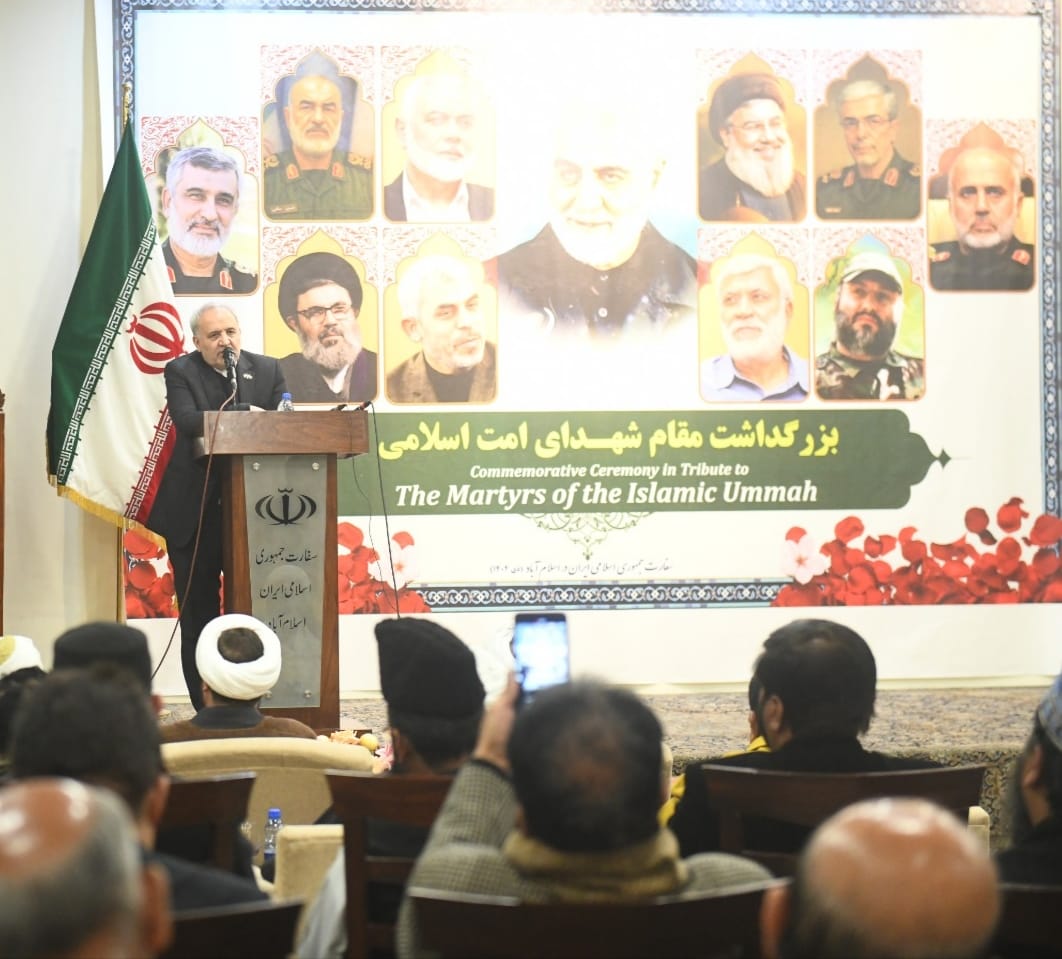
ISLAMABAD, Jan 03 (APP):In a solemn ceremony organized by the Iranian Embassy here Saturday, Ambassador Reza Amiri Moghaddam paid glowing tribute to Martyr Qasem Soleimani, the legendary commander of the Quds Force and other “martyrs of the Islamic Ummah.”
Describing them as “friends of the oppressed” and “Muslim heroes on the path of God,” the envoy underscored their sacrifices in defending Palestinians, Syrians, and Lebanese against what he called Israel’s expansionist ambitions.
The event, titled “The Martyr of the Islamic Ummah,” drew a diverse crowd of religious scholars, intellectuals, journalists, and citizens from all walks of life. It served as a poignant reminder of the ongoing struggles across the Muslim world, blending commemoration with calls for resistance against perceived oppression.

Addressing the gathering, Ambassador Moghaddam portrayed the martyrs not as fallen soldiers, but as eternal figures sustained by divine providence. “The status of the martyrs is very high; they are alive and receiving sustenance from God Almighty,” he declared. “They remained on the path of God and were martyred on the righteous path.”
Drawing from personal experience, the ambassador revealed his close encounters with some of these figures. “I have personally worked with some of these martyrs. They were Muslim heroes on the great path, the pinnacle of intelligence—wherever they went, they rose to the top,” he said. Rejecting paths to political power like ministries or parliaments, they chose “the path of struggle and challenge, the difficult path,” fighting “the enemies of God and humanity.”
The envoy linked their sacrifices to broader regional conflicts, accusing the “Zionist government” of oppressing Palestinians and attempting to crush Hamas over the past two years. “Israel is an evil government, backed by the Western bloc,” he charged.
He praised Iran’s pre-revolutionary leaders for supporting the Palestinian cause even from prison, crediting them with pushing back Israeli expansionism.
Turning to recent events, Moghaddam highlighted intelligence failures and hostage releases that exposed vulnerabilities. “The conspiracies of the Zionists have become clear,” he asserted. Expressing gratitude to Pakistan, he thanked its people, government, parliament, and political parties for standing with Palestinians. “We are proud that we came out of the 12-day war, but the Zionists want to destabilize this region.”
Iran, he vowed, would never yield. “Iran and its leaders stand in front of this system and will never bow their heads. Allah promises that whoever supports the oppressed, He will come to their aid. We will join the ranks of the martyrs. We will always be against the oppressor.
Prominent religious scholars amplified the ambassador’s message. Mufti Gulzar Naeemi, a renowned figure, emphasized Soleimani’s universal commitment. “Qasem Soleimani gave his life not only for Iran but also for Islam,” he said. Noting activities in Lebanon, Syria, and Yemen, Naeemi framed their deaths as a stand against “international colonialism.”
Allama Iftikhar Naqvi, convener of the Imam Khoumeni Foundation, celebrated the martyrs’ enduring legacy. “There is no greater honor than for a martyr to live forever on the path of God and Islam,” he proclaimed.
Referencing Hezbollah leader Hassan Nasrallah, Naqvi said the martyrs had inspired hundreds of followers, thwarting their enemies. “They are oppressors and will remain so, but the time is near when peace and Islam will be spread everywhere.”
The ceremony concluded with heartfelt prayers recited for the martyrs and the oppressed in Gaza and other Islamic countries.
In an era of escalating tensions, the gathering underscored a narrative of unyielding faith and transnational solidarity, positioning the “martyrs of the Islamic Ummah” as beacons for the faithful. As Ambassador Moghaddam put it, their chosen path was “a movement for the oppressed and the path of God Almighty”—one that, for many in attendance, continues to illuminate the way forward.