
- Advertisement -
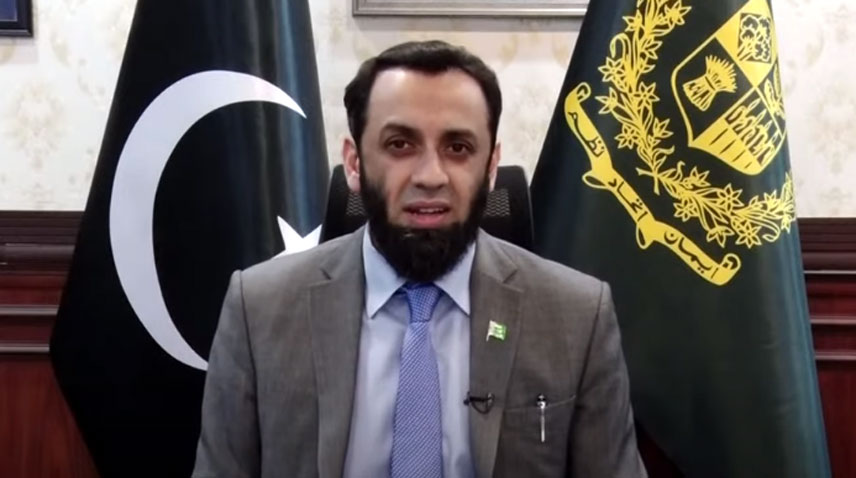
ISLAMABAD, Jan 20 (APP):Minister for Information and Broadcasting Attaullah Tarar on Tuesday underscored the need to foster creativity and bring TikTok-driven politics and journalism under a clear ethical and regulatory framework, cautioning that without such measures society cannot move forward.
Addressing the oath-taking ceremony of the Pakistan Federal Union of Columnists and Creators (PFUC)
after administering oath to the newly elected office-bearers, Information Minister said that bizarre acts are often staged merely to secure maximum likes on TikTok, while little attention is paid to the government’s initiative of distributing one million laptops and other public welfare initiatives.
He emphasized the need to promote creative content, saying it helps build awareness in a society facing multiple challenges. He noted that Prime Minister Shehbaz Sharif has revived the health card scheme first introduced by former Prime Minister Nawaz Sharif in 2012, yet it receives little attention, while TikTok politics continues to draw the most likes.
He acknowledged that dissent holds a vital place in society, warning that its absence renders a community lifeless. As a minister, he said, he accepts criticism, adding that narrative battles are best addressed through collaboration and the promotion of creativity.
He said dissent has ample space in society, recalling his journey through student politics, activism, bureaucracy, and law as phases essential for any mature politician. After years on the streets, student politics and a decade serving as deputy secretary to the chief minister secretariat, he entered electoral politics, stressing that he was neither a parachuter nor from a legacy family. These experiences, he noted, taught him to understand the system. “I bear criticism, including that directed at PML-N, for the sake of improvement,” he added.
During his formative years, he recalled, print media played a pivotal role in shaping journalists, politicians, and society at large. Newspapers, he noted, operated under a strict code of ethics and the close scrutiny of editorial boards. Senior journalists, many of whom dedicated decades to the profession, mentored young reporters and helped nurture successive generations. He cited the contributions of renowned journalists Irfan Siddiqui and Khawaja Farrukh Saeed, who carved distinguished names in the field.
Stressing the need for a regulatory framework for social media, he said the time had come to “nip the evil in the bud.” He warned that absconders would be brought back to the country and creators crossing red lines would be held accountable under the law. Those promoting extremism, he added, must answer for their actions, as it is not possible to use the microphone and camera at will.
He said today’s politicians show unmatched tolerance for dissent, unlike the intolerance of the 1990s. Sanity later prevailed with the Charter of Democracy signed by PML-N and PPP, but a third force emerged that divided society and fueled hatred and extremism. “We have always maintained that dialogue is the only solution, and we continue to urge talks to resolve issues,” he added.
PML-N suspended its election campaign when PTI founder Imran Khan was injured in a fall from a lift, with party leaders visiting him to inquire about his health. After winning the 2013 election, former prime minister Nawaz Sharif went to Bani Gala and offered joint efforts to improve people’s lives, but Imran declined. Subsequent dialogue offers from Prime Minister Shehbaz met the same fate.
Tarar said PML-N had made every effort to build political consensus. Without naming PTI, he alleged the party stood against national integrity, urging it to show courage by condemning TTP terrorists. He expressed astonishment that, except for one party in Khyber Pakhtunkhwa, every political force had been targeted by the TTP, yet that party refrains from condemnation, suggesting sympathy with the militants.
Criticising Khyber Pakhtunkhwa Chief Minister Afridi, he said that despite his claims, he has neither written nor produced any research work. He added that it was Irfan Siddiqui who, through his writings, promoted awareness and continues to live on.
He said PTI had reduced advertising rates for print and electronic media during its tenure, leaving payments stalled. In the first week of his office, he cleared Rs1.5 billion in pending ad payments to media outlets. He urged APNS and PBA to ensure staff dues are also settled alongside ad payments.
He observed that when print media transitioned to electronic platforms, society readily embraced the change, as many newspaper media houses launched their own channels. At that time, real estate interests had yet to enter media houses. He noted that regulation involves multiple stakeholders, including the Information, IT, and Interior ministries. The debate, he added, centers on whether the Information Ministry—tasked with promoting journalism—should serve as the regulator, or whether that role should fall under the Interior Ministry.
He said the Pakistan Armed Forces inflicted defeat on India last May, yet India still failed to grasp the reality of what had transpired.
He said he hails from the city of Maulana Zafar Ali Khan, about whom Quaid-e-Azam once remarked that if he had a few more companions like Zafar Ali Khan, another revolution would have been possible.
He announced the handover of his Lahore camp office to the PFUC and invited senior journalist Sohail Warraich to inaugurate it.