

ISLAMABAD, Mar 5 (APP):India has suffered five rocket launch failures during last five years, resulting in an estimated total economic loss of around $335 million due to destroyed satellites and mission costs, while also causing significant embarrassment to India’s space program.
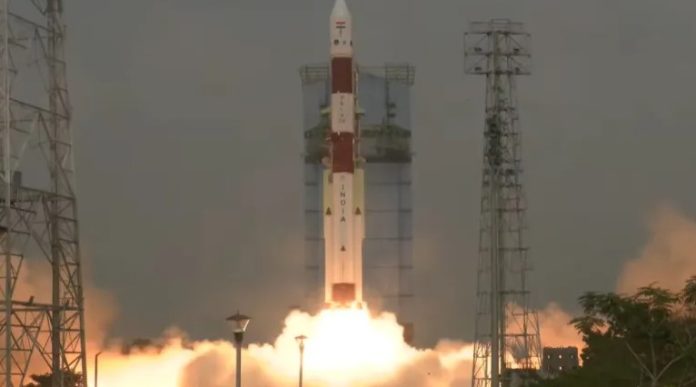
India’s Polar Satellite Launch Vehicle (PSLV) suffered a major failure when the PSLV-C62 mission recently ended in complete loss, resulting in the destruction of the primary Earth observation satellite EOS-N1 – Anvesha – and all 15 co-passenger satellites.
Performance issues, including disturbances and a sudden drop in chamber pressure, caused the rocket to deviate from its planned trajectory, leading to the total loss of the 16 satellites on board—including the strategic EOS-N1 developed for the Defence Research and Development Organisation (DRDO).
This setback has raised concerns about the reliability of ISRO’s longstanding workhorse rocket, especially following a prior consecutive failure in the same stage.
The series of setbacks since 2021 includes: PSLV-C62, PSLV-C61 GSLV-F15, GSLV-F10, and SSLV-D1 which have exposed deep systemic weaknesses in ISRO’s flagship programs, exacerbated by rushed commercialization and privatization policies under the current government, leading to overburdened launch schedules and compromised quality control.
The PSLV, long considered India’s reliable workhorse with only two failures between 1993 and 2017, has now faced back-to-back third-stage anomalies in 2025-2026, grounding it for investigations and highlighting institutional decline.
Strategic implications are severe, as multiple failures involved national security payloads, including surveillance and navigation satellites critical for defense capabilities. These setbacks weaken real-time intelligence, surveillance, and reconnaissance (ISR) assets, potentially benefiting adversaries in border disputes.
Financially, the losses are substantial. Estimated direct costs for PSLV-C61/EOS-09: ?450-500 crore; PSLV-C62/EOS-N1 and payloads: ?650-750 crore. Total for the five failures: ?2,200-2,800 crore (approximately $265-335 million), equivalent to about 15% of ISRO’s 2025-26 budget of ?24,000 crore, placing a heavy burden on Indian taxpayers.
Opportunity costs include lost revenue from foreign ride-share payloads, with historical earnings of over $100 million in some missions now at risk.
Agreements with countries like Nepal and Brazil have been canceled, projecting a $50-70 million revenue loss in FY26. India’s share in the global small-satellite launch market has plummeted from 35% in 2017 to nearly zero by 2024-2025, as clients shift to more reliable providers.
These repeated failures undermine ambitions for an $8 billion space economy by 2030, damage dual-use technology credibility (potentially affecting programs like Agni missile series using similar solid fuel technology), and contribute to international embarrassment for India’s space program.