
PESHAWAR, Feb 08 (APP): As an agrarian country, Pakistan’s food security and agricultural productivity are heavily dependent on uninterrupted flow of river water to meet the needs of nearly 250 million people. In this scenario, the Indus Waters Treaty (IWT) signed between Pakistan and India in 1960 protected by World Bank as guarantor remains critically important for the former country, agriculture and economics experts said. The necessity of the historic …
India using IWT as weapon to create food insecurity situation in Pakistan: Experts
PESHAWAR, Feb 08 (APP): As an agrarian country, Pakistan’s food security and agricultural productivity are heavily dependent on uninterrupted flow of river water to meet the needs of nearly 250 million people.
In this scenario, the Indus Waters Treaty (IWT) signed between Pakistan and India in 1960 protected by World Bank as guarantor remains critically important for the former country, agriculture and economics experts said.
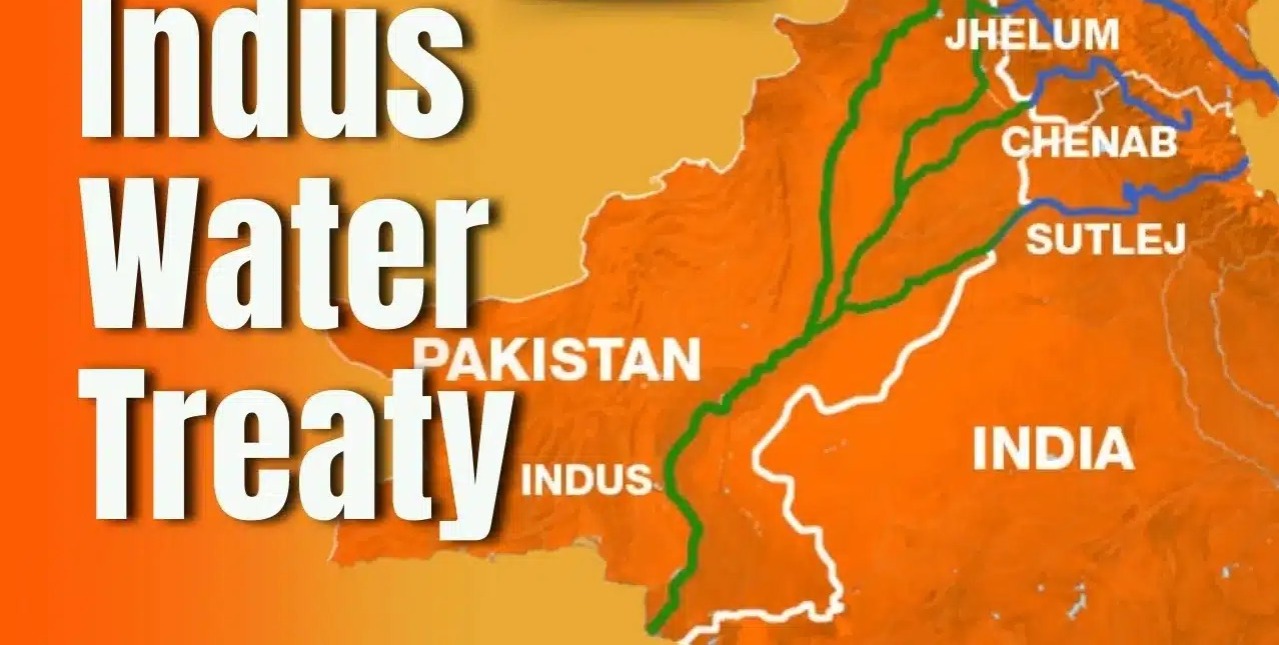
The necessity of the historic IWT had emerged in 1948 when India illegally halted water flows from the eastern rivers mostly originating from Kashmir, triggering serious tensions between the two countries. International mediation followed, culminating in the signing of the IWT between Pakistan and India in 1960, resulting allocation of water of western rivers Indus, Chanab and Jehlum to Pakistan and eastern rivers Beas, Sutlaj and Ravi to India.
Highligting importance of IWT, Professor Dr. Zilakat Malik, former Chairman of the Economics Department, told APP that IWT was a lifeline of agriculture sector of Pakistan.
He said annual flow of 168 million acre-feet of water from the Indus basin was divided under the treaty between the two countries.
Pakistan was granted right over nearly 80 percent of the water from the three western rivers namely Indus, Jhelum, and Chenab amounting to approximately 133 million acre-feet, while India was given control over the eastern rivers of Ravi, Beas, and Sutlej.
He explained that since the sources of several western rivers lie in India, and Indian Illegally Occupied Jummu and Kashmir (IIOJ&K), India was granted partial permission to store up to 3.6 million acre-feet of water and to use it on a limited scale for irrigation and hydropower generation.
“However, India has increasingly used this provision as a tool of water aggression against Pakistan,” said Dr. Zilakat Malik.
He said India has already constructed more than 15 dams on Indus, Chenab, and Jhelum rivers in the occupied territories and is preparing to build an additional 45 to 61 dams, which is against IWT.
Additionally, over 30 irrigation projects were illegally completed on western rivers by India and initiated further projects worth approximately $15 billion, including the 1,856-megawatt Sawalkot Power Project which is complete violation of IWT.
Against IWT, he said India expedited work on Kishanganga, Ratle, Miyar, Lower Kalnai, Pakal Dul Hydroelectric Plant, and the Wular Barrage Navigation Project, which caused decrease water flow in western rivers.
Although India described these projects as power-generation initiatives, but it is aimed at regulating and controlling water flows on western rivers in a bid to create food insecurity in Pakistan.
Dr. Malik said that India had repeatedly threatened to hold the IWT in abeyance to exert pressure on Pakistan and has publicly floated nefarious designs to divert flow of western rivers, which is extremely difficult.
He explained that the Ravi river originates in the mountainous Chamba district of Himachal Pradesh near a small village known as R.F. Cholan whereas Beas river rises from Beas Kund in the same state and joins the Sutlej at Ferozepur, flowing entirely within India.
The Sutlej river originates near a lake in the Tibetan region of China, known in India as Rakshas Tal, and flows through Himachal Pradesh and Indian Punjab before entering Pakistan at Kasur district and joining the river system at Head Sulemanki.
Historically, Pakistan received an average of 19 million acre-feet of water annually from eastern rivers. However, India constructed several dams and canals on the Ravi and Sutlej rivers before and after the treaty, diverting water toward Rajasthan and other regions.
As a result, annual inflows to Pakistan from these rivers has declined to less than 300,000 acre-feet. He said this was made easier due to India’s favorable geographic control over eastern rivers.
The situation altogether differs significantly for the western rivers. The Indus river originates in Tibet and enters Pakistan after flowing through difficult mountains of Indian Illegally Occupied Jummu and Kashmir. The Jhelum river begins at the Verinag spring in the Pir Panjal range, passes through Srinagar, and Azad Kashmir, and enters Pakistan at Jhelum district. Alike, the Chenab river originates in Himachal Pradesh and enters Pakistan at Head Marala near Sialkot.
According to water experts, diverting or blocking the Indus and Jhelum rivers is extremely difficult due to the Kashmir Valley’s location between the Himalayas and Pir Panjal ranges.
Such diversion would require the construction of tunnels exceeding 300 kilometers in length through mountainous terrains, demanding enormous financial investment. He said Chenab’s narrow course and deep gorges further complicate any diversion move.
Brigadier (retd) Mahmood Shah, former Secretary Law and Order of the erstwhile FATA, said India has a long history of taking illegal unilateral actions by frequently announcing the suspension or holding in abeyance of the IWT following major incidents.
He cited instances such as the 2003 Indian Parliament attack, the last year Pahalgam incident, and suspension of Indus Waters Commission (IWT)’s meetings after the Uri IIOJ&K incident.
He said India has again unilaterally announced holding the treaty in abeyance on April 23, 2025, following the Pahalgam incident, describing the move as a clear violation of international law, Geneva Convention, UN Charter and World Bank’s role as guarantor.
Qazi Anwar, Advocate and former President of the Supreme Court Bar Association, said India cannot legally hold the treaty in abeyance following the ruling of the Permanent Court of Arbitration (PCA) in The Hague in June 2025.
He said the PCA has ruled that India cannot unilaterally suspend or obstruct the treaty or its dispute resolution mechanism (DRM), affirming that the IWT remains fully in force.
Qazi Anwar reiterated that the treaty contains no termination clause, making unilateral withdrawal legally impermissible.
Moreover, India’s unilateral suspension of the treaty and plans to build more dams are seen by Pakistan and many international relations and diplomatic experts as violations of international law and Vienna Convention on the Law of Treaties and UN Charter.
“The IWT was specifically designed to function even during times of conflict and does not contain a provision for unilateral withdrawal or suspension,” said Professor Dr. Muhammad Ejaz Khan, former Chairman, Economics Department at University of Peshawar.
He said the World Bank, as a guarantor, has also maintained that the treaty cannot be altered or suspended without mutual consent.
He said a Permanent Indus Commission had been established under the treaty besides a comprehensive dispute resolution mechanism involving neutral experts and international arbitration.
He said the western rivers are vital to Pakistan’s agriculture based economy and Pakistan has cautioned that any obstruction of water flows would be viewed as an act of war, with serious consequences.
He added that such illegal actions have already adversely affected India’s international standing and could further strain its relations with Pakistan, global institutions, including the United Nations and the World Bank.
Strongly condemning India’s unilateral suspension of IWT, former Ambassador Manzoorul Haq warned that such illegal actions set a dangerous precedent for resource-based coercion and threaten regional stability.
For more than 65 years, he said the IWT had stood as a model of mutual cooperation, ensuring fair and predictable water sharing between Pakistan and India even during time of conflict or wars.
“India’s unlawful unilateral decision to suspend this framework undermines both the letter and the spirit of the treaty besides deepening lack of trust and confidence,” he said.
The Modi Govt illegal actions threaten the already fragile ecosystems, disrupts essential data sharing, and endangers millions of population whose survival depends on the Indus water system for food and energy security.
He cautioned that such illegal measures was not only harming agriculture but also erode global confidence in international water law.