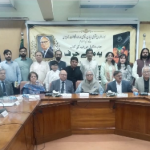
ISLAMABAD, Jul 28 (APP):Federal Minister for National Health Services, Regulations and Coordination, Mustafa Kamal, has declared Hepatitis C a national emergency, stressing that the time for silence has passed and that Pakistan must now take decisive action to eliminate the disease. Speaking on the occasion of World Hepatitis Day, the Minister said the country can no longer afford to lose precious lives to a disease that is preventable, detectable and …
Health Minister calls Hepatitis C a national emergency, urges decisive action to eliminate disease by 2030
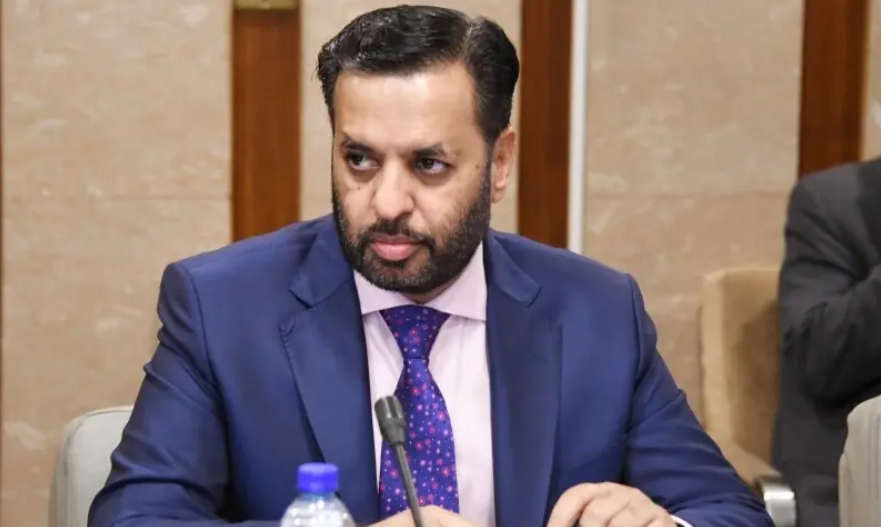
ISLAMABAD, Jul 28 (APP):Federal Minister for National Health Services, Regulations and Coordination, Mustafa Kamal, has declared Hepatitis C a national emergency, stressing that the time for silence has passed and that Pakistan must now take decisive action to eliminate the disease.
Speaking on the occasion of World Hepatitis Day, the Minister said the country can no longer afford to lose precious lives to a disease that is preventable, detectable and curable.
The Minister stated that the gathering was not merely to observe an international day but to reaffirm Pakistan’s commitment to ending Hepatitis C. He emphasized that Hepatitis C is no longer just a public health issue but a national emergency requiring an urgent and coordinated response.
Highlighting the scale of the challenge, Mustafa Kamal said Pakistan carries high burden of Hepatitis C, with more than 10 million people living with the virus and approximately 110,000 new infections reported each year. He stressed that these figures cannot be treated as routine statistics and require immediate national attention.
The Minister noted that the availability of modern antiviral medicines has made Hepatitis C a curable disease with more than 95 percent of patients able to achieve complete recovery through timely diagnosis and treatment.
Mustafa Kamal said that the Prime Minister’s National Hepatitis C Elimination Programme represents far more than a policy announcement. It reflects the Government of Pakistan’s firm commitment to ensuring early identification of patients through free screening, free diagnostic testing and free treatment. He added that the programme will be expanded across the country in phases with the objective of screening more than 164 million people.
He informed that the Federal Government is directly implementing the programme in Islamabad Capital Territory, Azad Jammu and Kashmir and Gilgit-Baltistan, while working closely with provincial governments to gradually extend its coverage nationwide. The Minister expressed confidence that with collective national efforts, Pakistan can achieve the goal of becoming Hepatitis-free by 2030.
The Federal Minister emphasized that “Hepatitis C is not an incurable disease. However, if left undiagnosed and untreated it can cause severe liver damage, leading to liver cirrhosis and eventually liver cancer, making treatment significantly more complex. He urged citizens to undergo timely screening and seek early treatment.
Mustafa Kamal further stated that, under the leadership of the Prime Minister of Pakistan and with the guidance of Professor Saeed Akhtar, a comprehensive national programme has been developed to eliminate Hepatitis C. The Ministry of National Health Services has played an active role in its formulation, adopting Egypt’s internationally recognized model, which successfully controlled the disease through nationwide screening within a few years.
He said Pakistan is implementing the same model in phases, beginning with Islamabad, through close collaboration between the Federal and Provincial Governments. The ultimate objective is to screen the entire population to ensure that every infected individual is diagnosed and treated at the earliest opportunity.
The Minister announced that every individual diagnosed with Hepatitis C under the programme will receive a complete three-month course of treatment free of cost, with an estimated value of PKR 34,000 per patient. If additional treatment is required, the Government will also provide it free of charge. He added that all screening expenses are being fully covered by the Government and urged citizens to voluntarily visit designated screening centers, where testing is available at no cost.
Speaking about the broader vision for Pakistan’s health sector, Kamal said the Government’s priority extends beyond treating diseases to preventing them. He stressed that a modern healthcare system is built on prevention rather than cure. In line with this vision, the Ministry is strengthening maternal and child health services, routine immunization, family planning, nutrition, access to safe drinking water, environmental health and primary healthcare across the country.
The Minister observed that a healthy society cannot be built through hospitals alone. Healthy homes, a clean environment, quality primary healthcare and effective preventive systems collectively form the foundation of a healthy nation. He cautioned that unless greater emphasis is placed on disease prevention, the burden on hospitals will continue to rise.
Expressing concern over Pakistan’s broader public health challenges, the Minister noted that the country continues to face a high burden of preventable diseases. He highlighted that approximately 11,000 women lose their lives every year during pregnancy and childbirth due to causes that are largely preventable through timely healthcare and effective interventions. He stressed that disease prevention must now become a national priority alongside treatment.
Mustafa Kamal also drew attention to other major health challenges confronting Pakistan, including malnutrition, poor maternal and child health, Hepatitis, diabetes, cardiovascular diseases and mental health disorders. He noted that hundreds of thousands of children die each year from preventable causes, while many more suffer from impaired physical and cognitive development due to malnutrition. He emphasized that these health challenges are not only medical issues but also serious barriers to Pakistan’s economic growth and national development.
Addressing the growing threat of antimicrobial resistance, the Minister warned that the misuse and overuse of antibiotics in humans, livestock and poultry have led to increasing resistance to medicines, making infections more difficult and time-consuming to treat. He stressed that responsible use of antibiotics is essential and that protecting public health is a shared responsibility between the Government and every citizen.
Concluding his remarks, the Federal Minister urged the public to take full advantage of the Government’s free screening services for Hepatitis and other communicable diseases. He also announced that the Government is introducing legislation to make screening for HIV, Hepatitis B, Hepatitis C and other essential infectious diseases mandatory for patients undergoing surgery or other invasive medical procedures.
He added that the screening programme will gradually be expanded across public and private hospitals nationwide to strengthen early diagnosis, disease prevention and patient safety.