
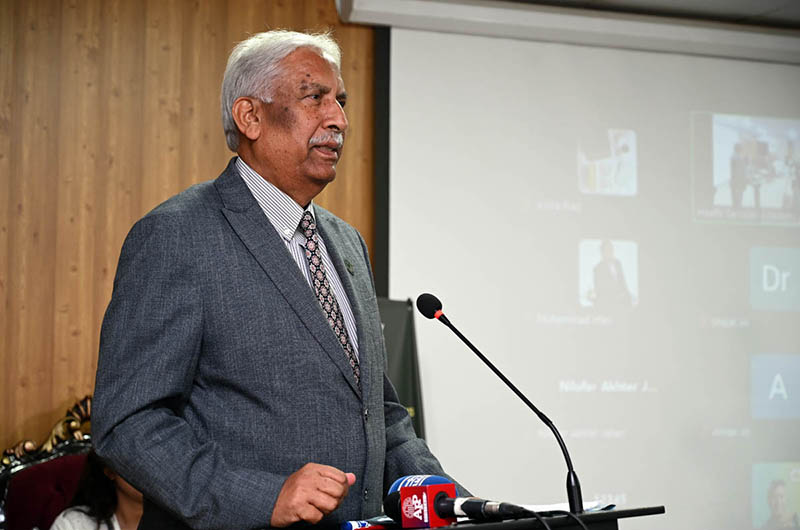

ISLAMABAD, Mar 05 (APP):Parliamentary Secretary for National Health Services, Regulations and Coordination Nelson Azeem Thursday informed the House that the government is taking the issue of hepatitis very seriously and has initiated several measures to control the disease across the country.
Replying to a Calling Attention Notice in National Assembly, he said the virus particularly affects individuals who are already suffering from Hepatitis B, adding that people between the ages of 18 and 40 are more vulnerable.
Nelson Azeem expressed hope that with sustained efforts and coordinated measures, Pakistan will be able to eliminate Hepatitis B and C by 2030.
He said that the government has engaged with international agencies and donors to develop a coordinated strategy to combat the disease.
Nelson Azeem said efforts are underway to develop vaccines and injections against the virus, with trials currently in progress.
He said that the government has also launched a birth-dose vaccination program for Hepatitis B so that children can develop immunity against the disease from an early age.
Nelson Azeem said that awareness campaigns are being conducted nationwide. Vaccination is being provided to girls aged 9 to 14, while awareness lectures are being delivered in schools and information is being disseminated through the media. Basic Health Units (BHUs) and rural health centers are also playing a role in educating the public and encouraging vaccination.
He said the government is strengthening the blood transfusion monitoring system to prevent infected blood from being used.
Nelson Azeem said the private clinics are also being monitored to ensure the safe use of syringes and other medical equipment. Dental clinics, which can also pose a risk of infection, are being brought under stricter regulatory oversight.
He emphasized that hepatitis generally spreads through infected blood transfusions, unsafe syringes and the use of contaminated razors or medical instruments, and clarified that it does not spread through water.