ISLAMABAD, Apr 07 (APP):Finance Minister Senator Muhammad Aurangzeb on Tuesday said that the government is managing the economic crisis responsibly, ensuring that subsidies reach those most in need while continuing structural reforms and planning for energy security and macroeconomic stability. Speaking in the National Assembly, he said, “The government is pursuing a holistic strategy that balances fiscal responsibility, subsidy management, energy security, and structural reforms, ensuring Pakistan’s macroeconomic stability in …
Govt tackling economic challenges responsibly, focuses on reforms, energy security: Finance Minister
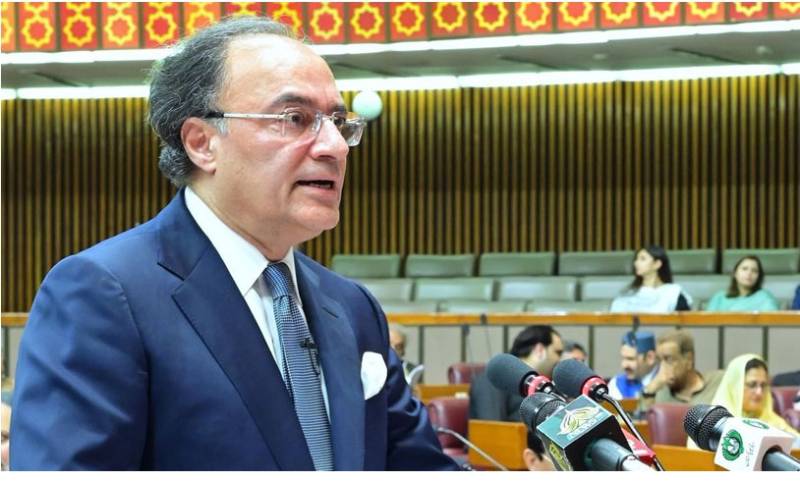
ISLAMABAD, Apr 07 (APP):Finance Minister Senator Muhammad Aurangzeb on Tuesday said that the government is managing the economic crisis responsibly, ensuring that subsidies reach those most in need while continuing structural reforms and planning for energy security and macroeconomic stability.
Speaking in the National Assembly, he said, “The government is pursuing a holistic strategy that balances fiscal responsibility, subsidy management, energy security, and structural reforms, ensuring Pakistan’s macroeconomic stability in challenging times.”
Senator Aurangzeb said that from March 14 to April 4, fuel price transmission was temporarily halted, and a blanket subsidy was provided to prevent further increases.
“The total subsidy amounts to Rs 129–130 billion. This was not left to mere discretion or speculation—it was carefully funded and monitored by the Finance Division,” he added.
He explained that austerity measures were enforced systematically, with around 60% of government vehicles grounded and other controls applied under ministerial oversight. A third-party audit of the subsidy is currently underway to ensure transparency.
Addressing claims that certain sectors were neglected, the minister said, “Targeted subsidies were announced for deserving groups, including two-wheelers, trucks, large vehicles, mini-vans, and public transport buses. Small farmers and provincial mechanisms were also considered, with Punjab having 850,000 beneficiaries and Sindh using the Card system.”
He added that the government coordinated closely with relevant ministries, the State Bank, and banking officials to ensure proper distribution.
“Subsidy disbursements are already underway, and every measure has been reinforced to protect the public interest,” the finance minister concluded.
Aurangzeb also provided an update on Pakistan’s fuel subsidy program and its alignment with regional trends, emphasising that all deserving groups will begin receiving benefits soon.
He said the Ministry of Petroleum has been coordinating daily to monitor fuel policies across South and Southeast Asia, including the UAE, Bangladesh, Sri Lanka, India, the Philippines, and Cambodia.
“For instance, in the UAE, petrol prices have increased by 30% and diesel by 70%. Many countries have already started rationing. We are observing these developments closely to ensure our subsidy policy remains effective,” he added.
The minister stressed that Pakistan is implementing a carefully planned strategy, with continuous monitoring of the macroeconomic impact. “We are tracking increases in oil and gas bills, insurance and freight costs, and implications for exports, particularly to GCC countries. Remittances remain stable so far, which is encouraging,” he added.
Aurangzeb underscored that the government is committed to transparency and efficiency, coordinating closely with key officials. “Our strategy is guided by both short-term realities and long-term planning to protect the economy and support the public,” he said.
He provided detailed insights into Pakistan’s fiscal and subsidy strategy, emphasizing careful planning amid domestic and international economic pressures.
The government is monitoring the impact of subsidies on inflation, the balance of payments, and the current account, particularly concerning GCC countries. “We are closely tracking external financing needs, including the upcoming Eurobond repayment this week, alongside other obligations,” he noted.
The finance minister stressed that austerity measures and cost-cutting proposals are being implemented without compromising public welfare.
He highlighted structural reforms, including the privatisation of 26 state-owned enterprises, such as PIA and the Women’s Bank. “Some entities that were unviable, like certain PWD operations, were closed to eliminate corruption and mismanagement, ensuring subsidies reach their intended purpose,” he added.
On energy, Aurangzeb said daily monitoring is being conducted for petroleum, diesel, aviation fuel, LPG, and crude oil, along with the assessment of strategic reserves in other countries.
He emphasised lessons learned from international markets, particularly China. Regarding renewable energy, he said Pakistan currently has around 8,000 megawatts of solar capacity, and the Prime Minister has formed a committee to plan the energy transition over the next 8–10 years to reduce fossil fuel dependency.
The minister stressed the importance of building strategic reserves alongside commercial stocks to better manage future energy shocks, adding that daily monitoring mechanisms had been implemented in coordination with the Petroleum Division.
He also noted that remittances, particularly from Gulf Cooperation Council (GCC) countries, are being closely monitored given their importance for external stability, adding that no decrease has been observed to date.
“With unity and informed decision-making, Pakistan can navigate these external shocks and continue its journey towards economic stability and sustainable growth,” he added.