
ISLAMABAD, Jun 17 (APP):Federal Minister for National Food Security and Research Rana Tanveer Hussain on Wednesday said the government was implementing wide-ranging reforms to modernise Pakistan’s agriculture sector through mechanisation, seed regulation, research, farmer support programmes, and value-added exports. While participating in the general discussion on the Budget 2026–27, the minister said mechanisation remained a fundamental requirement for increasing agricultural productivity and transforming the sector. He said the government was …
Govt. pursuing wide-ranging reforms to modernise agriculture sector: Rana Tanveer Hussain
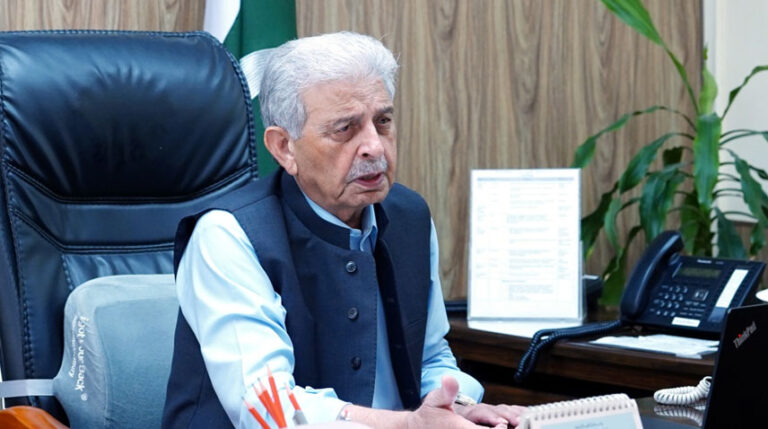
ISLAMABAD, Jun 17 (APP):Federal Minister for National Food Security and Research Rana Tanveer Hussain on Wednesday said the government was implementing wide-ranging reforms to modernise Pakistan’s agriculture sector through mechanisation, seed regulation, research, farmer support programmes, and value-added exports.
While participating in the general discussion on the Budget 2026–27, the minister said mechanisation remained a fundamental requirement for increasing agricultural productivity and transforming the sector.
He said the government was focusing on technology transfer and modern farming practices to improve output.
He said that when the current government assumed office in 2024, there were around 1,100 registered seed companies in the country, of which over 400 were found to be involved in irregularities. Their licences were subsequently cancelled to ensure the supply of quality certified seeds to farmers.
To strengthen oversight, he said the government had established the National Seed Regulatory Authority (NSRA), an independent body with a board of governors tasked with regulating the seed sector and ensuring that only certified seeds reached farmers, thereby protecting agricultural production.
The minister said the government was also prioritising agricultural research and working to transform the Pakistan Agricultural Research Council (PARC). In this regard, collaboration had been initiated with the Chinese Academy of Agricultural Sciences, whose experts had visited Pakistan and submitted recommendations on restructuring PARC.
He added that Chinese technical experts would also be stationed in Pakistan to help develop climate-resilient seed varieties over the next one to two years.
Referring to the impact of climate change on agriculture, the minister said Pakistan’s farming sector was among the most affected.
He added that changing weather patterns had adversely impacted crop production and that farmers themselves were witnessing these effects.
The government, he said, was providing advisory services to help farmers adjust crop cycles and minimise climate-related losses.
The minister said a new programme titled the “Zarkhez-e Scheme” had been launched to provide collateral-free loans to small farmers owning less than 25 acres of land.
Under the scheme, tenant farmers and sharecroppers who often lack land ownership documents would also be able to access financing through personal guarantees.
He said the government had directed the State Bank of Pakistan to ensure that agricultural lending reached small farmers rather than being concentrated among large agribusinesses and industries.
Rana Tanveer Hussain said the government had sent 1,000 agricultural graduates to China for practical training programmes of three to six months in various disciplines.
Following Prime Minister Shehbaz Sharif’s visit to China, another batch of 1,000 students was announced under an arrangement with China’s apex agricultural institutions.
The minister said the government had recently approved three major long-pending policies, including the National Seed Policy and the Biotechnology Policy, both introduced after a gap of nearly 40 years.
Highlighting the olive sector, he described it as an area with immense potential. He added that Pakistani olive oil producers had won three silver medals for quality and said the country had exported olive oil worth around $80 million despite substantial domestic consumption.
The minister said the government plans to increase olive oil exports to $1 billion within two years with adequate support measures.
He recalled that during a visit to Spain, officials informed him that the country earned around $11 billion annually from olive oil exports, while Pakistan’s entire agricultural export sector generated roughly the same amount, including around $4 billion from rice exports.
He stressed the need for value addition in agriculture, saying Pakistan could significantly increase export earnings by processing agricultural products rather than exporting them in raw form.
The minister also outlined a newly launched District Development Programme targeting the country’s 10 most underdeveloped districts.
Under the initiative, farmers owning up to five acres of land would receive direct financial support, livestock assistance, and production incentives, including Rs15,000 per acre.
The programme aims to help small farmers access quality inputs, improve productivity, and adopt modern farming practices.
He further highlighted a Farmers Producer Organisation scheme under which small farmers would be encouraged to form cooperatives covering up to 100 acres collectively. Registered groups would receive support including machinery, harvesters, and other agricultural equipment.
He said nearly 95 per cent of Pakistan’s farmers were small landholders who could not independently afford mechanisation, improved seeds, and modern inputs. Cooperative farming, he said, would help them benefit from economies of scale and raise productivity levels.
Rana Tanveer Hussain said foreign investors from China and Saudi Arabia had also expressed interest in contract farming and agricultural investment projects in Pakistan.
Turning to provincial initiatives, he praised Punjab’s interest-free Kissan Card programme, under which nearly 800,000 small farmers had been registered.
The provincial government had allocated additional funds and was also providing support for tractors, solar-powered tube wells, and agricultural mechanisation through transparent balloting procedures.
He said Punjab had also transferred substantial resources for solarisation programmes and other farmer-support initiatives aimed at reducing production costs and improving agricultural efficiency.
Turning to agriculture, Rana Tanveer Hussain reiterated that the sector remained the backbone of Pakistan’s economy but acknowledged that farmers had been facing difficulties for a considerable period.
He said Prime Minister Shehbaz Sharif regarded agriculture as a priority sector capable of delivering economic gains within a relatively short period. The government, he added, was focusing on improving farmers’ profitability and increasing productivity through targeted interventions.
The minister highlighted Pakistan’s growing collaboration with China in agricultural research and development, saying Chinese expertise was being utilised to improve farming techniques, enhance research capacity, and introduce modern technologies in the sector.
He said that agriculture was primarily a provincial subject following devolution, limiting the federal government’s direct role. Nevertheless, the federal government was continuing to support the sector through coordination, policy guidance, and development initiatives.
He further stated that no new taxes had been imposed on agricultural products in the current budget. Despite disruptions in global fertiliser supply chains caused by regional conflicts, he said the government had maintained a stable supply of urea and prevented price increases since assuming office in 2024.
He added that while fertiliser prices had risen significantly in neighbouring countries, Pakistan had ensured uninterrupted availability, protecting farmers from additional financial burden.
The government has also introduced a 60 per cent subsidy on farm machinery and implements, including harvesters, while tractors have been placed under a separate scheme. The subsidy also covers a range of agricultural equipment under the broader mechanisation programme.
Farmers are being encouraged to move away from traditional practices and adopt modern agricultural techniques to improve efficiency and productivity. Under the programme, thousands of super seeders are being distributed, with around 5,000 units provided free of cost in Punjab.
In Sindh, the provincial government has allocated around Rs52 billion for agriculture-related initiatives, including support measures in which fertiliser costs have been fully or significantly reduced for farmers cultivating up to 20–25 acres.
In Khyber Pakhtunkhwa, approximately Rs26 billion have been allocated for agriculture sector development. The province has also introduced initiatives aimed at providing financial support and soft loans to farmers, particularly small landholders, to improve access to credit without heavy interest burdens.
Similarly, Balochistan has launched multiple agriculture support and market development programmes, including initiatives focused on storage facilities, processing, and value addition. These measures are intended to strengthen agricultural markets and improve farmers’ incomes, with provincial contributions estimated in the range of several billion rupees.
Across provinces, various livestock support programmes have also been introduced, including financial assistance schemes for registered farmers and initiatives to improve livestock productivity. In Punjab, small farmers are being provided livestock support, including cattle distribution schemes aimed at promoting small-scale dairy farming and income generation.
The minister said these combined federal and provincial initiatives were aimed at boosting agricultural output, promoting mechanisation, and supporting small farmers through targeted subsidies and credit facilities.
Rana Tanveer Hussain described the federal budget as one of the best presented under the current economic circumstances, saying it had received widespread appreciation from stakeholders across various sectors.
The minister said the budget had drawn positive feedback from the business community, civil society, and other segments of society.
He maintained that, despite Pakistan’s commitments under the International Monetary Fund (IMF) programme and limited fiscal space, the government had avoided imposing major new taxes while providing incentives to exporters and various industries.
He said the government had reduced taxes and duties worth trillions and planned to offset the resulting revenue shortfall through improved tax compliance and stronger enforcement mechanisms.
He highlighted ongoing reforms within the Federal Board of Revenue (FBR), particularly the introduction of a faceless tax assessment system expected to become operational in October.
Under the new mechanism, tax returns and declarations would be processed through a centralised digital system, reducing direct interaction between taxpayers.
The minister said different stages of assessment, review, and decision-making would be handled separately, ensuring transparency and minimising opportunities for corruption.
He added that taxpayers would not know which officer was handling their case, while officials would also have limited information about individual taxpayers, making the process more impartial.
He also defended the government’s handling of economic challenges arising from regional tensions, particularly the conflict involving Iran, Israel, and the United States.
According to the minister, Pakistan successfully managed the situation without disruptions in fuel supplies or law and order.
He said the government ensured uninterrupted availability of petroleum products despite pressures faced by several countries in the region. Unlike some neighbouring states, he added, Pakistan did not experience shortages, panic buying, or major disturbances at fuel stations.
Rana Tanveer Hussain also referred to Pakistan’s recent diplomatic achievements, calling for national unity and political stability, saying the country had emerged stronger on the international stage following recent regional developments.
He said Pakistan had played an active role in mediation efforts and praised the unity demonstrated by political parties and the nation during recent challenges.
He credited Prime Minister Shehbaz Sharif and Field Marshal Syed Asim Munir for their commitment and efforts in advancing Pakistan’s diplomatic objectives.
He said the military leadership had worked tirelessly during negotiations, maintaining continuous engagement with relevant stakeholders to help achieve a ceasefire and finalise agreements.
He added that the success reflected the leadership’s determination and commitment to strengthening Pakistan’s international position.
According to the minister, Pakistan’s diplomatic success following the conflict had strengthened its global profile.
He said Pakistan was increasingly being recognised as an important player in regional and international affairs.
Rana Tanveer Hussain urged all political parties to build on the spirit of unity displayed during national challenges.
He said Pakistan needed political stability to effectively address economic challenges, just as it had successfully navigated diplomatic and security issues.
The minister said constructive dialogue remained the best way forward and reiterated the government’s willingness to engage with political stakeholders in the interest of national stability and progress.

