ISLAMABAD, Jan 21 (APP):Federal Minister for National Food Security and Research Rana Tanveer Hussain told the National Assembly on Wednesday that the government allowed sugar exports last year to protect farmers and the sugar industry from losses caused by surplus production, and later permitted limited imports to stabilise prices for consumers. Replying to questions in the House, the minister said climate-related factors later affected production estimates. Initial projections of around …
Govt balanced sugar trade to protect farmers, consumers: Rana Tanveer
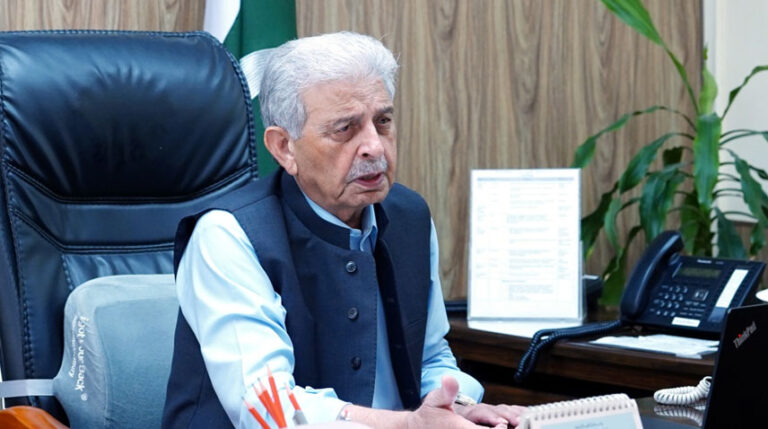
ISLAMABAD, Jan 21 (APP):Federal Minister for National Food Security and Research Rana Tanveer Hussain told the National Assembly on Wednesday that the government allowed sugar exports last year to protect farmers and the sugar industry from losses caused by surplus production, and later permitted limited imports to stabilise prices for consumers.
Replying to questions in the House, the minister said climate-related factors later affected production estimates.
Initial projections of around seven million tonnes were revised downward, with actual production standing at about 6.8 million tonnes.
After accounting for domestic consumption and reserve requirements, the shortfall made limited imports necessary to stabilise the market.
He acknowledged that sugar prices rose due to market manipulation by manufacturers and producers, but said timely government intervention prevented prices from reaching the feared level of Rs250 per kg. Instead, he said, prices were largely contained at around Rs200 per kg, even in remote areas of Balochistan.
The minister said current estimates suggested sugar production this year could range between 6.8 and seven million tonnes, which would help stabilise prices.
He clarified that price regulation did not fall under the federal government, while the Sugar Advisory Board only assessed production levels and recommended export or import decisions.
Referring to health concerns, Rana Tanveer Hussain said nearly 40pc of the population was affected by diabetes or related conditions due to excessive sugar consumption, and urged greater public awareness.
He noted that many countries imposed sugar taxes to discourage consumption.
He said a high-level committee on deregulation, formed by Prime Minister Shehbaz Sharif under the leadership of Sardar Awais Leghari, had submitted its report after consultations with stakeholders, including provincial governments, producers, and farmers. Once approved, the government would move towards end-to-end deregulation.
Responding to a supplementary question, the minister said the government remained committed to maintaining a balance that ensured fair returns for farmers while keeping prices affordable for consumers.
He said he had personally ensured that sugar mills cleared growers’ dues and that no farmer was left unpaid.
Acknowledging the lack of credible and consolidated crop data, Rana Tanveer Hussain said the government was working to develop reliable data systems by integrating information from federal and provincial sources to improve future planning.
He reiterated that limited sugar imports were allowed in small tranches solely to protect consumers from excessive price increases.
The government, he said, had approved the import of about 300,000 tonnes of sugar, procured through open tenders by the Trading Corporation of Pakistan from international markets, including Thailand and Brazil.
He said the tendering process was conducted transparently in line with international standards, with live video coverage and participation by international firms.
Specifications and quality standards were clearly defined to ensure the imported sugar met required benchmarks.
He added that tax and sales tax exemptions were granted on imported sugar to keep prices low.
The minister said the government had also stabilised the fertiliser supply chain over the past two years, ensuring there were no shortages and that prices remained below market levels due to effective supply management.
Turning to other crops, Rana Tanveer Hussain said potato and maize prices had come under pressure due to a sharp decline in international export rates despite strong domestic yields, which had reduced exports and pushed down local prices.
On wheat, he said inter-provincial transportation issues were being monitored in coordination with provincial governments, adding that the Pakistan Agricultural Storage and Services Corporation had sufficient stocks and provinces could lift supplies according to their requirements.
He said the National Wheat Policy had been approved by the federal cabinet with the consensus of all four chief ministers and would end future restrictions on inter-provincial movement of wheat.