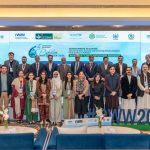
PESHAWAR, Nov 15 (APP):Governor Khyber Pakhtunkhwa Faisal Karim Kundi on Sunday chaired a special briefing at the Governor House on the province's health sector, where Adviser to the Governor on Health Lt Gen (R) Nigar Johar presented a comprehensive overview of the existing healthcare system, key challenges and the government's short and medium-term reform agenda aimed at improving public health services. The briefing was attended by provincial advisers, senior civil …
Governor reviews health sector reforms, stresses improved healthcare delivery in KP

PESHAWAR, Nov 15 (APP):Governor Khyber Pakhtunkhwa Faisal Karim Kundi on Sunday chaired a special briefing at the Governor House on the province’s health sector, where Adviser to the Governor on Health Lt Gen (R) Nigar Johar presented a comprehensive overview of the existing healthcare system, key challenges and the government’s short and medium-term reform agenda aimed at improving public health services.
The briefing was attended by provincial advisers, senior civil officers and representatives of the media. Lt Gen (R) Nigar Johar informed the participants about the current state of public hospitals and healthcare centres, shortage of medical staff, maternal and child health indicators, immunisation coverage and ongoing and proposed reforms in the health sector.
According to the briefing, Khyber Pakhtunkhwa has an estimated population of 31.89 million, with 81 per cent living in rural areas and 19 per cent in urban centres. The provincial health department has a workforce of 30,697 healthcare personnel, including 8,024 doctors, 3,970 nurses, 8,252 paramedics and 10,451 Lady Health Workers.
The province has 18,432 hospital beds in the public sector, while the World Health Organization recommends 18 beds per 10,000 population. The briefing noted that additional investment is required to increase hospital capacity, healthcare facilities and human resources in line with population growth.
Participants were informed that the neonatal mortality rate stands at 42 per 1,000 live births, the infant mortality rate at 53 per 1,000, while the maternal mortality ratio is 165 per 100,000 live births. Under-five mortality is 64 per 1,000 live births, while child stunting has reached 40 per cent. Immunisation coverage currently stands at 68 per cent, with a target to increase it to 78 per cent.
The briefing highlighted that 71 Basic Health Units in the merged and newly notified districts remain non-functional due to difficult terrain, long travel distances and security concerns. Other major challenges include shortages of medicines, medical equipment, hospital beds and healthcare workers, staff absenteeism, weak record management, ineffective utilisation of resources and poor integration of digital health systems. Violations of merit, nepotism, unnecessary strikes and administrative inefficiencies were also identified as factors affecting service delivery.
Under the 100-day reform plan, the government aims to ensure the availability of doctors at Basic Health Units, fill vacant posts, rationalise staff deployment, introduce digital registration, smart attendance and an effective accountability mechanism. The plan also includes establishment of five mobile drug screening laboratories to strengthen medicine quality monitoring and improve vaccine coverage through enhanced security, community surveillance, outreach services, vaccinator training and improved cold chain systems.
The participants were also briefed on the phased operationalisation of the Khyber Institute of Child Health (KICH). The first phase will provide outpatient and diagnostic services, the second phase will operationalise a 300-bed inpatient facility with PICU and NICU services, while the third phase will establish 18 specialised departments along with transplant facilities.
The 180-day reform agenda includes strengthening the Lady Health Workers Programme, improving maternal and child healthcare, nutrition, family planning, digital reporting, staff training and provision of essential equipment. It also envisages upgrading 250 primary healthcare facilities, including 200 BHUs and 50 Rural Health Centres, to provide round-the-clock services throughout the week.
The plan further includes renovation of 115 health facilities, installation of solar power systems at 124 centres, provision of modern diagnostic, surgical, laboratory and IT equipment, establishment of a central Health Information and Service Delivery Unit (HISDU) data hub and introduction of integrated digital systems, including EMR, DHIS, BAS, HRMIS, DCC and CMS, in 200 health facilities.
The briefing also outlined scholarship programmes for undergraduate and postgraduate nursing education, while under the Prime Minister’s special initiatives, Rs1.462 billion worth of medical equipment will be provided for Khyber Institute of Child Health. Another Rs4.933 billion has been allocated for expansion of cardiac care facilities, while Rs850 million has been earmarked for establishing breast cancer screening centres in Peshawar, Mardan, Hazara, Kohat and Bannu.
A question-and-answer session followed the briefing, during which Health Adviser Lt Gen (R) Nigar Johar, Assistant Chief Secretary Yahya Akhunzada and Health Secretary Matiullah Khan responded to queries from media representatives regarding the province’s health sector reforms and future plans.