ISLAMABAD, Sep 09 (APP):Federal Minister for Finance and Revenue, Senator Muhammad Aurangzeb, chaired the fourth meeting of the Access to Finance Steering Committee at the Finance Division on Wednesday, reviewing progress on initiatives aimed at expanding affordable and inclusive finance across priority sectors, including SMEs, agriculture, information technology (IT), exports, renewable energy and housing. The Finance Minister emphasized the importance of keeping the Steering Committee’s deliberations focused, outcome-oriented and increasingly …
Finance minister,reviews progress across priority sectors
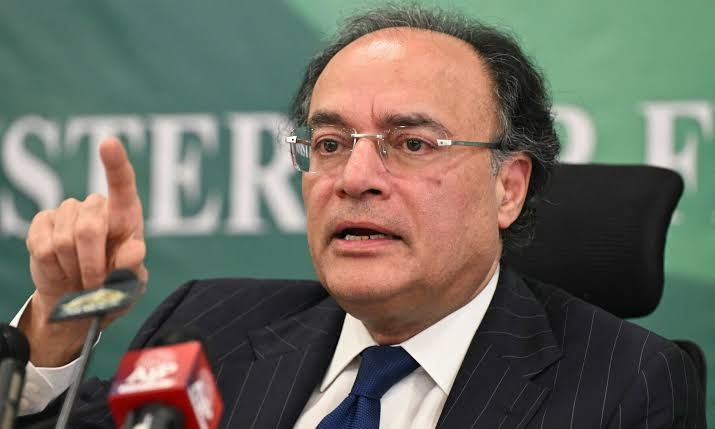
ISLAMABAD, Sep 09 (APP):Federal Minister for Finance and Revenue, Senator Muhammad Aurangzeb, chaired the fourth meeting of the Access to Finance Steering Committee at the Finance Division on Wednesday, reviewing progress on initiatives aimed at expanding affordable and inclusive finance across priority sectors, including SMEs, agriculture, information technology (IT), exports, renewable energy and housing.
The Finance Minister emphasized the importance of keeping the Steering Committee’s deliberations focused, outcome-oriented and increasingly centered on implementation.
He directed that significant proposals should first be considered through the relevant sub-committees before being brought to the Steering Committee for consolidated and well nuanced review, said a release issued here on Wednesday.
The Committee reviewed the latest position of SME financing.
The Steering Committee was informed that by the end of August 2026, SME finance stood at PKR 1.067 trillion, serving 323,987 borrowers and accounting for 9.90 percent of domestic private advances.
The medium-term aspiration is to expand SME financing to PKR 2 trillion and the number of borrowers to 775,000 by June 2028, raising its share to 13 percent.
The Finance Minister emphasized the importance of maintaining momentum towards these targets and called for a clear bank-wise plan to strengthen SME credit growth over the coming months.
He also welcomed progress on the wholesale SME financing framework, which is expected to help broaden outreach and expand the number of businesses able to access formal financing.
The Committee also reviewed agriculture finance, which reached PKR 1.268 trillion by the end of August 2026, covering 3,392,092 borrowers and representing 10.90 percent of domestic private advances.
The medium-term target is to increase agriculture finance to PKR 2 trillion and expand the borrower base to 5.5 million by June 2028.
The Committee was briefed on progress under Zarkhez-e-Asaan Zarai Qarza, designed to provide uncollateralised financing to smallholder farmers, including tenant farmers, across the country.
A total of 58,919 farmers had registered under the programme, with 35,838 applications received.
Of these, 16,964 loans amounting to Rs 7.349 billion had been approved, while 5,174 loans amounting to Rs 1.956 billion had been disbursed.
The Finance Minister emphasized the need to continue expanding outreach while ensuring that approvals translate efficiently into actual financing for farmers.
On housing finance, the Committee noted significant momentum under the Wazir-e-Azam Apna Ghar Programme – Ghar Ho To Apna, which provides affordable housing finance for tenors of up to 20 years, with a fixed 5 percent rate for the first 10 years. By September 4, 2026, approved housing finance under the programme had reached Rs 351.3 billion, increasing by PKR 38.3 billion since end-August, a significant 12 percent increase in less than one week. A total of 156,813 applications had been received, of which 60,349 loans valued at Rs. 351.3 billion had been approved, while 9,717 loans amounting to Rs 51.13 billion had already been disbursed.
The Finance Minister emphasized the importance of sustaining this momentum by accelerating the conversion of approved cases into actual disbursements and advancing, through the housing finance sub-committee, practical measures to make affordable mortgage financing simpler and more accessible.
The meeting also reviewed progress under the Pakistan Accelerated Vehicle Electrification (PAVE) Programme. With 17 participating banks, the programme had recorded 17,118 approved applications involving PKR 2.581 billion, while 4,228 loans amounting to Rs 804 million had been disbursed. A total of 1,860 electric bikes had so far been delivered.
The Finance Minister emphasized that the focus must now be on accelerating delivery of electric bikes to beneficiaries whose financing has already been approved and disbursed, so that financial approvals translate more quickly into tangible outcomes on the ground.
Chief Executive Officer, SMEDA, briefed the Committee on initiatives being undertaken across three key workstreams: the Financial Literacy Programme, SME Financing Help Desks, and Over-the-Counter Documents and Tools.
The Committee was informed that 560 financial literacy training programmes are planned across Pakistan, of which around 100 have already been conducted.
The Finance Minister appreciated the progress and emphasized the importance of assessing outcomes and incorporating feedback to continuously improve the effectiveness of these programmes.
The Committee was also briefed on the SME Financing Help Desk initiative being implemented with partner banks, with five help desks conducted during the last month. The discussion covered digital tools, partnerships and communication channels to improve SME awareness and access to finance.
The Finance Minister encouraged SMEDA to work closely with participating banks and leverage existing platforms and partnerships to scale up these initiatives, particularly to strengthen SME capacity, financial preparedness and ease of access to formal financing.
Senator Muhammad Aurangzeb emphasized that expanding access to finance requires coordinated action across the financial ecosystem, alongside measures to improve the capacity and bankability of SMEs and other underserved segments.
He highlighted the importance of practical support in areas such as financial management, documentation and cash-flow visibility to enable businesses to engage more effectively with formal financial institutions.
The Finance Minister noted that greater access to finance was an important enabler of the Government’s broader objective of moving towards private-sector-led and sustainable economic growth.
He emphasized that the focus should increasingly be on translating financing frameworks and approvals into actual credit, investment and economic activity, while progressively broadening access to businesses and individuals that have traditionally remained underserved by formal finance.
Senator Muhammad Aurangzeb underscored that the access to finance framework should remain anchored in measurable progress, effective coordination and timely implementation.
He directed that the relevant sub-committees continue to advance their respective workstreams and bring key recommendations and implementation issues to the Steering Committee for timely consideration, supporting continued progress towards the objectives of the Prime Minister’s Access to Finance Plan.
The meeting was attended by Federal Secretary Finance; Federal Secretary Housing and Works; Governor, State Bank of Pakistan (SBP); Chairman, Securities and Exchange Commission of Pakistan (SECP); Chief Executive Officer, Karandaaz Pakistan; CEO, Small and Medium Enterprises Development Authority; along with senior representatives of the Finance Division, the SBP and the SECP.