

- Advertisement -
ISLAMABAD, Dec 11 (APP):A high-level seminar marking Human Rights Day sounded the alarm over the worsening human rights situation in India, particularly in Indian Illegally Occupied Jammu & Kashmir (IIOJK).
The event, organised by the Institute of Regional Studies (IRS) in collaboration with the Kashmir Youth Forum, brought together diplomats, scholars, human rights advocates, and policy experts to examine the escalating human rights crisis in India and particularly in IIOJK.
The session highlighted the urgent need for international accountability, protection of minorities, and the preservation of Kashmir’s cultural and political identity, said a press release issued here on Thursday.
Ambassador Jauhar Saleem emphasized that India’s ruling party has institutionalized exclusion through a Hindu nationalist framework that sidelines Muslims and other marginalized groups. He emphasized that no Muslim parliamentarian exists within India’s ruling party and that Muslims remain largely absent from key state institutions. He further highlighted increasing repression in IIOJK, including mass detentions, communication blackouts, forced demographic changes, and the weaponization of draconian laws such as UAPA, PSA, and AFSPA.
Renowned journalist Farrukh K. Pitafi reprimanded India’s self-projection as a secular democracy, describing it as a state where caste, class, and religious hierarchies continue to shape political and social structures. He noted India’s evolution into an ‘upper caste dominant state’ where Hindu Muslim polarization is deliberately constructed to obscure deep systemic inequalities, including the marginalization of Dalits and Adivasis. He called for a long-term intellectual and research-driven approach in Pakistan to preserve and project Kashmir’s identity on the global stage.
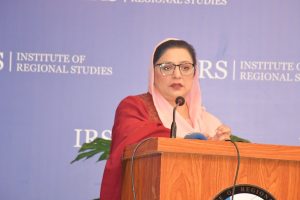
Former Member of the National Assembly, Dr Shazia Sobia Aslam Soomro, reaffirmed Pakistan’s commitment to raise its voice for oppressed communities across India. She stressed that despite constitutional guarantees, minorities, particularly Muslims and Christians, experience systemic persecution and structural barriers that silence their grievances. She emphasized Pakistan’s moral and diplomatic responsibility to advocate for Kashmiris at all international platforms.
Human rights activist Shamim Shawl provided detailed accounts of coercive tactics used against Kashmiris, including punitive demolitions, forced disappearances, suppression of dissent and the banning of critical literature. She voiced concern over the plight of Kashmiri women detainees in Tihar Jail and warned of ongoing attempts to erase Kashmiri identity through demographic engineering and targeted violence. She called on Pakistan to continue highlighting these violations at regional and global platforms.