Experts stress proactive, thematic media campaign to amplify global advocacy for Kashmir cause
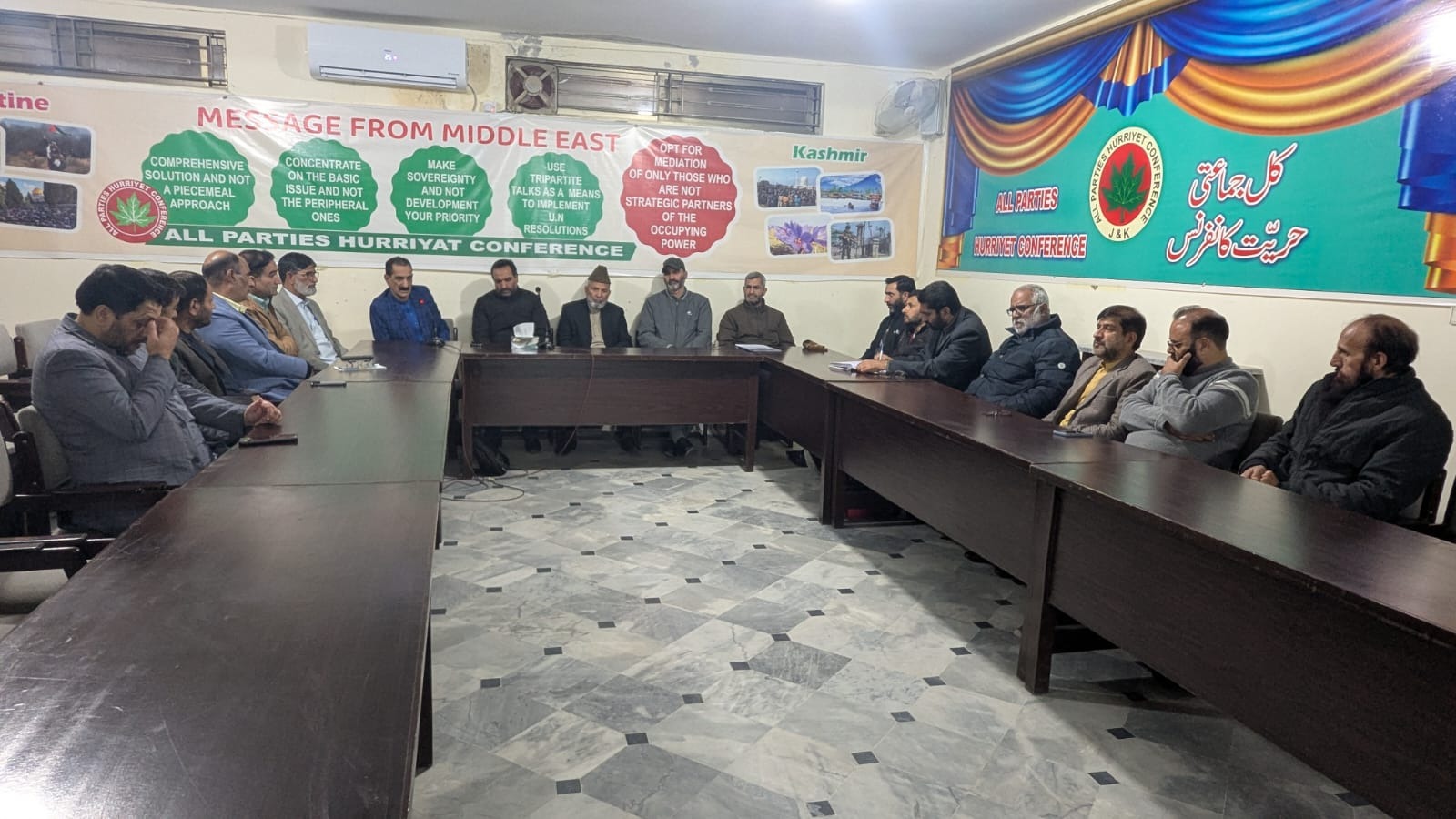
ISLAMABAD, Dec 2 (APP): Media and Kashmir affairs experts on Tuesday emphasized the need for replacing reactive communication with a proactive, thematic, and strategically coordinated media campaign to effectively highlight the Kashmir cause at both national and international levels.
They stressed the development of strong narrative themes, structured editorial and activity calendars, and harmonized outreach efforts to ensure sustained global attention on the human rights situation in Indian Illegally Occupied Jammu and Kashmir (IIOJK).
This emphasis came during a visit of a high-level delegation of the United Kashmir Journalists Association (UKJA), led by its President Dr Muhammad Ashraf Wani, to the office of the All Parties Hurriyat Conference (APHC) here.
The discussions centered on strengthening communication frameworks and enhancing the overall visibility of the Kashmir issue across media platforms.
APHC Convener Ghulam Muhammad Safi thanked the delegation for its detailed input and described Dr Wani’s briefing as “a guiding light” for future communication strategy.
He reaffirmed that APHC’s mandate was to internationalize the Kashmir freedom movement by foregrounding humanitarian concerns and the political rights of the Kashmiri people rather than serving any organizational considerations.
He reiterated APHC’s principled stance that the Kashmir dispute must be resolved in accordance with the Kashmiris’ right to self-determination and rejected any bilateral or step-by-step arrangement that sidestepped this foundational principle.
APHC General Secretary Advocate Parvaiz Ahmed noted that the forum had consistently highlighted the Kashmir cause with responsibility and clarity.
He underlined the need for stronger APHC-UKJA coordination, stressing that journalists formed a crucial pillar in amplifying the voices of Kashmiris facing repression under occupation.
 During the meeting, the UKJA delegation presented a comprehensive set of recommendations aimed at strengthening APHC’s strategic communication.
They underscored that content creation must remain central, with the most impactful material emerging directly from IIOJK, including issues such as demographic engineering, domicile policies, land-grabbing, and human rights violations.
They advised introducing fresh angles to storytelling and developing six- to twelve-week thematic calendars featuring messages such as “Humanity First” and “Criminalization of the Word Kashmiri,” along with observing international and national days through meaningful, unique messaging.
The delegation emphasized consistent narrative framing that positions APHC as a humanitarian voice advocating the rights and dignity of the Kashmiri people, supported by well-written, concise, targeted, and timely press releases.
They also encouraged APHC’s constituent members to contribute op-eds and analytical pieces to strengthen intellectual engagement on the issue.
The experts further recommended enhancing media engagement through audience mapping, message consolidation, and systematic follow-up of press releases to secure broader coverage.
They highlighted the importance of providing complete media kits including photographs, fact sheets, and one-page briefs, during press conferences, and proposed organizing regular press visits, briefings, seminars, and interactions with journalists and editors.
Strengthening ties with reporters covering the Kashmir beat and facilitating electronic media coverage through one-minute video statements and short 30 to 60-second sound-bites by APHC spokespeople were also advised.
In terms of capacity building, the delegation stressed the need to train APHC spokespeople on camera presence, delivery of crisp 20-second responses, bridging techniques, and maintaining composure when handling challenging or hostile questions. They also called for strengthening internal mechanisms for preparing press releases and official statements.
The meeting also emphasized a robust social media strategy, calling for weekly and monthly editorial calendars aligned with key developments, the creation of content pillars such as human stories, fact sheets, calls to action, rebuttals, and historical timelines, and enhanced collaboration with influencers, diaspora groups, academics, and journalists for message amplification. They recommended establishing WhatsApp broadcast lists and rapid-sharing groups, along with producing short videos, reels, explainers and motion graphics to increase engagement.
A series of monthly thematic digital campaigns using focused hashtags and platform-specific messaging was also proposed to sustain visibility in global digital spaces.
The delegation additionally advised APHC to reinforce its media wing, intensify engagement with national and international media houses, and establish structured follow-up mechanisms for every press interaction to ensure consistent and sustained projection of the Kashmir issue across all communication channels.