
To control accelerating glacial melt across Pakistan’s mountainous regions, the government needs to take immediate measures to strengthen glacier monitoring systems, improve policy implementation and scale up community-based adaptation.
Experts for speedy steps to strengthen glacier monitoring systems, improve policy implementation
ISLAMABAD, Apr 07 (APP): To control accelerating glacial melt across Pakistan’s mountainous regions, the government needs to take immediate measures to strengthen glacier monitoring systems, improve policy implementation and scale up community-based adaptation.
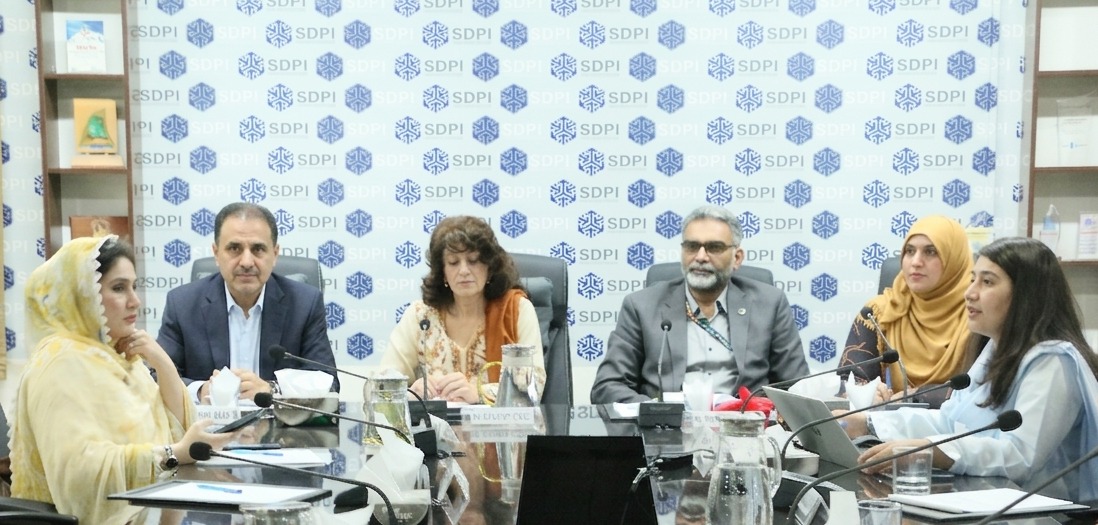
This was the crux of a consultation on ‘Glacier Adaptation Plan for Gilgit-Baltistan’ organized by Sustainable Development Policy Institute (SDPI) here on Tuesday, said a press release.
The participating government officials, researchers, experts and civil society representatives also called upon the government to declare a glacial emergency in northern areas, and promote quality tourism to reduce carbon emissions to contain glacial melt.
Zakir Hussain, the Director-General of Gilgit-Baltistan Disaster Management Authority, said Gilgit-Baltistan faces serious risks from flash floods, glacial lake outburst floods and landslides. Stressing the need for better aligning climate adaptation with disaster risk reduction strategies, he said, the authority has conducted awareness sessions, simulation exercises, media engagement and exposure visits as part of community-based preparedness efforts.
He added that protective retaining walls have been constructed in vulnerable areas to safeguard farmland, livestock and settlements from GLOF impacts, while slope stabilization through plantation initiatives is underway. He said around 180 early warning installations are operational, though only 16 valleys are currently covered across Gilgit-Baltistan’s 72,000 square km. He further identified the absence of a comprehensive socioeconomic framework for addressing climate vulnerability as a key policy gap.
Zainab Naeem, Head of the Ecological Sustainability and Circularity Unit and Associate Research Fellow at SDPI, said extreme climatic events have intensified after 2022, accelerating glacier retreat across Pakistan’s high-mountain regions. Describing the Hindukush–Karakoram–Himalaya (HKH) region as the “Third Pole,” she highlighted its importance as a freshwater source for South Asia.
“Glacier mass reductions could reach between 22 and 44 per cent under low-emission scenarios and up to 57 per cent under high-emission pathways by 2100,” she said, adding that locally driven adaptation strategies already exist within mountain communities but require policy support and resources to scale up. She also highlighted the importance of reducing black carbon emissions from wood-based cooking in remote settlements.
Khadim Hussain, a representative of Gilgit-Baltistan government, emphasized the importance of recognizing indigenous knowledge of glacier-dependent communities as a core component of scientific understanding. He noted that glaciers should be declared protected areas, like Tajikistan, where glacier protection legislation restricts harmful activities in sensitive zones.
Sabih Ud Din, Cryosphere Expert at the National Disaster Management Authority (NDMA), said Pakistan hosts more than 13,000 glaciers covering about 15,000 square km and faces significant exposure to GLOF hazards. He emphasized that Gilgit-Baltistan remains underrepresented in national risk assessments due to data gaps and called for improved institutional data-sharing mechanisms.
Aisha Khan, Executive Director of the Civil Society Coalition for Climate Change (CSCCC), emphasized adopting climate-smart agriculture practices, including soil testing, tunnel farming and greenhouse cultivation, to strengthen food security. Expressing her concerns about tourism-related hydrocarbon emissions in sensitive mountain areas, including regions near K2, she called for reducing carbon footprints associated with expedition tourism and strengthening regional cooperation across the HKH region.
Sher Muhammad, Remote Sensing Specialist at the International Centre for Integrated Mountain Development, said 45 to 62 per cent of glaciers in the Indus Basin are located in the Karakoram region and the basin contains nearly 26,000 square km of glacier area. He reported more than 3,000 glacial lakes in the basin, including over 30 potentially dangerous glacial lakes. He warned that glacier melt rate increased by about 65 per cent between 2010 and 2019.
Muhammad Fawad Hayat, Senior Director (Recharge Pakistan) at World Wide Fund for Nature Pakistan, emphasized the importance of transitioning from conventional infrastructure approaches toward nature-based solutions for sustainable water management.
Dr Davide Fugazza, glacier expert at EvK2CNR, said glacier inventory work confirmed that Pakistan hosts more than 13,000 glaciers and nearly 80 per cent of them are smaller than 0.5 square km. He emphasized that automatic weather stations are critical for improving glacier monitoring and supporting evidence-based planning.
Fahim Ahmed, Technical Specialist at the United Nations Development Programme, in his special remarks, said the key challenge in advancing glacier adaptation planning is mobilizing adequate financial resources. He noted that multiple climate finance channels are available to Pakistan, including the Green Climate Fund and the Global Environment Facility, which can support scalable adaptation initiatives such as green infrastructure, nature-based solutions and early warning systems.
Quratulain Ahmed from Global Change Impact Studies Centre (GCISC) said glacier recession, declining per capita water availability, groundwater depletion and dependence of river flows on glacier systems are major water security challenges for Pakistan. She called for integrated glaciers and snow monitoring systems and updated glacier inventories to support evidence-based policy implementation.
Talha Bhatti from Institute of Regional Studies (IRS) said Pakistan’s glacier belt extends between elevations of 2,500 and 8,000 metres with the most critical melt activity occurring between 4,500 and 5,500 metres. He proposed that Pakistan consider declaring a glacier emergency covering about 4,000 to 5,000 square km of vulnerable glacier zones. He also stressed the need for upstream-to-downstream governance coordination across river basins affected by glacier melt.
Ejaz Karim, Head of Emergency Management at Aga Khan Agency for Habitat (AKAH), said hazard vulnerability maps have been developed in more than 800 villages across Gilgit-Baltistan and community watchers are helping ensure timely evacuation during disasters.