ISLAMABAD, Sep 03 (APP):The experts among regulators, researchers and industry stakeholders on Thursday called for strengthening the foundational systems of power distribution companies (DISCOS) before expanding the Competitive Trading Bilateral Contracts Market (CTBCM). These recommendations came during the Sustainable Development Policy Institute (SDPI)’s Network for Clean Energy Transition (NCET) launch of its Energy Regulatory Sandbox on “Impacts of Competitive Auctions on DISCOs: Managing Consequences of Market Liberalization”, said a press …
ISLAMABAD, Sep 03 (APP):The experts among regulators, researchers and industry stakeholders on Thursday called for strengthening the foundational systems of power distribution companies (DISCOS) before expanding the Competitive Trading Bilateral Contracts Market (CTBCM).
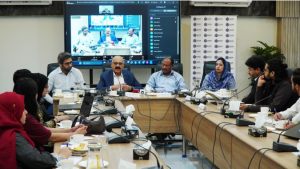
These recommendations came during the Sustainable Development Policy Institute (SDPI)’s Network for Clean Energy Transition (NCET) launch of its Energy Regulatory Sandbox on “Impacts of Competitive Auctions on DISCOs: Managing Consequences of Market Liberalization”, said a press release.
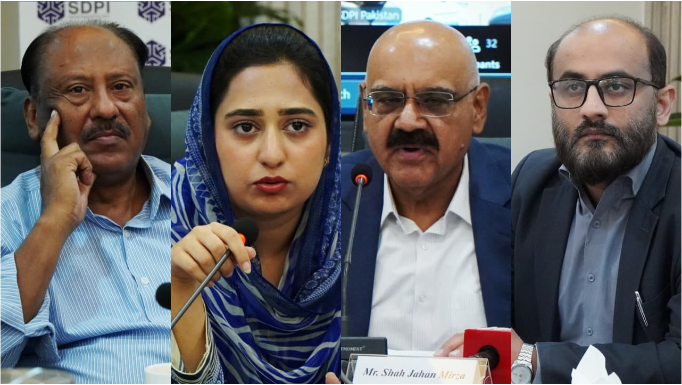
Speaking on the occasion, Shah Jahan Mirza, former Managing Director of Private Power and Infrastructure Board (PPIB), described CTBCM as one of the sector’s most important topics, currently operating within a limited competitive market. He noted that the quantum being auctioned was not large in volume and might therefore have a limited overall impact on the sector. He identified the two pillars of the transition as the privatization of Discos and the establishment of a competitive market under CTBCM, and commended the SDPI sandbox exercise as a valuable effort.
Citing global experience, he said markets opened to competition had generally seen improvements in electricity pricing, quality and quantity. He said the overarching goal should be to reduce the overall system cost, which could be managed through income from wheeling charges and standard cost recovery from migrating consumers, ensuring the rest of the system faced no adverse impact.
He noted that the 200MW quantum would be drawn from the most expensive chunk of power generation, calling for the introduction of a competitive market. He added that already-installed solar systems were part of the system and should not be removed but rather better utilized. He predicted an overall positive impact, describing the initiative as a first step that would take time to mature, and said the 200MW pilot project would not adversely affect the system.
Dr Khalid Waleed, Energy Economist and Research Fellow at SDPI, said solar and Battery Energy Storage System (BESS) adoption had gained significant momentum and had been instrumental in the sector’s transition. He said privatization and liberalization of the market, including privatization of Discos, along with wheeling reforms, should be the way forward for introducing competition. He proposed designating solar and BESS entities as virtual power plants, enabling them to sell electricity generated during the day to industrial consumers through the CTBCM.
He cautioned that privatization alone would not benefit consumers, industry and the masses unless innovation remained central to market liberalization.
Muhammad Ayub, former chief executive officer, KPK Transmission and Grid Company, a system-side technical expert, said that the basic operational infrastructure required for the CTBCM including a functional SCADA system and real-time online data.
The sandbox exercise, presented by SDPI researcher Muhammad Umer, examined the country’s first-ever wheeling auction of 200 megawatts (MW) being launched by the Independent System Market Operator (ISMO) during Phase-I, with net planned of 800MW allocated for upto 5 years. The sandbox’s objectives were to measure the financial impact on Discos, evaluate different market scenarios, assess tariff implications and generate policy recommendations.
On the recommendations emerging from the sandbox, Muhammad Umer proposed establishing a Virtual Power Plant (VPP)-led revenue model for Discos, targeting a defined consumer pool, phasing in auction participation gradually, and creating a CTBCM surplus market mechanism in Scenario-II, with the approximate revenue gain is estimated at Rs. 93 billion.
Muhammad Faisal Sharif, an Energy and Climate Practitioner at the University of Bath, said the CTBCM provided an enabling environment through relevant authorities and institutions, and that the country was finally entering a competitive mode through the privatization of Discos. He said the discussion needed to go beyond Disco revenue concerns to consider how marginalized communities and rural populations would benefit from the transition.
Waqas Haroon Moosa, Chairman, Pakistan Solar Association (PSA), questioned the methodology used to calculate revenue loss, noting that industrial base-rate multiplication did not account for other applicable charges. He suggested that excess electricity supply, particularly during load-shedding in specific areas, could instead be diverted to commercial users, potentially reducing the net revenue loss to Discos.
Amina Shahab, Research Associate, Policy Research Institute for Equitable Development (PRIED), raised concerns about the reliability of electricity supply for industrialists and investors, stressing that uninterrupted power was essential for uninterrupted production. She noted that many industrial consumers already relied on multiple energy sources, including captive solar, wind and thermal generation, often informally, and questioned whether the CTBCM’s initial phases, covering 200MW and beyond, would succeed unless consumer readiness and desperation for reliable supply were properly assessed.
Muhammad Umar Khan, Joint Director (Power and Infrastructure Procurement), PPIB, discussed the treatment of demand assumptions in the sandbox. He said that wherever markets had moved toward liberalization, governments had typically supported the transition through federal funding or subsidies during the shift.
Mashhood Urfi, Energy Transition Officer (ETO) Alternate Development Services (ADS), sought clarification on the weekend-charging assumption used in the sandbox study, and asked which of the two scenarios presented was more economically viable from a purely economic perspective.
The session concluded with a question-and-answer segment among participants.