Government officials, business leaders and experts on Friday called for consistent tariff reforms to improve industrial competitiveness, boost exports and support sustainable economic growth.
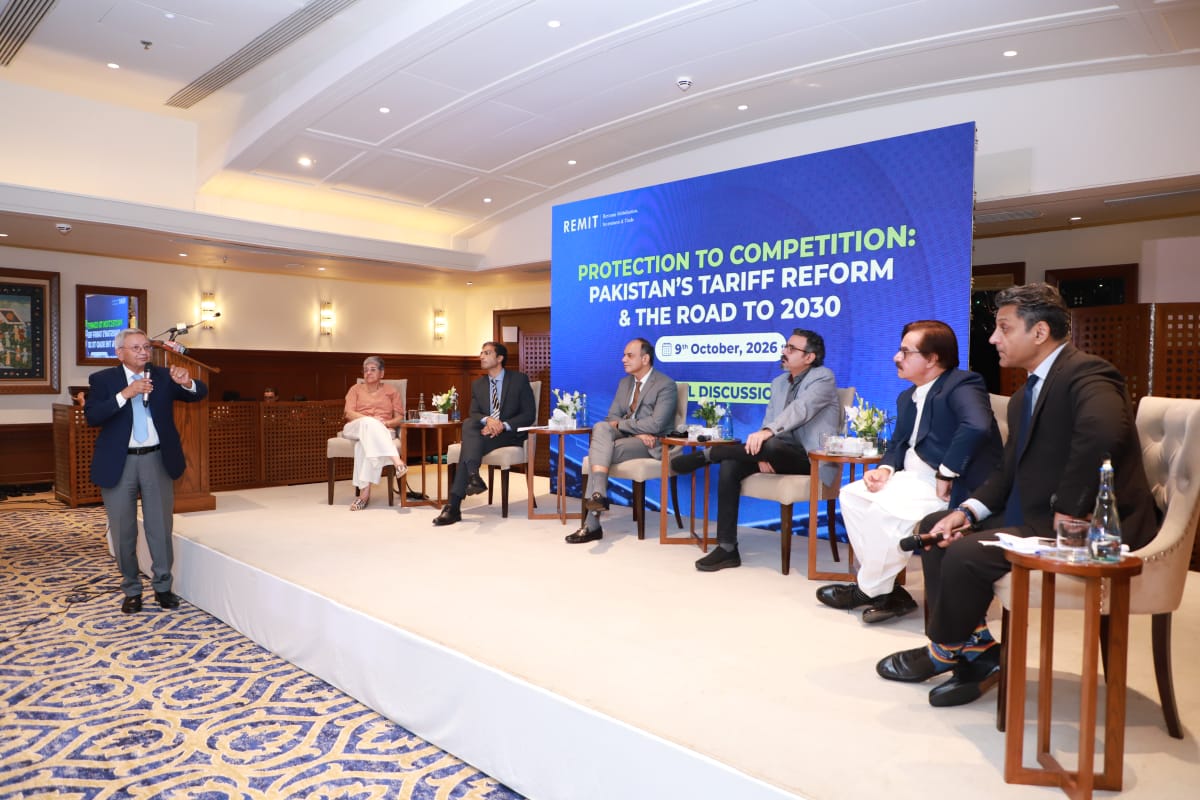
ISLAMABAD, Oct 09 (APP): Government officials, business leaders and experts on Friday called for consistent tariff reforms to improve industrial competitiveness, boost exports and support sustainable economic growth.
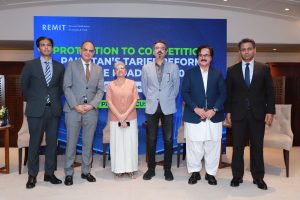
They made the remarks at a discussion titled “Pakistan’s Tariff Reform and the Road to 2030”, organised by the Revenue Mobilisation, Investment and Trade Programme here.
The participants discussed the implementation of the National Tariff Policy 2025-30, its impact on businesses and consumers, and the challenges of ensuring that lower tariffs support domestic industries.
In his opening remarks, Member Customs Shakeel Shah said Pakistan’s economic growth model had relied on revenue generation and protection for domestic industries for decades.
He said a shift towards productivity, competition and exports would have far-reaching effects on investment, industry and employment.
“We need to complement tariff reforms with governance reforms to make the industry competitive,” he said.
He said Pakistan faced pressure on imports when economic growth picked up because exports did not increase at the same pace. This often led to another stabilisation programme after two to three years, he added.
He stressed the need to break this cycle by improving the country’s export capacity.
Independent expert Dr Robina Athar said economies that had adopted trade liberalisation and export-led growth generally performed better than those relying on import substitution.
She said Pakistan’s experience showed that high protective tariffs had failed to deliver the desired results. The country needed to move towards a more competitive, export-oriented growth model, she added.
Another independent expert, Dr Vaqar Ahmed, stressed the need for consistent implementation of tariff reforms.
He said the policy could deliver its intended benefits only if it was implemented without favouring specific sectors or allowing exceptions under pressure from vested interests.
He said the tariff policy should be allowed to run its course instead of being undermined by conflicting industrial or sectoral policies.
Zafar Mehmood, chief executive officer of NIMIR, said reducing customs duties alone would not resolve the problems facing Pakistan’s chemical industry.
He said manufacturers also faced other issues.
Unless these issues were addressed, the benefits of tariff rationalisation for consumers could remain limited, while tax-compliant domestic industries would face greater pressure, he added.
Zain Mustafa of Rubatech Manufacturing said export growth required an enabling business environment rather than targets alone.
He stressed that consistent policies were essential to improving Pakistan’s export competitiveness.
Wajid Bukhari of the Pakistan Association of Large Steel Production said the National Tariff Policy had a positive impact on industry during its first two years.
However, he expected the impact to become neutral in the third year.
He cautioned that safeguards existing only on paper offered little protection to domestic manufacturers and called for effective safeguards and a predictable policy environment.