
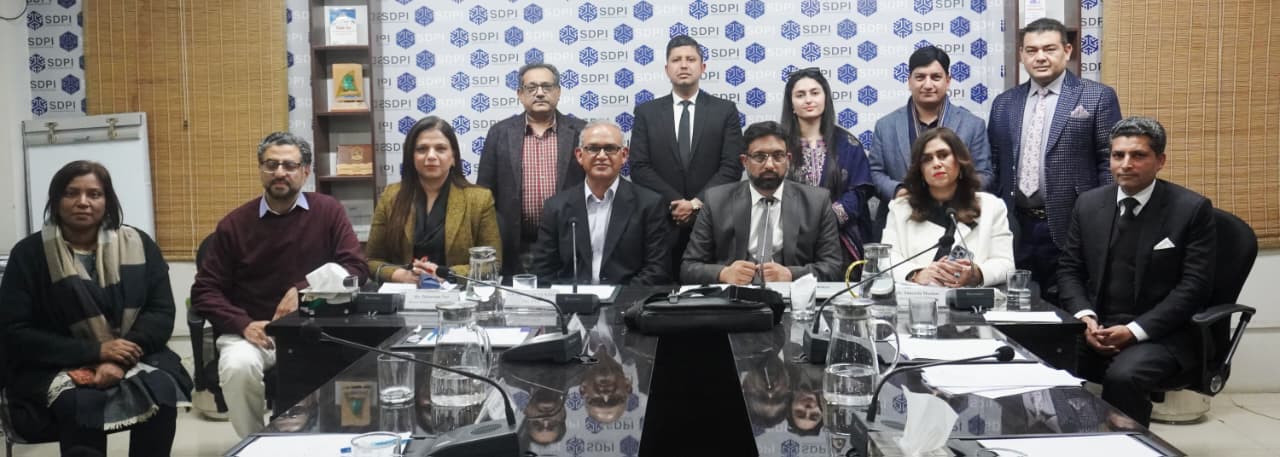

ISLAMABAD, Dec 15 (APP):Experts from law, media, education, law enforcement and regulation on Monday stressed the need for institutional capacity development, public awareness to secure digital lives and address technology-based gender-based violence (GBV), at a seminar organized by the Sustainable Development Policy Institute (SDPI) on Monday.
The seminar, titled “Securing Digital Lives: Cybersecurity, Gender-Based Violence and Digital Rights”, highlighted growing risks in cyberspace, weak enforcement of existing laws and the urgent need to recognize digital rights as fundamental human rights.
Addressing the seminar as chief guest, DG Cyber and Vigilance, Pakistan Telecommunication Authority (PTA) Brig (R) Dr. Mukarram Ali Khan acknowledged gender-based digital inequality and challenges in protecting women and children online.
He said many digital crimes are committed using fake SIMs and highlighted PTA’s efforts against illegal SIM sellers.
He maintained that PTA blocks websites and platforms only on government directives and emphasized Pakistan’s improved global digital rankings, child online protection efforts and collaboration with global platforms such as Meta. He said the government is also studying global models for restricting social media use for minors.
SDPI Deputy Executive Director Dr. Shafqat Munir said cyberspace is an unavoidable reality and society must learn how to live with it through balanced laws, awareness and responsible governance.
Advocate Malik Saqib Mahmood, Supreme Court expert on criminal practice, said cyberspace had become a vital component of modern life and violence in digital spaces reflected societal challenges. He emphasized the need for effective complaint response mechanisms, swift redressal and stricter legislation to curb false reporting of digital crimes.
While penalties of up to 14 years imprisonment exist for certain cyber offences, he noted that weak prosecution and inconsistent court trends undermine deterrence. He called for reviewing prosecution lapses and improving enforcement, noting the difference between cognizable and non-cognizable cyber offences under the law.
Director National Curriculum Council Dr. Tabassum Naz said Pakistan’s approach to digital harms remains largely reactive. She advocated a “whole-of-society” approach, highlighting that issues such as cyberbullying, identity theft and responsible digital behavior are included in the national curriculum. However, she stressed that assessment of behavioral outcomes and mental development of students is critical. She said rationalization and optimization of the national curriculum is underway with provincial consultations.
Former IGP and Federal Secretary Dr. Syed Kaleem Imam warned that digital harm causes lasting psychological and emotional damage and that declining trust in institutions fuels vigilantism. He pointed to over-surveillance, selective policing and weak institutional capacity as key challenges, calling for strengthening institutions, grooming individuals and rehabilitating digital victims through education and awareness.
Deputy Director NCCIA Akram Mughal said cyber laws awareness is essential for citizens, noting that PECA 2016 clearly defines punishments but remains reactive in nature. He advocated separate data protection legislation and clearer division of responsibilities, with investigation handled by NCCIA and regulation by PTA.
Executive Director IRADA Aftab Alam termed online abuse against women as “tech-based gender-based violence,” citing data that 1.5 billion women in low- and middle-income countries are connected to the internet. In Pakistan, he said, women’s access to smartphones and the internet remains significantly lower than men’s.
Referring to Digital Rights Foundation data, he noted that around 20,000 complaints of online violence against women had been received, while conviction rates remain below one percent. He called for clearer definitions, particularly of cyber terrorism in the Prevention of Electronic Crimes Act (PECA). He also stated that digital rights are recognized as human rights under the UN framework.
Senior anchorperson and journalist Tanzeela Mazhar said denial of gender-based violence and excessive regulation were major issues. She warned against moral policing and selective justice, arguing that laws such as PECA are sometimes misused for witch-hunting, damaging state credibility.
She called for flexible reporting mechanisms, stronger privacy protections for victims and gender-sensitive legal jurisprudence, while stressing the need for digital literacy and societal grooming rather than censorship.
During the question-and-answer session, speakers emphasized digital literacy, rebuilding trust between state and society, and strengthening NCCIA’s capacity to effectively address cyber threats.