ISLAMABAD, Jun 17 (APP):Federal Minister for Information and Broadcasting, Attaullah Tarar on Wednesday said the government has created fiscal space through economic stability, tax reforms and effective enforcement, enabling it to provide substantial relief to salaried individuals, exporters, industry, housing, agriculture, information technology and youth in the Federal Budget 2026-27. He said that under the leadership of Prime Minister Shehbaz Sharif, the economy had been steered away from serious challenges, …
Economic stability creates fiscal space for public relief in budget 2026-27: Tarar
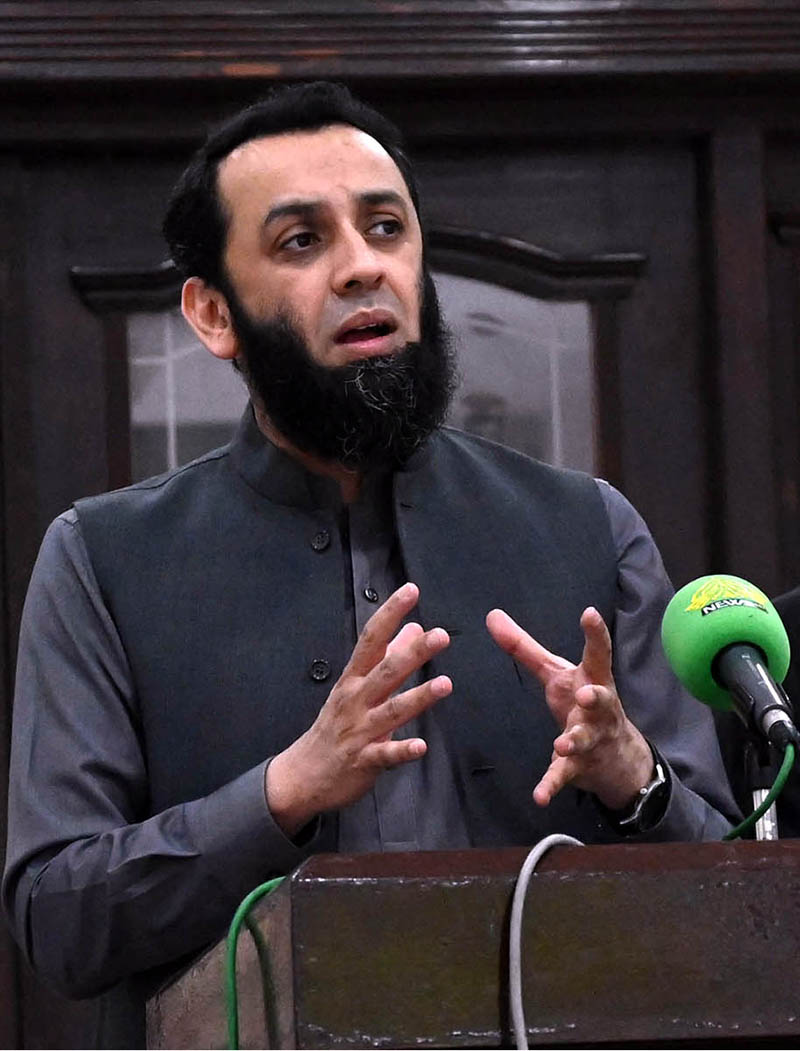
ISLAMABAD, Jun 17 (APP):Federal Minister for Information and Broadcasting, Attaullah Tarar on Wednesday said the government has created fiscal space through economic stability, tax reforms and effective enforcement, enabling it to provide substantial relief to salaried individuals, exporters, industry, housing, agriculture, information technology and youth in the Federal Budget 2026-27.
He said that under the leadership of Prime Minister Shehbaz Sharif, the economy had been steered away from serious challenges, including the threat of default, high inflation, an unstable exchange rate and historically low foreign exchange reserves, and had been put on the path of stability.
He expressed these views during an online briefing. Minister of State for Finance, Bilal Azhar Kayani was also present on the occasion.
He added that Federal Bureau of Revenue (FBR) reforms, digitalization, improvements in the tax system, enhanced recoveries from major sectors, incentives for housing and exports, loan and skills programmes for youth, abolition of duties on agricultural machinery and facilitation measures for the IT sector and freelancers had helped ensure broad-based economic activity and public relief.
The minister said that some people were accustomed to criticism for the sake of criticism.
He added that even opponents of the budget were appreciating it and, by the grace of Allah Almighty, a relief-oriented budget was prepared.
Tarar said that in the past, Pakistan Tehreek-e-Insaf (PTI) leaders repeatedly claimed that the country would default. At that time, foreign exchange reserves had fallen to their lowest levels, resources were insufficient to meet import requirements, the exchange rate was highly volatile, the rupee lacked stability, exporters faced difficulties in opening letters of credit, inflation had reached 38 percent and was projected to rise to 50 percent, the policy rate had crossed 22 percent, and remittances had also declined significantly.
He said some public officials had taken leave because they did not want the country to default during their tenure and no one was willing to take responsibility for stabilizing the economy.
Attaullah Tarar said that in such difficult circumstances, the leadership of Pakistan Muslim League-Nawaz (PML-N) took charge of the economy. Under the vision of Muhammad Nawaz Sharif, Prime Minister Shehbaz Sharif moved economic affairs forward.
He said that had matters with the International Monetary Fund (IMF) not been settled in Paris, there was a possibility that the country might have defaulted.
He said Prime Minister Shehbaz Sharif personally made efforts to secure successful negotiations with the IMF, enabling Pakistan to enter the IMF programme and achieve economic stability.
The minister said that throughout the past two years, the Prime Minister repeatedly stated that relief would be provided to the public as soon as fiscal space became available.
He added that the government did not merely wait for space to emerge but worked hard to create it.
He said the government introduced reforms in the Federal Board of Revenue (FBR), ended the culture of recommendations and streamlined the tax collection system.
He said the Prime Minister’s vision was clear that the burden of tax evaders could not be placed on taxpayers. Whether in customs or income tax, the practice of appointments based on recommendations had been ended and a merit-based system introduced. A transparent and merit-driven system had been established from ports to income tax offices.
Tarar said that a faceless appraisal system had been implemented at ports under which importers and exporters had no direct interaction with customs officials.
The entire process was carried out through an online system. Tasks that previously took weeks were now completed within days.
He said the faceless system had eliminated opportunities for delays and undue demands.
The minister said that some major industries, including sugar, beverages, cement and tobacco, had been earning extraordinary profits while not paying taxes proportionate to their earnings.
He said cameras had been installed in sugar mills, information technology systems introduced, production and sales monitoring initiated, and barcodes and QR codes affixed to every sugar bag to ensure complete traceability. As a result of these reforms, an additional Rs 60 billion in tax revenue had been collected from the sugar industry alone.
He said there had been revenue leakage of Rs 200 billion in the tobacco sector. Raids were conducted to curb illegal trade, while monitoring measures were also being implemented in the beverages and cement sectors.
The minister said the government’s objective was clear: major sectors should pay the taxes applicable to them so that the burden did not fall solely on the salaried class.
He said the government established new tribunals to resolve tax disputes and litigation, appointed new chairpersons, secured decisions in pending cases resulting in recoveries worth hundreds of billions of rupees, removed stay orders and directed relevant institutions to ensure complete recoveries.
He said nearly Rs 800 billion in additional revenue had been collected through enforcement measures in a single year.
According to the minister, these reforms created the fiscal space that enabled the government to provide relief to the public, and this was the result of Prime Minister Shehbaz Sharif’s personal efforts.
He said the government’s position had always been that meaningful improvement was impossible without tax reforms, FBR reforms and IT-based systems.
He said the Melinda Bill Gates Foundation had been involved in FBR digitalization and that individuals educated at some of the world’s leading institutions were currently managing the IT system.
The minister said that the PTI government could also have undertaken such measures and that these reforms had enabled relief for the salaried class.
He said individuals earning up to Rs 50,000 per month would pay no tax, while those earning between Rs 50,000
to Rs 100,000 per month would pay only one percent tax.
Tax rates for other income groups had also been reduced. Reducing the burden on salaried individuals had been a major demand, which the government had fulfilled.
The minister said significant measures had been proposed for the housing sector. Taxes on the purchase and sale of
five-marla and ten-marla houses or plots had been substantially reduced.
He said Rs 90 billion had been allocated for the Apna Ghar Programme, of which Rs11 billion had already been released.
He said investment in the housing sector stimulated not only construction activity but also more than a dozen related industries, including cement, gravel, steel and fittings.
The minister said advance tax for exporters had been abolished and the elimination of super tax had also been announced.
He said exporters would earn higher profits, leading to new investment, industrial expansion and greater competitiveness of “Made in Pakistan” products in international markets.
He added that the interest rate under the Export Refinance Scheme had been fixed at four percent, which represented major relief for the export sector.
Tarar said substantial funds had been allocated for youth under the Prime Minister’s Youth Programme.
He added that 550,000 young people would benefit from agricultural and business loans. Technical training institutions were being strengthened to equip youth with modern skills.
He said the Sports Talent Hunt Programme had been further expanded.
According to him, many players had emerged through the programme and participated in the Pakistan Super League this year.
He added that successful sports personalities, including Arshad Nadeem, had emerged through such initiatives.
He said projects such as Daanish Schools and Daanish University were being advanced to provide better educational opportunities to the younger generation.
The minister said import duty on agriculture-related machinery had been abolished, making it easier to import such equipment.
He said super tax and advance tax had been removed and various facilities had been created for the private sector.
Responding to a question, Tarar said tax relief for the IT sector had been maintained and no additional burden or taxes had been imposed on freelancers.
He said IT services remained among the government’s top priorities and concessions had been granted to IT companies to help them expand their operations.
In response to another question, he said approximately 3.6 million retailers were outside the tax net. Following consultations with traders’ organizations, a fixed tax scheme had been introduced under which retailers would pay a minimum annual tax of Rs 25,000 and receive an FBR certificate.
He described it as a major initiative and said trader organizations across Pakistan were on board.
Responding to another question, the minister said the government had received a comprehensive charter of demands from jewellers and was examining it.
He said the jewellery trade was a highly skilled field and that gold was imported into the country through imports. The government was considering the demands of various jewellers’ associations and would formulate an appropriate policy.
Tarar said all duties on the import of agricultural equipment had been abolished.
He said more than Rs one billion had been allocated under the Youth Business Loan programme to promote agriculture and support young graduates. Agricultural graduates had also been sent to China this year for further education.
He said the Agricultural Innovation Scheme would continue and that under the fertility scheme, the interest rate on agricultural finance would be significantly reduced.
The minister said the salaried class, industry and exporters had all benefited from the budget.
He added that every segment of society was appreciating the budget and noted that former finance minister Miftah Ismail had also stated that salaried individuals, exporters and the business community had received relief.
Tarar said Prime Minister Shehbaz Sharif and his entire team had worked day and night to achieve economic stability.
He acknowledged the contributions of Finance Minister, Senator Muhammad Aurangzeb, Field Marshal Syed Asim Munir and their teams, as well as the Special Investment Facilitation Council (SIFC) and all stakeholders.
He said the country was moving towards economic stability as a result of collective efforts and that all these achievements were the outcome of teamwork guided by the vision of Muhammad Nawaz Sharif.
The minister said PML-N had always served the country and that over the past two years the government had sought to maximize public relief and fulfill its commitments.