The Council of Ministers of the Economic Cooperation Organization (ECO), in a joint communique on Monday, expressed support for the mediation efforts undertaken by Pakistan and Qatar, as well as for the recent initiative put forward by the Islamic Republic of Iran aimed at achieving a dignified resolution of the conflict and ensuring the complete and permanent termination of the current war.
ECO Council of Ministers support efforts of Pakistan, Qatar to end conflict in region
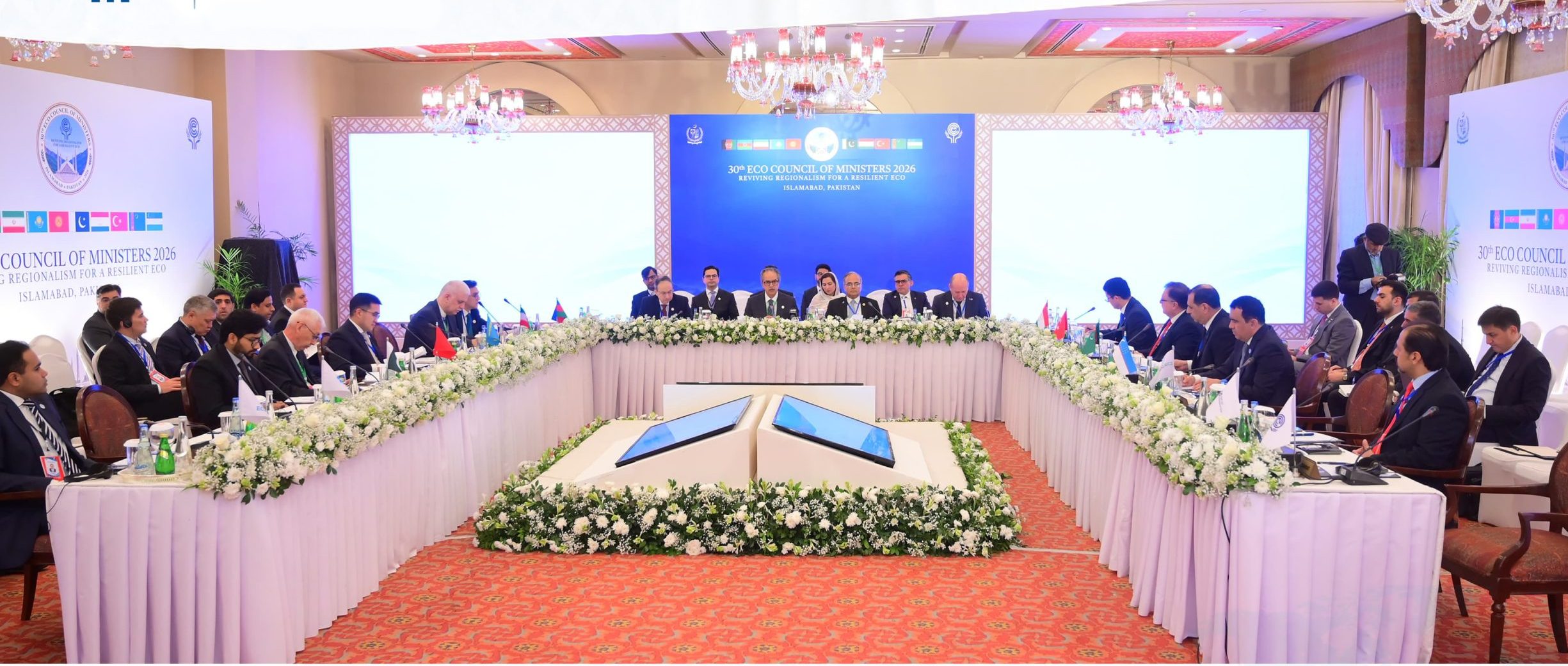
ISLAMABAD, Nov 16 (APP): The Council of Ministers of the Economic Cooperation Organization (ECO), in a joint communique on Monday, expressed support for the mediation efforts undertaken by Pakistan and Qatar, as well as for the recent initiative put forward by the Islamic Republic of Iran aimed at achieving a dignified resolution of the conflict and ensuring the complete and permanent termination of the current war.
Following is the text of the Islamabad Communique issued at the conclusion of the 30th Meeting of the Council of Ministers (COM) of the Economic Cooperation Organization (ECO):
“We, the Ministers of Foreign Affairs and Heads of Delegation of the ECO Member States, convened for the 30th Meeting of the ECO Council of Ministers (COM) on 16, 2026 in Islamabad under the Chairmanship of Mohammad Ishaq Dar, Deputy Prime Minister and Minister of Foreign Affairs of the Islamic Republic of Pakistan, and while:
1. Recalling the principles enshrined in the Treaty of Izmir and the goals set within the ECO framework, as well as the shared resolve of our Heads of State and Government to strengthen regional cooperation, advance sustainable development and foster inclusive economic growth;
2. Expressing concern over the challenging geopolitical environment in the region, emphasising the importance of restraint, dialogue and diplomatic engagement, and recognising the important role of the Islamic Republic of Iran as a founding Member State of the ECO and its significant contributions to the development of the Organisation; Expressing support for the mediation efforts undertaken by Pakistan and Qatar, as well as for the recent initiative put forward by the Islamic Republic of Iran aimed at achieving a dignified resolution of the conflict and ensuring the complete and permanent termination of the current war;
3. Appreciating and commending the Islamic Republic of Pakistan’s consistent and constructive diplomatic support for ECO Member States and its mediation efforts towards de-escalation during the recent Iran–United States crisis, including the Islamabad Peace Talks and the resulting Islamabad MoU, as well as its participation in the post-agreement negotiations in Burgenstock, Switzerland; Reaffirming the importance of dialogue, diplomacy, respect for international law and promoting mutual trust, stability and the peaceful resolution of disputes, and calling for continued cooperation within the ECO framework towards lasting peace and stability in the region; in addition to Pakistan’s commendable efforts, highly appreciating the State of Qatar for its important role as a trusted facilitator of international diplomacy, most notably demonstrated by its mediation efforts at the 81st United Nations General Assembly;
4. Commending the Organisation for demonstrating that regionalism can remain effective and operational even under conditions of acute geopolitical stress;
5. Underscoring the importance of convening regular and timely in-person meetings of the ECO Council of Ministers (COM) and other high-level meetings as essential mechanisms for strengthening policy coordination, providing strategic guidance, advancing regional cooperation and ensuring the effective implementation of ECO decisions, priorities and joint initiatives.
6. Recalling the adoption of ECO Vision 2025 at the 22nd Meeting of the COM in Islamabad in 2017, and Welcoming the Strategic Goals of Economic Cooperation 2035, adopted at the 30th Meeting of COM in Islamabad on 16, 2026, as a comprehensive framework building upon the achievements and guiding principles of the ECO Vision 2025 to advance regional integration, connectivity, resilience and sustainable prosperity; looking forward to the 18th ECO Summit in Tehran for strategic guidance of the Leaders for effective implementation of ECO Strategic Goals of Economic Cooperation 2035;
7. Reaffirming the significance of the “Ashgabat Consensus for Action” adopted at the 15th ECO Summit in Ashgabat on 28, 2021, as a mainline document that provides a comprehensive framework for cooperation across all key areas, including trade, transport, connectivity, energy, industry, economic growth, social welfare, environment, and climate change; emphasising its continued relevance as a roadmap for realising the principal goal of sustainable socio-economic development and prosperity in the ECO region; Commending the ECO Secretariat for its effective measures to fulfil the goals and objectives arising from the Ashgabat Consensus for Action, and resolving to further strengthen our collective efforts to implement its provisions for the benefit of all Member States;
8. Recalling the successful holding of the 29th COM Meeting chaired by the Republic of Kazakhstan in an online format on 28, 2025;
9. Recalling the successfully organised 17th ECO Summit in Khankendi, Azerbaijan, and organising the first-ever ECO Week, held from 1–4, 2025, which included the ECO Youth Forum, ECO Women’s Forum and the 6th ECO Business Forum, providing an invaluable platform to strengthen dialogue, cooperation and partnerships among the youth, women and business communities across the ECO region;
10. Welcoming the initiative of the Republic of Uzbekistan to establish the “World Youth Movement for Peace” and call for active participation from youth organisations of the Member States;
11. Acknowledging with deep appreciation the assumption by the Islamic Republic of Pakistan of the ECO Chairmanship for 2026–2027 under the newly established two-year Chairmanship formula; welcoming its theme, “Reviving Regionalism for a Resilient ECO,” and expressing full support for the Chairmanship’s efforts to advance this theme through enhanced dialogue, strengthened multilateral cooperation, expanded regional connectivity and greater people-to-people exchanges, with a view to furthering the Organisation’s shared regional objectives;
12. Welcoming the adoption of the United Nations General Assembly Resolution A/RES/80/269 of June 25, 2026, entitled “International Decade of Strengthening of Peace for Future Generations (2027–2036),” initiated by the Republic of Tajikistan, as well as convening the High-Level International Conference in Dushanbe on 11-12 May 2027 dedicated to the launch of the implementation of the Decade, and encouraging ECO Member States to actively participate in the Conference;
13. Acknowledging with appreciation the successful convening of the 10th ECO Ministerial Meeting on Disaster Risk Reduction in the Islamic Republic of Pakistan in January 2026; the 7th ECO Ministerial Meeting on Tourism in Shusha, Republic of Azerbaijan, in April 2026; the 6th ECO Ministerial Meeting on Environment in Samarkand, Republic of Uzbekistan, in June 2026; the 14th ECO Ministerial Meeting on Transport in October 2026, and the 7th Prosecutors General Meeting in the Republic of Kazakhstan in September 2026; the 4th ECO Ministerial Meeting on Industry and the 3rd Meeting of the High-Level Experts Group on Industry in Dushanbe, Republic of Tajikistan in September 2026; Also acknowledging the First Meeting of the ECO High-Level Dialogue Platform on Environmental Cooperation held in Astana, Republic of Kazakhstan in April 2026, and the First Meeting of the Technical Negotiation Committee on ECOTA held in April 2026; Welcoming the substantive outcomes of these meetings, including the adoption of relevant strategies, frameworks, roadmaps and recommendations aimed at strengthening regional cooperation in their respective sectors; Expressing sincere appreciation to the host Member States for their valuable contributions to advancing the objectives of the Organization;
14. Welcoming the unanimous adoption by the United Nations General Assembly on July 24, 2026, of the resolution entitled “Year of International Law, 2028,” initiated by Turkmenistan and co-sponsored by 78 UN Member States, recognizing the strategic importance of this initiative for strengthening the rule of law, promoting peaceful resolution of disputes, and enhancing international legal cooperation, and expressing sincere appreciation to all ECO Member States that co-sponsored this significant resolution;
15. Acknowledging the need for continuous reforms of institutional, regulatory and operational frameworks of the ECO aimed at enhancing the efficiency, transparency and effectiveness of the Organization, so that it remains responsive to the evolving challenges and needs of the ECO Member States; Highlighting the important role of the High-Level Committee (HLC) in this regard;
16. Recognizing the central role of the Regional Planning Council (RPC) in advancing the objectives of the Organization through programme planning, implementation review and sectoral coordination, and emphasizing the importance of further strengthening its role, in line with the ECO reform process, as an effective mechanism for coordination and engagement between the Secretariat and relevant national institutions of Member States;
17. Welcoming the continued momentum in ECO sectoral cooperation through the planned convening of next ministerial meetings on commerce and foreign trade and agriculture in the Islamic Republic of Iran, energy in the Republic of Türkiye; interior and ICT in the Islamic Republic of Pakistan, as well as ministerial meetings on finance/economy and health, and expressing confidence that these engagements will further strengthen policy coordination and the implementation of the Strategic Goals of Economic Cooperation – 2035;
18. Stressing the vital importance of the collective adoption and implementation of ECO agreements and frameworks by all Member States to promote uniformity, strengthen institutional cohesion and ensure the effective achievement of the Organization’s shared development goals;
19. Recognizing the essential contribution of trade and investment to economic prosperity and sustainable development; Stressing the importance of strengthening intra-regional economic cooperation and enhancing the region’s participation in international trade and global value chains; Emphasizing that deeper regional integration and broader market connectivity are critical to enhancing competitiveness, productivity and long-term economic resilience; while taking into account the different levels of development and national circumstances of Member States;
20. Acknowledging the outcomes of relevant United Nations processes on artificial intelligence, including General Assembly resolutions 78/265 and 78/311, 79/322 and 80/302 adopted by consensus, as well as the convening of the first Global Dialogue on Artificial Intelligence Governance in Geneva on 6–7 July 2026 pursuant to resolution 79/325, and underlining the importance of bridging the artificial intelligence capacity gap among and within countries and of promoting safe, secure and trustworthy artificial intelligence systems in the non-military domain for sustainable development;
21. Underlining the important role of small and medium-sized enterprises (SMEs) as drivers of innovation, employment and inclusive economic growth, highlighting the need to create an enabling environment for their development through fair competition, technological advancement, entrepreneurship, improved access to finance, business opportunities and professional networks, while promoting sustainable and environmentally responsible trade practices;
22. Acknowledging the strategic significance of the “ECO Sustainable and Resilient Transport Strategy for 2026–2035” and the “ECO Regional ICT Strategy for 2026–2030” in enhancing connectivity, trade facilitation and digital transformation within the ECO Region; Recognizing the importance of strengthening institutional and human capacity across the ECO Region to accelerate connectivity initiatives and implement transport and ICT strategies effectively;
23. Fully aware of the transformative potential of emerging technologies, including artificial intelligence, blockchain, quantum computing, 5G, robotics, and others — and the need to harness these technologies to foster sustainable economic development, inclusive growth, and regional prosperity, taking into account the associated risks and the need to exchange experience on ways to mitigate such risks;
24. Recognizing the critical role of quality education, technical and vocational education and training (TVET), digital skills, research, innovation and lifelong learning in promoting human capital development, youth empowerment and sustainable economic growth across the ECO region;
25. Attaching increasing importance to sustained ECO multilateral engagement and diplomacy with existing and prospective partners in transport and ICT, including UNESCAP, UNECE, UN-OHRLLS, IsDB, AIIB, ADB, SCO, OTS, ITU, DCO, IRU, OSJD, OTIF, and other relevant regional and global organizations;
26. Recognizing the steady developments in the ECO region towards enhancement of energy security and sustainability via stronger energy connectivity, diversification of energy mix and supplies, as well as advancement of clean energy and regional electricity market agendas;
27. Recognizing the vital role of agriculture in ensuring food security, supporting rural livelihoods, generating employment, and promoting environmental sustainability, and underscoring the importance of enhanced investment, innovation, climate-resilient agricultural systems, and sustainable water use through strengthened regional cooperation;
28. Reaffirming the strategic importance of sustainable industrial development as a key driver of economic growth, productivity, economic diversification, and regional competitiveness, and emphasizing the role of technological innovation, industrial modernization, aligned standards taking into account Member States’ international obligations and enhanced regional cooperation in advancing the common development objectives of ECO Member States;
29. Taking note of tourism as an important driver of regional integration, sustainable development and cultural connectivity, and emphasizing the importance of advancing collaborative efforts in this sector; Welcoming the inauguration of Shusha as the ECO Tourism Capital 2026 and the associated year-long programme of activities, which together contributed to enhancing the visibility of the ECO brand and promoting the region’s tourism destinations;
30. Welcoming the launch and advancement of key tourism policy initiatives, including the Compendium of Best Practices for Ecotourism in the ECO Region, the Policy Brief on Diversifying Intra-Regional Tourism, and the finalization of the 2026–2030 Roadmap for Expansion of Tourism Services (RETS-2030) by the ECO Advisory Committee on Tourism, as important contributions to the sustainable development and competitiveness of the tourism sector in the ECO region;
31. Recognizing inclusive and sustainable development as essential to regional integration and prosperity, with youth, women and families serving as key drivers of social, economic and cultural progress; Acknowledging education, health, disaster resilience, sustainable water cooperation, access to finance, and technology transfer on mutually agreed terms as important enablers for achieving sustainable development goals and advancing the long-term priorities of the ECO region; Underscoring the importance of promoting sustainable approaches and public procurement practices in the sectors of disaster risk reduction, education, healthcare and water cooperation;
32. Emphasizing the significance of the First ECO Forum on Sustainable Development, held in Arkadag, Turkmenistan, on April 28–29, 2025, and the First ECO Women and Youth Forum held in Azerbaijan on the sidelines of the 17th ECO Summit; Recognizing these initiatives as important steps towards strengthening regional cooperation and promoting the participation, skills development and empowerment of young people, while giving due attention to their physical, psychosocial and digital well-being, including through preventive approaches to substance use and behavioural addictions; Reaffirming the commitment of Member States to advancing the Strategic Goals of Economic Cooperation 2035;
33. Noting the initiative of the Republic of Kazakhstan regarding the possible establishment of an International Water Organization under the auspices of the United Nations, recognizing that further consideration of this proposal should take into account the need for broad international consensus and respect for existing mandates and processes within the United Nations system.
Noting the need to take urgent preventive measures for innovative environmental development, the efficient use of diminishing water resources, and the introduction of new technologies in agriculture and industry, support the establishment of the Regional Center for the introduction of Energy-Efficient and Resource-Saving Technologies in Bishkek, which will contribute to scientific research and technological development for the environmental sustainability of Central Asia, as well as green economic growth;
34. Welcoming the convening of the 2028 United Nations Water Conference, to be held in Dushanbe, Republic of Tajikistan, on 4–6 May 2028, and advancing international cooperation on water and sanitation; Encouraging ECO Member States to actively engage in the Conference and contribute to its outcomes, including the Dushanbe Water Framework based on a member-driven, balanced, inclusive and action-oriented approach, to strengthen regional and international water cooperation;
35. Reaffirming the critical importance of robust regional cooperation against illicit drugs and transnational organized crime as a core pillar of the ECO Strategic Goals and Objectives (Vision 2035), and emphasizing the necessity of enhanced synergy among judicial, law enforcement, and parliamentary institutions;
36. Recognizing the important role of parliamentary diplomacy in advancing the objectives of the Organization and deepening cooperation among Member States, notably through the active engagement of the Parliamentary Assembly of ECO Member States (PAECO);
Reaffirming their shared commitment to advancing inter-religious dialogue and intercultural accord as essential pillars of global peace and stability; in this regard, recalling the role of the Congress of Leaders of World and Traditional Religions in Astana, as well as other similar initiatives for fostering mutual respect and peaceful coexistence.
37. Acknowledging the need for continued consultation with Member States to address the issues of Afghanistan’s engagement with the Organization in relevant areas, with a view to achieving the country’s full and effective participation once circumstances permit;
38. Emphasizing the importance of enhancing scientific, educational and technological, as well as industrial cooperation among the Member States; Recognizing the role of ECO Subsidiary Bodies in advancing the Organization’s multifaceted agenda;
39. Commending the work of the ECO Secretariat in monitoring, coordinating and implementing ECO projects, and underscoring the importance of accelerating the implementation of priority initiatives; Emphasizing the urgent need for diversified financing mechanisms — including through potential cooperation with the ECO Trade and Development Bank (ECOTDB) and other international financial institutions — for robust research and statistical data ecosystems, and for enhanced institutional collaboration to drive evidence-based policymaking and to deliver tangible regional outcomes aligned with the Monitoring and Evaluation framework of the “Strategic Goals of Economic Cooperation – 2035”;
40. Welcoming the successful outcome of the 2nd Meeting of the Sub-Working Group on the Establishment of the ECO Joint Trade Zones, held in Gorgan, Iran, on November 3, 2025, and the subsequent endorsement by the Council of Permanent Representatives in February 2026 of the initiative of Turkmenistan to develop a feasibility study for the creation of joint trade zones in the ECO region; Recognizing the critical importance of actively leveraging the potential of cross-border and regional trade to consistently increase trade turnover between ECO Member States; Underscoring the need to create a comfortable cross-border environment and stimulate regional cooperation through a system of agreed priorities and mutual benefits; Encouraging all Member States to actively participate in the formulation of this initiative to support the development of joint trade zones, drawing on successful examples, such as the joint trade zone established between Turkmenistan and the Republic of Uzbekistan, and the proposed trade market at the “Altyn Asyr (Turkmenistan) – Incheh Boroun (Islamic Republic of Iran)” border crossing, with a view to creating a modern infrastructure for efficient trade and increasing intra-regional trade volumes;
41. Recognizing the growing challenges of desertification, land degradation and drought for the ECO Region and the importance of strengthening regional cooperation in this area, including through the initiatives of Turkmenistan to establish a Regional Center to Combat Desertification for Central Asian Countries;
42. Recognizing the significant impact of climate change on glacier melting, the depletion of water resources, land degradation and ecosystem deterioration, noting in this regard the initiative announced by the Kyrgyz Republic for the establishment of a possible special joint trust fund for the preservation of Lake Issyk-Kul, which is part of the UNESCO Biosphere Reserve and is included in the list of Wetlands of International Importance under the Ramsar Convention;
43. Expressing concern over the humanitarian situation in the Gaza Strip, due to the recent flooding in the Deir al-Balah area and wider neighbourhood on 6 November 2026, and in light of the onset of the winter season, emphasizing the urgent need to prioritize the delivery of essential humanitarian supplies, including food, medicines, fuel, heating equipment, tents, shelters, blankets and winter clothing and also calling for an immediate end to policies of forced displacement and the deliberate deprivation of food and the full implementation of the Gaza ceasefire agreement of October 2025.
Have decided to:
1. Welcome with appreciation the convening of the next ECO Ministerial Meetings on Commerce and Foreign Trade and Agriculture in the Islamic Republic of Iran; the 5th ECO Ministerial Meeting on Energy in the Republic of Türkiye; and the forthcoming ECO Ministerial Meetings on Interior and ICT, including the 4th ECO Ministerial Meeting on ICT in Islamabad, Islamic Republic of Pakistan; Also Welcome the planned ECO Ministerial Meetings on Finance/Economy and Health and Agriculture in Iran, and; Appreciate the readiness of Member States to host the relevant meetings during 2026 and 2027; Encouragethe timely convening of these meetings and participation of Member States at the highest appropriate level, with a view to sustaining the momentum of sectoral cooperation, strengthening policy coordination and advancing the implementation of the Strategic Goals of Economic Cooperation – 2035;
2. Invite ECO Member States to participate at the highest level in the 18th ECO Summit in Tehran, which will provide an important opportunity for the Leaders to deliberate on key areas of cooperation in the ECO Region and provide strategic guidance and recommendations, with a particular focus on the Strategic Goals of Economic Cooperation 2035, aimed at advancing regional integration, strengthening connectivity, and promoting shared prosperity;
3. Welcome the convening of the first High-Level Committee (HLC) Meeting on ECO Reforms on February 3, 2025, and its outcomes, followed by the development of concrete proposals by the relevant Working Group for the implementation of the HLC recommendations; Encourage the continued active engagement of Member States in the reform process and underscore the importance of sustaining this momentum through regular and substantive HLC meetings;
4. Support the accelerated amendment and implementation of the ECO Trade Agreement (ECOTA), in accordance with the Trade Negotiation Strategy and Roadmap adopted by the 5th ECO Ministerial Meeting on Commerce and Foreign Trade, through an inclusive technical negotiation process open to all ECO Member States, with a view to aligning ECOTA with contemporary trade agreements and evolving developments in international trade, while taking into account the respective international obligations and commitments, national circumstances and development priorities of Member States;
5. Encourage Member States to actively participate in the ongoing ECOTA amendment process and invite those Member States that are not yet parties to ECOTA to engage in consultations, taking into account national development levels, economic priorities, and flexible accession mechanisms, with a view to advancing trade liberalization and regional market integration;
6. Call for the timely implementation of the feasibility study on the establishment of joint trade zones within the ECO region, as proposed by Turkmenistan and unanimously supported by the ECO Council of Permanent Representatives in February 2026, recognizing that such zones represent a practical and effective mechanism for increasing intra-regional trade turnover, strengthening cross-border cooperation, and creating a favorable environment for business contacts through a system of agreed priorities and mutual benefits; Encourage Member States to consider replicating the successful model of the joint trade zone established between Turkmenistan and the Republic of Uzbekistan, which has demonstrated clear benefits for trade growth and business confidence;
7. Call upon Member States to undertake joint measures aimed at attracting foreign direct investment, developing free economic zones, establishing joint manufacturing enterprises and regional value chains, supporting small and medium-sized enterprises, as well as enhancing export potential; further call upon Member States to intensify cooperation in promoting domestic products in regional and international markets, organizing joint trade and investment exhibitions and forums, exchanging export-related information and developing e-commerce, as well as facilitating the establishment of direct business contacts among entrepreneurs, simplifying trade procedures through the digitalization of export and import procedures, developing the Single Window system, the electronic exchange of trade documents, reducing customs clearance costs and timeframes, in compliance with the national legislation of the Member States;
8. Further underscore the importance of the expeditious conclusion of the draft ECO Trade Facilitation Agreement, and task the Joint Working Group with intensifying its technical negotiations toward the Agreement’s early finalization and submission for adoption; and in this regard, note with appreciation the offer of the Islamic Republic of Pakistan, made during the 36th Meeting of the Regional Planning Council, to host the 4th Meeting of the Joint Working Group in the third quarter of 2026;
9. Urge the Member States to fully implement the ECO Transit Transport Framework Agreement (TTFA) to unlock the region’s full potential and enhance regional connectivity, trade, and economic development;
10. Encourage Member States to accord priority and urgency to ECO connectivity initiatives, including transport, transit and digital connectivity projects, in their national and regional development agendas, and to strengthen coordination through the Council of Ministers and relevant technical and ministerial forums to ensure their effective and timely implementation, and in this regard; Highlight the importance of the timely finalization and operationalization of the ECO Sustainable and Resilient Transport Strategy 2026–2035 and the ECO Regional ICT Strategy 2026–2030 as flagship frameworks for advancing regional connectivity, trade facilitation and digital transformation, as well as the importance of developing transport and transit corridors, improving access of landlocked ECO Member States to international seaports, reducing transportation costs and removing existing barriers to the carriage of goods;
11. Encourage Member States to deepen cooperation on artificial intelligence and other emerging technologies, including through the exchange of experiences and best practices on national strategies, joint capacity-building, training and research programmes under the auspices of the ECO Science Foundation and other relevant ECO bodies, with a view to bridging the digital and artificial intelligence divide and harnessing these technologies for inclusive and sustainable development across the ECO region;
12. Encourage interested Member States to explore cooperation on the peaceful uses of outer space, including satellite technologies and space-based services in support of regional connectivity, disaster risk reduction and environmental monitoring;
13. Underline the importance of strengthening the security and resilience of critical digital infrastructure and essential services across the ECO region and encourage enhanced cooperation amongst Member States in the field of ICT security, including through capacity-building and voluntary exchange of information and best practices, cooperation amongst the relevant national bodies and joint training and exercises for preparedness in accordance with national legislation and relevant international frameworks;
14. Emphasize the importance of ensuring equal, fair, transparent and non-discriminatory access, particularly for developing countries, to global markets for ICT security products, technologies and services, as a confidence-building measure to address security capability gaps, strengthen supply chain resilience and integrity, and enhance mutual trust among Member States; Encourage international cooperation, including the exchange of knowledge and best practices, capacity-building and technology transfer, as appropriate, while avoiding unjustified restrictions and unnecessary barriers that impede access to ICT security tools;
15. Stress the need for strengthened and diversified ECO multilateral diplomacy and outreach as a catalyst for connectivity and ICT development, and encourage results-oriented cooperation and partnerships with existing and prospective partners, and in this context, note the importance of exploring and advancing cooperation mechanisms with relevant partners to enhance transport, transit corridors and ICT initiatives in the ECO Region;
16. Call upon the Member States to enhance their ownership in the ECO’s major energy projects while doubling support to the ECO Clean Energy Centre (CECECO) and earliest launch of studies on ECO Regional Electricity Market (ECO-REM);
17. Welcome the operationalization of the ECO Clean Energy Centre (CECECO) in Baku, which will contribute to paving the way for regional sustainable energy transition in the ECO region, expressing conviction that it will evolve into a pivotal mechanism to ramp up the industrialization, energy and climate goals in the ECO region and beyond;
18. Welcome the adoption of “ECO Five-Year Roadmap on minerals cooperation for 2026– 2030” as the first ever overarching and inclusive framework document for regional cooperation in the field of minerals, including critical minerals essential for advanced and emerging technologies, and, in this regard; Reaffirm the commitment to promoting the sustainable management of mineral resources across the region;
19. Reiterate the importance of stronger regional action for addressing climate change, including adaptation and desertification, as well as reducing greenhouse gas emissions, to underscore the importance of pursuing climate cooperation based on agreed principles and national conditions and priorities of Member States to promote the implementation of nationally determined contributions, national adaptation strategies and plans through enhanced access to climate finance, transfer of technology on mutually agreed terms and capacity-building;
20. Recognize the High-Level Dialogue Platform on Environmental Cooperation, initiated by the Republic of Uzbekistan, as a mechanism for bringing together all relevant stakeholders to exchange knowledge, share best practices, identify practical solutions, and advance coordinated regional environmental action;
21. Recognize the importance of preserving glaciers and other components of the cryosphere for sustainable development and adaptation to climate change as well as the importance of sustainable development of mountain regions and ecosystems and cooperation in assessing the transboundary impacts of glacier melting on water resources of countries of the region to note the importance of further international cooperation in advancing the outcomes of the International Year of Glaciers’ Preservation, 2025, and within the framework of the Decade of Action for Cryospheric Sciences, 2025–2034 to promote the strengthening of scientific research, systematic observations and monitoring of the state of glaciers, the assessment of climate risks associated with changes in glaciers, the training of specialists, and the exchange of scientific information on mutually agreed terms, including through cooperation with the World Meteorological Organization and the United Nations Educational, Scientific and Cultural Organization;
22. Call upon Member States to further strengthen regional cooperation in the agriculture and industry sectors through focusing on effective implementation of already existing and/or agreed upon frameworks, programmes, and initiatives, with a view to enhancing food security, promoting sustainable industrial development, fostering innovation, facilitating technology transfer, and advancing economic integration within the ECO region;
23. Encourage all ECO Member States to strengthen regional efforts in tourism investment, promote sustainable tourism practices, expand digital outreach, and enhance capacity building initiatives through the newly established ECO Tourism Educational Network;
24. Urge active participation of relevant stakeholders in ECO’s tourism cooperation mechanisms, including the ECO Advisory Committee on Tourism, the ECO Tour Operators’ Network, the ECO Silk Road Task Force, and other relevant sub-committees, to foster a vibrant and resilient tourism sector across the region;
25. Welcome the continued implementation of the ECO Tourism Capital initiative and encourage all Member States to actively support and participate in the programme, recognizing its contribution to cultural exchange, local economic development and the preservation of cultural heritage; and note with appreciation the designated ECO Tourism Capitals, commencing with Lahore in 2027, followed by Mary in 2028, Karakol in 2029 and Aktau in 2030;
26. Support ECO activities on sustainable development aimed at fostering collaboration and coherence among the ECO Member States; Acknowledge the recommendations of the 1st ECO Forum on Sustainable Development, the ECO Youth Forum and the ECO Women Forum; Encourage the institutionalization of these forums and the development, within the ECO Youth Forum, of thematic workshops, experience-sharing and capacity-building initiatives in areas of common interest, including entrepreneurship, innovation, sustainable development and technology; Call upon Member States to consider, subject to their national legislation, priorities and available resources, allocating appropriate financial resources to support youth engagement in regional economic integration
27. Welcome Kazakhstan’s initiative to establish a Global Coalition on Primary Health Care, recognizing its potential to advance universal health coverage, ensure equitable access to quality and affordable health services, and promote the right to health;
28. Emphasize the importance of strengthening the capacity of national hydrometeorological services, modernizing observation networks, improving forecasting, and developing people-oriented early warning systems for hazardous hydrometeorological phenomena; to promote cooperation in these areas in support of the implementation of the United Nations initiative ‘Early Warnings for All – EW4ALL’, in cooperation with the relevant national authorities and international partners;
29. Encourage the Member States and the Secretariat to strengthen their coordinated efforts in combating illicit drugs and transnational organized crime through enhanced judicial, law-enforcement and parliamentary cooperation, complemented, as appropriate, by evidence-based prevention, early intervention and referral to treatment;
30. Encourage stronger cooperation between the relevant ECO Member States and the Central Asian Regional Information and Coordination Centre for Combating Illicit Trafficking of Narcotic Drugs, Psychotropic Substances and their Precursors (CARICC), with a view to enhancing joint efforts to combat illicit drug trafficking;
31. Reaffirm their commitment to strengthening international biological security and, in this regard, consider the possibility of establishing an international agency for biological security based on Convention on the Prohibition of the Development, Production and Stockpiling of Bacteriological (Biological) and Toxin Weapons and on Their Destruction;
32. Welcome the past and the ongoing successful leadership of ECO Member States – Azerbaijan and Türkiye, respectively, in global climate negotiations and hosting 29th Conference of the Parties (COP-29) to the UN Framework Convention on Climate Change (UNFCCC) in Baku and COP31 in Antalya;
33. Commend the efforts of the Republic of Türkiye in promoting zero-waste approaches at the global, regional, national and local levels; welcoming the successful convening of the first International Zero Waste Forum on October 17-19, 2025 in Istanbul under the auspices of H.E. Mrs. Emine Erdogan, First Lady of the Republic of Türkiye and take note with appreciation of the representation of ECO Secretariat at the Forum;
34. Urge the Member States to further strengthen parliamentary cooperation within the ECO framework, including through active engagement with the Parliamentary Assembly of ECO Countries (PAECO), urging those Member States that have not yet done so to complete the necessary procedures for signing and/or ratifying the PAECO Charter at the earliest opportunity;
35. Underscore the need for achieving meaningful progress on concerns of Member States for fostering regional cooperation and laying the basis for Afghanistan’s participation in any ECO activities and processes;
36. Acknowledge the contributions of the Termez International Trade Center and the Termez Multi-Functional Transport and Logistics Hub in the Republic of Uzbekistan to promoting regional trade, connectivity and humanitarian cooperation, particularly with Afghanistan;
37. Reject unilateral coercive measures, sanctions and economic pressures and their extraterritorial economic, technological, financial or trade impacts which are contrary to the purposes and principles enshrined in the Charter of the United Nations, the fundamental norms of International law, and the right to development of nations, adversely affecting international peace and security, impeding sustainable development, jeopardising regional and global economic stability and undermining the provision of supply chains for food, pharmaceuticals and energy and humanitarian assistance;
38. Acknowledge the ECO Secretariat’s efforts for consolidating cooperation with other regional and international organizations, as well as ECO Observers; Welcome the adoption of the United Nations General Assembly Resolution A/RES/79/330 entitled “Cooperation between the United Nations and the Economic Cooperation Organization” during the 79th Session of the United Nations General Assembly on September 5, 2025;
39. Commend Pakistan’s efforts, as current ECO Chair, to spearhead the convening of the inaugural meeting of the ECO–ASEAN Contact Group, with the Ambassador of Pakistan in Jakarta leading coordination efforts;
40. Urge Member States to actively engage with and support the ECO Educational Institute, ECO Cultural Institute and ECO Science Foundation through broader participation, enhanced collaboration and greater ownership; Commend their continued efforts in advancing the work of the Organization across the region, encouraging them to further strengthen mutual coordination and develop complementary programmes, joint initiatives and thematic events that effectively promote ECO priorities, objectives and regional cooperation agenda;
41. Underscore the importance of enhancing ECO’s global visibility and, to this end, encourage Member States to observe ECO Day in a coordinated manner, including through gatherings of ECO Ambassadors, particularly when it coincides with UN or other international events, to strengthen the Organization’s profile and visibility;
42. Encourage the ECO Secretariat to intensify engagement with the United Nations, regional and international organizations, and development banks to advance priority initiatives, leveraging comparative strengths and generating tangible socio-economic benefits across the region;
43. Urge the ECO Member States to support the Secretariat in its efforts to engage with International Financial Institutions (IFIs), Multilateral Development Banks, including through potential cooperation with ECO Trade and Development Bank and other international financial institutions particularly those in which the Member States participate in order to secure grant and concessional financing for regional initiatives, including: (i) grants for the implementation of sustainable and green tendering procedures; (ii) co-financing of the transformation of the ECO Economic Journal (Scopus/Web of Science indexing); (iii) capacity-building of National Statistical Offices in the field of Smart Statistics; and (iv) pre-feasibility studies for projects originating from the Member States;
44. Reiterate the need to strengthen the ECO Trade and Development Bank (ECO TDB), including through expanding its membership to interested ECO Member States, while recognizing the importance of enhancing the Bank’s role in financing projects of ECO TDB Member States as well as ECO projects and mobilizing resources from international partners, in accordance with its mandate and established governance mechanisms.
45. Foster vibrant and resilient media cooperation across the region, recognizing the transformative impact of digital communication and emerging technologies. Strengthen coordinated efforts to promote the dissemination of factual information and responsible media reporting, contributing to the realization of the ECO Vision, regional solidarity and sustainable development;
46. Call upon ECO Member States and the ECO Secretariat to strengthen cooperation on sustainable use of water resources, capacity building in water-use efficiency, flood and drought management, groundwater recharge, water quality improvement, wastewater treatment and reuse, climate-resilient water infrastructure, and early warning systems; and encourage the development of bankable regional water resilience projects supported by international financial institutions and multilateral development banks, in accordance with national priorities, national laws, and based on mutually agreed terms;
47. Extend deep appreciation to the Islamic Republic of Pakistan and to H.E. Mr. Mohammad Ishaq Dar, Deputy Prime Minister and Minister of Foreign Affairs, for the excellent arrangements and able chairmanship of the 30th Meeting of the Council of Ministers (COM); Express gratitude to all ECO Member States for their participation in the Meeting, reflecting steadfast commitment to regional cooperation;
48. Appreciate the support of the ECO Secretary General, Dr Asad M. Khan, and his team at the Secretariat in Tehran, whose dedicated efforts contributed significantly to the preparation and successful holding of the COM Meeting.