Dar said that while he spoke with counterparts in 61 countries during the India-Pakistan war last year, he had engaged in over 150 diplomatic communications since February 28 to resolve the US-Iran conflict.
Dar says Israeli attacks on Lebanon nearly derailed US-Iran talks as spoilers never wanted deal to happen
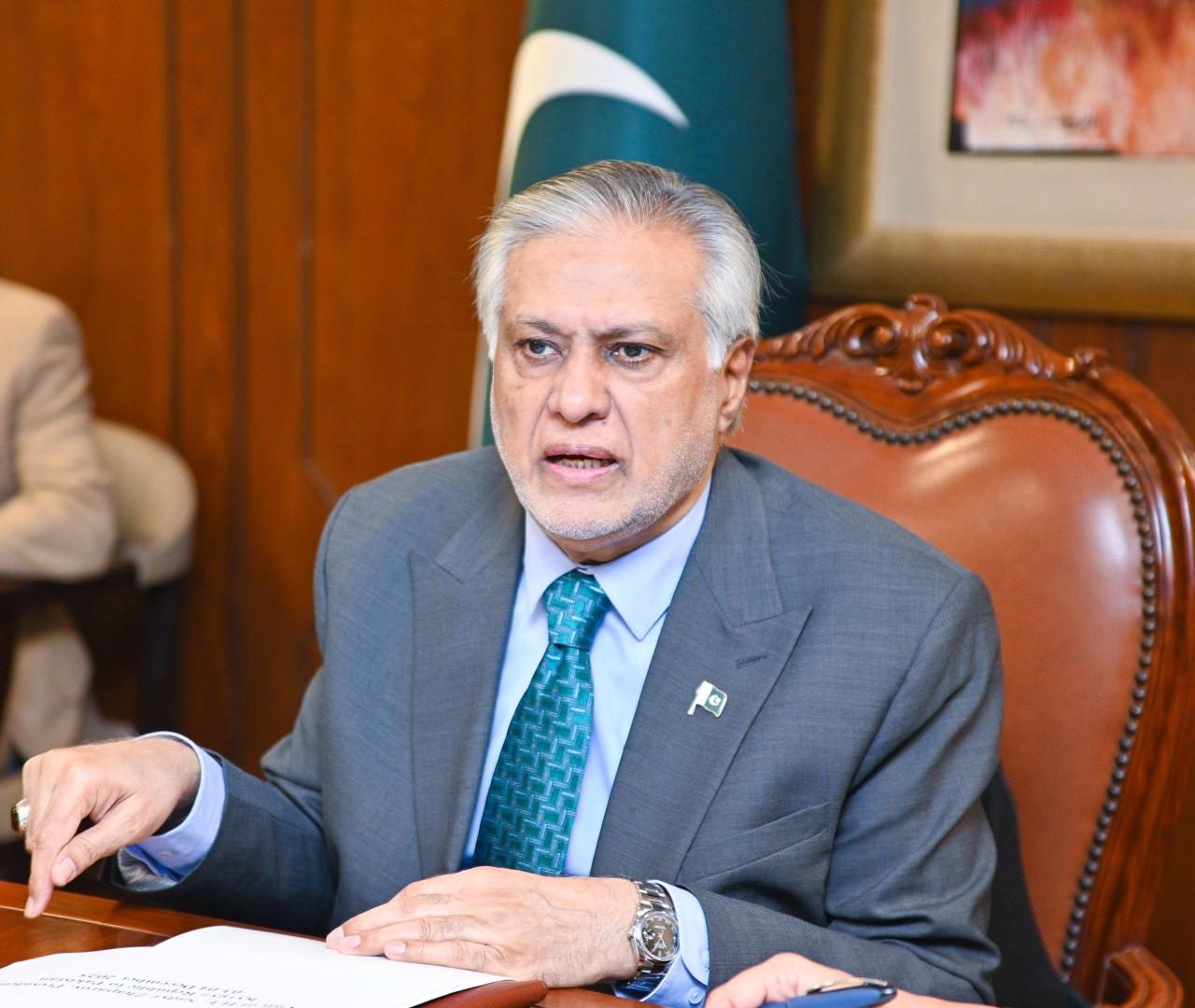
ISLAMABAD, Jun 23 (APP): Deputy Prime Minister and Foreign Minister Mohammad Ishaq has said that Pakistan’s diplomatic efforts have succeeded in bringing the United States and Iran to the negotiating table despite recent regional escalations that threatened to derail the process, as the spoilers never wanted this deal to happen.
The deputy prime minister, in an interview with Al Arabiya English, said that the discussions in Switzerland represented phase two of the diplomatic process, comprising three technical working groups focused on nuclear issues vis-à-vis Iran, sanctions and the unfreezing of assets, and the situation in Lebanon.
He said that the Burgenstock talks could have started a few days earlier, but because of the Israel attack on Lebanon actually derailed everything and stopped everything.
He described the heavy bombing in Lebanon immediately following the signing of the MoU as a clear provocation by spoilers intending to make the parties pause.
He told the interviewer that the diplomatic breakthrough followed an intensive 21-hour marathon session of direct talks between the US and Iran in Islamabad on April 10 and 11—marking their first direct dialogue in 47 years.
He said that the framework outlined a 30-day timeline to conclude certain technical items, with a 60-day overall timeline to finalize the bulk of the comprehensive deal, mutually extendable by consent.
“It is a very well-thought-out document, acceptable to both the parties,” he said.
He said that a key component of the agreement guaranteed the unhindered resumption of navigation in the Strait of Hormuz and that Pakistan’s position remained firm that conditions must fully return to the status quo prior to February 28, when the conflict erupted.
“Our understanding is that there should be nothing—no government interference, no fees, no tolls, and no service charges,” Dar stated, noting that a common five-point proposal he previously discussed with the Foreign Minister of China in Beijing, as well as subsequent White House statements, backed a fee-free transit zone.
Dar highlighted that the conflict disrupted global energy supply chains and triggered inflation, resulting in an estimated loss of 20% to 25% of global GDP. It also heavily affected Pakistan, forcing the government to provide billions of rupees in temporary subsidies before passing the relief directly back to consumers as global prices stabilized.
“We have seen already the dividends of this peace,” he said. “The prices of energy has come down, the ships had started moving.”
Reflecting on the unprecedented diplomatic mobilization, Dar said that while he spoke with counterparts in 61 countries during the India-Pakistan war last year, he had engaged in over 150 diplomatic communications since February 28 to resolve the US-Iran conflict.
DPM Dar said that throughout the process, Pakistan kept regional allies connected, leading to the creation of the “R4” consultative forum alongside Egypt, Saudi Arabia, and Turkey, while coordinating closely with Gulf nations like Qatar and international partners including China and the EU.
He said that during recent ministerial consultations, Pakistan, Egypt, Turkey, and Saudi Arabia also agreed to reactivate the Group of Eight Arab-Islamic countries to revive focus on the Gaza-Palestine issue and the West Bank, which had been overshadowed by the immediate U.S.-Iran crisis.