ISLAMABAD, Dec 04 (APP): China-Pakistan Study Centre (CPSC) at the Institute of Strategic Studies Islamabad (ISSI) organized the fifth working session of the Islamabad Conclave 2025 titled “Regional Connectivity in South Asia: Multilateral Pathways for Collective Growth". The session brought together an esteemed panel of regional experts, including Ambassador Masood Khalid, former Ambassador of Pakistan to China; Prof. Dr. Zhang Jiadong, Director, South Asian Studies, Fudan University; Dr. Aminath Sudha, …
CPSC hosts fifth working session of Islamabad Conclave 2025
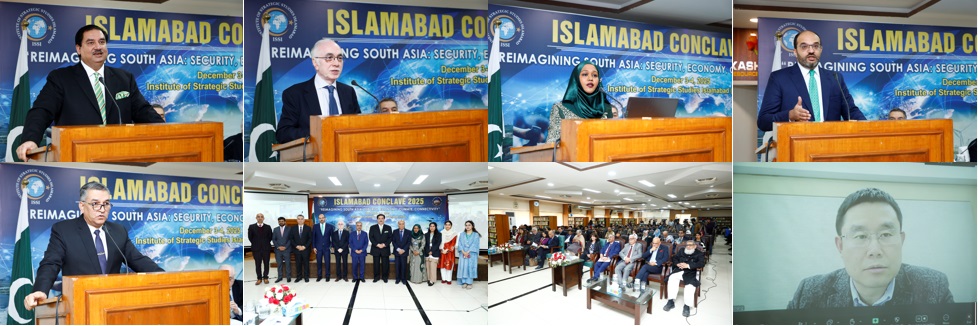
ISLAMABAD, Dec 04 (APP): China-Pakistan Study Centre (CPSC) at the Institute of Strategic Studies Islamabad (ISSI) organized the fifth working session of the Islamabad Conclave 2025 titled “Regional Connectivity in South Asia: Multilateral Pathways for Collective Growth”.
The session brought together an esteemed panel of regional experts, including Ambassador Masood Khalid, former Ambassador of Pakistan to China; Prof. Dr. Zhang Jiadong, Director, South Asian Studies, Fudan University; Dr. Aminath Sudha, Head of Department, MNU Business School, Maldives National University; and Syed Hassan Akbar, Chairman, Strategic Policy Planning Cell (SPPC), National Security Division (NSD).
The keynote address was delivered by Khurram Dastgir Khan, former Minister for Foreign Affairs, Defence, and Energy, said a press release here on Thursday.
In his keynote remarks, Khurram Dastgir Khan underscored Pakistan’s strategic commitment to fostering inclusive, rules-based, and future-oriented regional connectivity rooted in geo-economic cooperation.
He highlighted that connectivity is a shared aspiration across South Asia, yet remains underdeveloped at multiple levels. Emphasizing the region’s vast economic potential, he noted that Pakistan’s vision aligns strongly with the growing demand for regional integration, particularly with the increasing engagement of Central Asian Republics (CARs).
He pointed out that hostile regional dynamics—especially challenges emanating from India and Afghanistan—continue to hinder meaningful regional integration. Stressing that credible leadership is essential for regional harmony.
Khurram Dastgir appreciated China’s pivotal role in promoting win-win cooperation and highlighted CPEC as a transformative model of partnership. He emphasized that Pakistan-China relations should be optimally leveraged to expand sub-regional connectivity and strengthen Pakistan’s long-term geo-economic posture. He concluded by noting that Pakistan’s recent diplomatic gains provide a strong foundation for advancing its regional connectivity agenda.
Earlier in his remarks, Dr. Talat Shabbir, Director CPSC and moderator of the session, emphasized the importance of structured regional cooperation in an era characterized by global fragmentation. He highlighted South Asia’s immense connectivity potential and underscored Pakistan’s strategic geo-economic location as a catalyst for regional transformation and shared prosperity.
Ambassador Masood Khalid highlighted BRI and CPEC as key drivers of South Asian connectivity and cooperation, urging Pakistan to build practical, inclusive frameworks with regional partners. He emphasized leveraging China-led mechanisms and regional platforms like CAREC and ECO to address development gaps. By fostering dialogue, trust, and economic integration, South Asia can transform rivalry into collaboration and unlock its full potential.
Prof. Dr. Zhang Jiadong discussed China’s Global Development, Security, and Civilization Initiatives, noting their significance for South Asia’s long-term stability and prosperity. He emphasized the need for strengthened sub-regional cooperation, climate partnerships, digital integration, and inclusive narratives to unlock the region’s full potential.
Dr. Aminath Sudha highlighted the value of robust multilateralism and inclusive regional institutions in accelerating South Asia’s economic rise. She noted that as one of the fastest-growing regions in the world, South Asia stands to benefit greatly from comprehensive connectivity frameworks built on complementarity rather than competition.
Syed Hassan Akbar emphasized that Pakistan can reinvigorate its geo-economics agenda by leveraging its strategic geography, maritime potential, and emerging partnerships to enhance technology, investment, and knowledge-driven connectivity across South Asia, Central Asia, and ASEAN. He observed that India’s reluctance to embrace an inclusive regional vision remains a key impediment to integration and commended China’s constructive role in promoting cooperative regional arrangements.
The session ended with presentation of mementos to the speakers by Ambassador Khalid Mahmood, Chairman BoG, ISSI.