
ISLAMABAD, Jun 17 (APP):The Supreme Court of Pakistan has held that leave to defend in banking recovery suits could only be granted where the defendant raised a genuine, substantial and arguable question of law or fact The Court further observed that a litigant could not adopt contradictory positions at different stages of the proceedings or subsequently advance a defence that was inconsistent with an earlier stance. Justice Muhammad Shafi Siddiqui …
Contradictory positions not permissible in banking recovery cases, rules SC
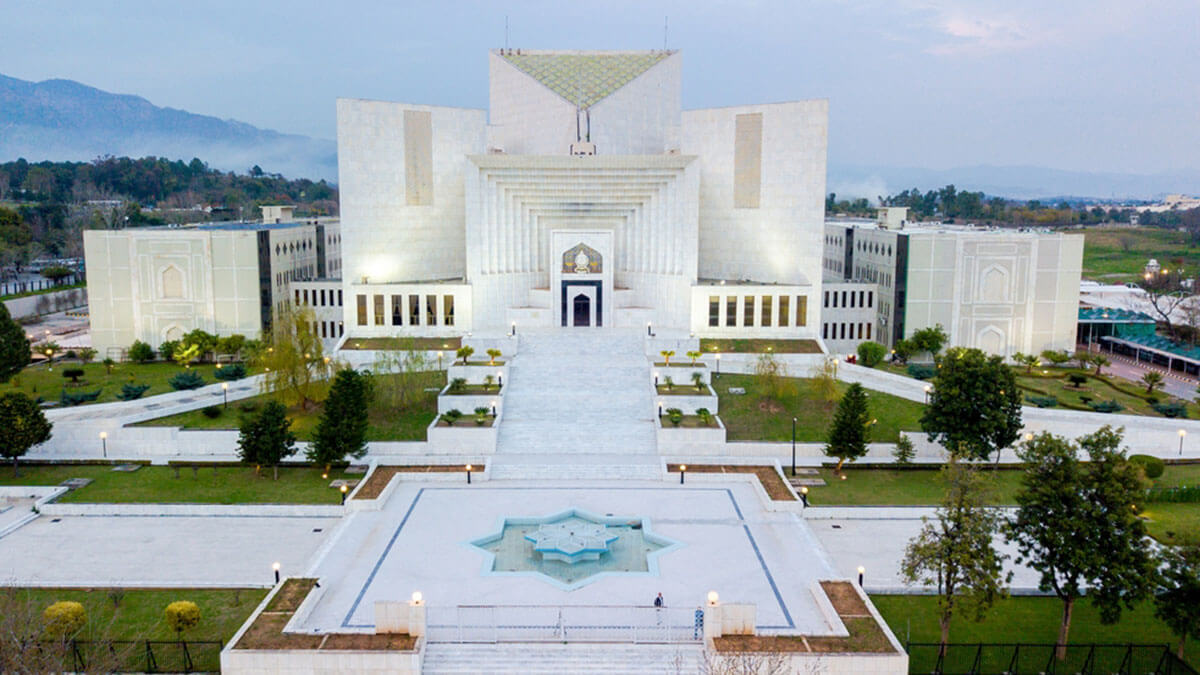
ISLAMABAD, Jun 17 (APP):The Supreme Court of Pakistan has held that leave to defend in banking recovery suits could only be granted where the defendant raised a genuine, substantial and arguable question of law or fact
The Court further observed that a litigant could not adopt contradictory positions at different stages of the proceedings or subsequently advance a defence that was inconsistent with an earlier stance.
Justice Muhammad Shafi Siddiqui authored the judgment on behalf of a three-member bench comprising two other judges, Justice Shahid Waheed and Justice Naeem Akhtar Afghan.
The Court dismissed the appeal filed by Shahid Hameed and others, while upholding the decisions of the Banking Court and the Lahore High Court in favour of United Bank Limited (UBL).
The Supreme Court observed that under the law governing the recovery of finances by financial institutions, a defendant was required to clearly set out in the application for leave to defend all material facts, the basis of the defence, and the legal issues in dispute. Where these statutory requirements were not fulfilled, the court was under no obligation to grant leave to defend.
Explaining an important legal principle, the Court held that the possession of original title documents of a property by a bank constitutes strong evidence of an equitable mortgage. If a person claimed that he did not sign the security documents, he must also explain how the original title documents of his property came into the bank’s possession.
The Court noted that in their jointly filed application for leave to defend, the appellants neither alleged forgery, fabrication, impersonation or misuse of signatures, nor denied the disbursement of the loan facility or the mortgaging of the property.
Their subsequent contention that the security documents had been signed by someone else was inconsistent with their earlier position.
The Supreme Court emphasized that the law did not permit a party to maintain two contradictory positions simultaneously. Where a person acknowledged a fact at one stage of the proceedings and later sought to deny it, the credibility and legal strength of that party’s case were significantly undermined.
The judgment further observed that the appellants failed to establish that the principal appellant was outside the country at the time the security documents were executed. No travel record or other reliable evidence was produced in support of that claim.
The Court held that the borrowing company had availed financial facilities, the appellants were its directors, the property had been mortgaged in favour of the bank, and the original title documents remained in the bank’s custody. In such circumstances, objections relating to the guarantees did not constitute an effective or sustainable defence.
Concluding that both the Banking Court and the Lahore High Court had correctly applied the law, the Supreme Court found no basis for interference with their judgments and accordingly dismissed the appeal.

