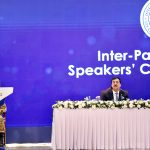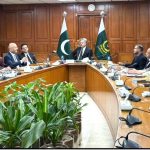
ISLAMABAD, Nov 11 (APP): Speakers at the Margalla Dialogue on Tuesday highlighted the shifting dynamics of global power, underscoring China’s unstoppable rise, pointing to India’s recent military setback that challenges its claims of regional dominance. Taking part in the Margalla Dialogue titled “Great Power Politics and the Future of International Security”, Chairman of the Pakistan-China Institute, Senator Mushahid Hussain Sayed, underscored major geopolitical transformations. The dialogue was organised by Islamabad …
China’s rise, India’s setback, Israel–Iran tensions dominate Margalla Dialogue
ISLAMABAD, Nov 11 (APP): Speakers at the Margalla Dialogue on Tuesday highlighted the shifting dynamics of global power, underscoring China’s unstoppable rise, pointing to India’s recent military setback that challenges its claims of regional dominance.
Taking part in the Margalla Dialogue titled “Great Power Politics and the Future of International Security”, Chairman of the Pakistan-China Institute, Senator Mushahid Hussain Sayed, underscored major geopolitical transformations.
The dialogue was organised by Islamabad Policy Research Institute (IPRI).
He recalled that during his tenure as minister, he had established the Islamabad Policy Research Institute (IPRI) to serve as a dedicated think-tank for portraying Pakistan’s narrative internationally.
Addressing the dialogue vi video link, Senator Mushahid said India failed to establish its hegemony in South Asia after its defeat in war with Pakistan in May this year. He added that Israel’s aggression in Palestine amounted to the “worst genocide,” while its confrontation with Iran backfired, shattering perceptions of Israeli military might as Iranians struck sensitive installations during the conflict.
Highlighting global power dynamics, he stressed that the rise of China is “unstoppable,” posing a challenge to Western hegemony. He remarked that even in Western capitals like New York and London, the growing influence of Muslims illustrates changing realities.
On U.S. politics, he noted that the “Trump factor” was not representative of the American deep state, but it altered the paradigm of U.S. foreign policy. He said Trump’s trade war against China had failed.
Senator Mushahid also warned that India’s vision of “Akhund Bharat” seeks to merge nine countries into its fold, a plan he described as expansionist.
Dr. Victor Zhikai Gao, Vice President of the Center for China and Globalization, highlighted Pakistan’s historic role in bridging relations between China and the United States.
He emphasized that Pakistan can continue to play such pivotal roles in the future. If Pakistan once again assumes this indispensable position in fostering dialogue between Beijing and Washington, it would be a powerful demonstration of its commitment to global peace. He congratulated the Pakistan Armed Forces on their victory over India on May 25, describing it as a triumph of peace over war. Pakistan’s success in the May 2025 conflict was characterized as a wake-up call for the Indian military, he added.
Dr. Victor expressed deep personal anguish over the ongoing atrocities in Gaza, describing them as acts of genocide against Palestinians. He reaffirmed that China firmly opposes such actions, standing in solidarity with Muslim nations. Dr. Victor emphasized China’s unwavering support for a two-state solution, underscoring the hope that Palestinians will one day be treated as equals to Israelis.
Ms. Anastasia Malygina, Associate Professor at Saint Petersburg State University, underscored that the link between disarmament and development must remain central to the United Nations framework. She highlighted Russia’s ongoing push for comprehensive disarmament, pointing to its active engagement in both bilateral and multilateral negotiations. Malygina further cited recent forum achievements as evidence of Russia’s commitment to advancing strategic stability on the global stage.
The session was moderated by Fahd Husain, Executive Director & Anchor, Express Media Group.
Dr. Moeed W. Yusuf, Vice Chancellor of Beaconhouse National University, urged Pakistan to recalibrate its foreign policy by embracing middle power coalitions rather than relying solely on ties with the United States, China, or Gulf nations.
Speaking in Margalla Dialogue, he emphasized that Pakistan must adopt a multi-aligned, and issue-based approach to navigate global complexities.
Dr. Yusuf highlighted that heavy investment in minerals and regional stability with active involvement from both Washington and Beijing could unlock new avenues of connectivity, revenue generation, and geo-economic success for Afghanistan and Pakistan.
He said Pakistan’s National Security Policy envisions cooperative geoeconomics as the future, built on three pillars.
The first pillar, development partnerships, shifts focus from seeking assistance to generating non-debt foreign exchange inflows.
Pakistan’s recurring balance of payments crises every three to four years undermine foreign policy independence.
To resolve this, he said the priority is sustainable inflows through three avenues: Exports, Foreign Direct Investment (FDI), and Manpower exports.
Former Kyrgyz Prime Minister Dr. Djoomart Otorbaev highlighted the region’s rapid economic rise, noting an average growth rate of 6.7% over the past two decades, with even stronger performance this year.
He hailed the region as the “Asian tigers in Asia,” calling it the fastest-developing globally, marked by three unmatched strengths: a fully educated population, rapid economic growth, and strong demographic expansion — a rare combination setting it apart on the world stage.
Eurasia is witnessing a transport revival through the “rail revolution,” with trains linking Chongqing, China, to Duisburg, Germany in just 12 days. Rising trade volumes and new north–south routes to Indian Ocean ports are positioning the region as a key hub. Amid Red Sea disruptions, this rail corridor has become as cost effective as sea transport while being faster and greener attracting more logistics firms. The development echoes the Silk Road’s legacy, promising stronger trade ties with Pakistan and South Asia.
Speaking in the Margalla Dialogue, Haroon Akhtar Khan, Special Assistant to the Prime Minister, said Pakistan must make energy prices competitive, lower interest rates, and reduce taxes. He warned that if local businesses shut down and move abroad, foreign investment cannot be expected.
Khan added that the government is engaged in discussions and developing a balanced policy to address these challenges and set the country on a path of growth.
Former State Bank of Pakistan Governor Dr. Shamshad Akhtar emphasized that Pakistan must strengthen its capacity by ensuring energy reliability, upgrading logistics, developing human capital, and reinforcing institutions. She highlighted the urgent need for improved governance, regulatory predictability, and fair taxation, while stressing that investment in vocational training and STEM education will be critical to recover lost economic value.
She said Pakistan and Saudi Arabia have signed a landmark defense and investment pact, pledging that an attack on one will be treated as an attack on both. The agreement deepens trust, strengthens economic ties, and aligns Pakistan with Saudi Vision 2030, unlocking opportunities in energy, agriculture, logistics, and Gulf–Africa connectivity.
The Bank of Punjab CEO Zafar Masud emphasized that funding for green initiatives is readily available, but the sector faces a shortage of bankable projects and capacity.
He noted that despite economic or political volatility, including tariff-driven challenges, green financing remains a major opportunity. Masud stressed that the key hurdle is not financing, but the lack of viable projects to channel funds effectively.
Dr Stefan Dercon, Professor of Economic Policy, University of Oxford, UK, has warned that Pakistan’s trade-to-GDP ratio, at just 25%, is among the lowest in Asia, exposing long-standing structural weaknesses. He noted that even modest growth spurts of 3.5–3.8% repeatedly trigger balance of payments crises, underscoring the economy’s fragility. Despite this, some exporters continue to succeed globally, proving that competitiveness can thrive without protectionism.
He stresses that reforms must be gradual and predictable, implemented patiently over five years, pointing out that even Margaret Thatcher’s economic transformation took a decade.
Nematov Akramjon Ilkhomovich, First Deputy Director of the Institute for Strategic and Regional Studies, emphasized that connectivity between Uzbekistan, Central Asia, and South Asia is vital not only for development but also for regional security and stability.
For Central Asia, it means diversifying economic ties and driving growth, while South Asia gains access to Central Asia’s fast-growing market and rising consumer demand.
Nematov Akramjon Ilkhomovich said lasting peace in Afghanistan is seen as vital for building a dependable framework of connectivity between Central and South Asia. Experts emphasize that Afghanistan, Pakistan, and the Central Asian states form an interconnected regional security complex, making stability in Kabul crucial for broader cooperation and integration across the region.
Karim Nazriev, Deputy Head of the Internal Policy Department of the Republic of Tajikistan, stated that one of the problems of the modern world is ensuring security. He noted that countries worldwide face numerous challenges and emphasized that Tajikistan supports resolving disputes through diplomatic means. “One of the major problems of the modern world is ensuring security. Today, nations face numerous challenges and concerns. Achieving common security requires collective effort, and Tajikistan firmly supports resolving all disputes through diplomatic means.
Dr. Mukhit B. Assanbayev, Chief Expert at the Kazakhstan Institute for Strategic Studies, emphasized that energy cooperation through pipelines and gas transit can link landlocked Central Asian states like Kazakhstan, with surplus energy, to South Asia. For Pakistan, with over 200 million people and rising demand, building transit and logistics links is strategically vital to ensure a reliable energy supply and strengthen regional economic ties.
Chair of Economic Security, IPRI, Dr. Salman Aneel, remarked:
“Charles Dickens tells the tale of a young man who endures hardship after hardship, yet continues to learn, adapt, and rebuild his life. In many ways, nations today face a similar journey, navigating trade turbulence, shifting markets, and evolving alliances. Despite these challenges, countries must find the resilience to adapt and the strength to grow.