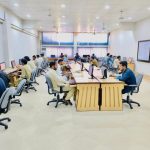
ISLAMABAD, Aug 10 (APP):The Benazir Income Support Programme (BISP) has reaffirmed its commitment to protecting and promoting breastfeeding as a critical intervention for maternal and child health, stressing that financial support must be complemented by counselling, accurate information and access to quality health and nutrition services. BISP Chairperson Senator Rubina Khalid made these remarks while addressing the launch ceremony of World Breastfeeding Week 2026, organized at BISP Headquarters in collaboration …

ISLAMABAD, Aug 10 (APP):The Benazir Income Support Programme (BISP) has reaffirmed its commitment to protecting and promoting breastfeeding as a critical intervention for maternal and child health, stressing that financial support must be complemented by counselling, accurate information and access to quality health and nutrition services.

BISP Chairperson Senator Rubina Khalid made these remarks while addressing the launch ceremony of World Breastfeeding Week 2026, organized at BISP Headquarters in collaboration with UNICEF, World Health Organization (WHO), World Food Programme (WFP) and the Ministry of National Health Services, Regulations and Coordination.
She said breastfeeding provided every child with the healthiest start in life and was fundamental to child survival, family well-being, human capital development and national progress.
Senator Rubina Khalid urged mothers to exclusively breastfeed their infants during the first six months of life and discouraged the unnecessary use of formula milk and bottle feeding.
She said the vision of Shaheed Mohtarma Benazir Bhutto for improving the health and well-being of women and children, particularly through initiatives such as the Lady Health Workers Programme, was being carried forward through the Benazir Nashonuma Programme.
The programme, she added, promotes maternal and child nutrition and provides essential health and nutrition services to pregnant and breastfeeding women.
The BISP Chairperson said the programme had established a unique mechanism to reach pregnant and lactating mothers during one of the most critical stages of their lives.
“While financial assistance is vital, cash support alone is not enough,” she said, stressing the need for accurate information, counselling, trust and access to quality health and nutrition services to ensure healthy pregnancies and the well-being of children.
UNICEF Country Representative Ms. Pernille Ironside commended BISP’s leadership through the Benazir Nashonuma Programme and emphasized that breastfeeding should begin within the first hour after birth, describing a mother’s first milk as a child’s first vaccine.
WHO Pakistan Deputy Country Representative Ms. Ellen Thom described the Benazir Nashonuma Programme as an excellent example of integrating social protection with health and nutrition interventions and reaffirmed WHO’s support for Pakistan’s efforts to improve maternal and child health.
WFP Pakistan Deputy Country Director Mr. Thomas Conan said breastfeeding was one of the simplest and most cost-effective investments in improving maternal and child nutrition and also contributed to women’s empowerment.
He appreciated the partnership between WFP and BISP and stressed the importance of delivering consistent breastfeeding messages through community-based interventions.
Earlier, UNICEF Early Childhood Development Manager Dr. Saba Shuja presented an overview of the global theme and national campaign for World Breastfeeding Week 2026, highlighting breastfeeding’s role in healthy growth, child survival and long-term development.
The ceremony also featured a panel discussion titled “Protecting Breastfeeding through Social Protection Initiatives,” in which experts from BISP, UNICEF, WHO, WFP, the Ministry of National Health Services, Regulations and Coordination and the Pakistan Paediatric Association discussed strategies to strengthen breastfeeding through integrated health, nutrition and social protection interventions.
During the panel discussion, BISP Director General Conditional Cash Transfer Dr. Asim Ijaz briefed participants on the Benazir Nashonuma Programme and its contribution to the country’s nutrition ecosystem.
He said BISP was reaching 1.4 million active beneficiaries through 578 facilitation centres across the country, providing counselling and referrals to health services, including antenatal and postnatal care.
He said the programme was also spreading nutrition and breastfeeding messages through 169 Nutrition Stabilization Centres.
Dr. Asim Ijaz said the Benazir Nashonuma Programme had achieved significant success in reducing stunting and increasing awareness about breastfeeding.
In his closing remarks, Additional Secretary BISP Dr. Asmat Nawaz thanked UNICEF, WHO, WFP, the Ministry of National Health Services, Regulations and Coordination and other partner organizations for their continued collaboration in promoting maternal and child nutrition.
He reaffirmed BISP’s commitment to working closely with development partners to ensure that every mother and child has access to the support and services needed for a healthy and productive future.