
PESHAWAR, Jan 19 (APP):At a time when smartphones and social media dominate the attention of the younger generation, the centuries-old traditional dances of Khyber Pakhtunkhwa (KP) continue to survive—beating drums, swirling swords and firing shots into the air, keeping alive a proud cultural legacy that once echoed across battlefields. Among these, the Mehsud, Khattak and Yousafzai attains stand as living symbols of bravery, unity and tribal identity of Khyber Pakthunkhwa. …
Beats of heritage: Mehsud, Khattak, Yousafzai dances defy social media’s addiction
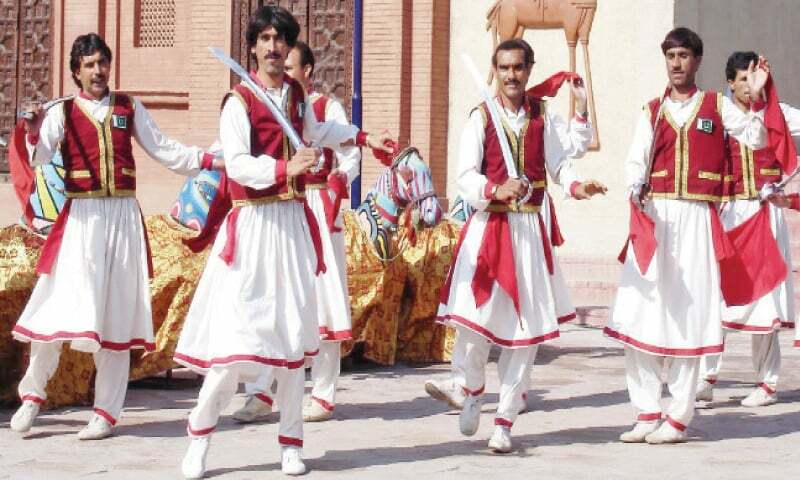
PESHAWAR, Jan 19 (APP):At a time when smartphones and social media dominate the attention of the younger generation, the centuries-old traditional dances of Khyber Pakhtunkhwa (KP) continue to survive—beating drums, swirling swords and firing shots into the air, keeping alive a proud cultural legacy that once echoed across battlefields.
Among these, the Mehsud, Khattak and Yousafzai attains stand as living symbols of bravery, unity and tribal identity of Khyber Pakthunkhwa.
Historically, these dances were performed to energize warriors before battle or to celebrate victory. Today, despite the mushroom growth of information technology and social media over the past two decades, these dances remain an integral part of life in KP, especially during weddings, Eid festivities, birthday celebrations and the reception of VIP and VVIP guests, including in the merged tribal districts.
“Mehsud dance is believed to have originated in South Waziristan centuries ago,” said Bakhzada Khan, Assistant Director at the Archaeology and Museum Department, in an interview with APP on Monday.
“It was performed by the Mehsud tribe to psychologically pressure rival tribes before battle often after peace jirga negotiations had failed so as to protect their independence, land, mines and caves.”
According to historians, Mehsud, Khattak and Yousafzai tribesmen would also perform these dances after achieving victory in battle, turning celebration into a powerful collective expression of pride.
The Mehsud dance is perhaps the most striking of all dances in KP. Armed male dancers gather in a circle, firing shots into the air as they move in rhythm to thunderous drumbeats. The echo of gunfire reverberates across the landscape, creating an atmosphere of intensity and awe.
“In Mehsud dance, the dancers carry guns and handkerchiefs, often with long flowing hair flicking in rhythm,” said Tariq Khan Mehsud, a Mehsud dance expert while talking to APP.
“They kneel, rise, fire their weapons and move with incredible speed. It demands 100 percent physical fitness and fearless confidence.”
He added that the dancer performs with heroic zeal, showcasing agility, endurance and coordination qualities once essential on the battlefield.
Bakhzada Khan said that the Mehsud dance continued even during the British colonial era, particularly in Waziristan, where tribes such as the Mehsud, Ahmadzai Wazir and Bhittani fiercely resisted foreign rule.
Quoting former British Indian Frontier Governor Sir Olaf Caroe, he said, “The Masud tribe are a people who can never even think of submitting to a foreign power. From 1860 to 1937, English forces repeatedly attacked Mahsud positions but never gained a foothold.”
Despite the passage of centuries, the Mehsud dance remains unchanged in spirit—an expression of resilience, agility and pride performed from the heart.
Like the Mehsud dance, the subcontinent’s oldest and most popular Khattak dance, recognized as Pakistan’s national dance, continues to thrive in KP.
Introduced by the Khattak tribe in the 14th century, the dance is still performed at weddings, birth celebrations and official functions, leaving a lasting impression on audiences.
“Khattak dance is as old as the history of the Khattak tribe itself,” said Bakhzada Khan.
“Passed from generation to generation, it gave rise to many forms such as Braghoni, Shahdola, Bangra, Balbullah and Chatrali, which later spread widely across society.”
Historically, Khattaks mostly residing in Karak, Nowshera and surrounding districts used sword dances as warm-up exercises before battles.
“The Khattak dance was popular during both Mughal and British eras,” Bakhzada added.
“The rulers were deeply impressed by the bravery of Khattak warriors and recruited them into their armies. Freedom fighter Khushal Khan Khattak symbolized Pashtun unity and resistance.”
The dance is performed in colorful traditional attire, a wide shalwar, custom-made frock-style kameez, red embroidered waistcoat and a decorative scarf tied at the waist. Dancers wave glittering swords in perfect harmony with drumbeats and the haunting notes of the surnai.
Shazeb Gul, a Khattak dance expert and musician from Nowshera, explained the dance’s progression.
“Bhangarah is the first step, where all members swirl with swords,” he said.
“It is followed by Derabi, where two dancers perform with a sword and handkerchief before the troupe.”
The third step, Laila, features four performers holding two swords each, moving in a circular formation.
“Braghoni is the fastest and most adventurous,” he added.
“A single dancer performs with three swords—two in the hands and one held in the mouth. It requires exceptional fitness and skill.”
The concluding step, Bulbullah, is performed without swords. Dancers sing a love song at high pitch as drumbeats gradually intensify, ending the performance on an emotional high.
Cultural experts stressed that government initiatives such as the proposed Rs 1 billion film fund, national film institute, studios and post-production facilities would greatly benefit artists, musicians and the film industry.
They emphasized that promoting art, music and traditional dances is vital not only for preserving heritage but also for countering rising intolerance and providing meaningful cultural engagement in an increasingly digital society.
As screens multiply and attention spans shrink, the thunder of drums and clash of swords continue to remind KP’s people that some traditions are too powerful to fade.