ISLAMABAD, Dec 11 (APP):The China-Pakistan Economic Corridor (CPEC) projects have achieved significant progress across Balochistan, reflecting a renewed focus on the province’s infrastructure development, social uplift and economic integration. According to documents available with Wealth Pakistan, in the energy sector, a landmark completed project is the 1320MW China Hub Coal Power Plant in Hub District, executed under the IPP model with an investment of USD1,912.2 million, now supplying critical baseload …
Balochistan sees major progress on CPEC energy, roads projects
ISLAMABAD, Dec 11 (APP):The China-Pakistan Economic Corridor (CPEC) projects have achieved significant progress across Balochistan, reflecting a renewed focus on the province’s infrastructure development, social uplift and economic integration.
According to documents available with Wealth Pakistan, in the energy sector, a landmark completed project is the 1320MW China Hub Coal Power Plant in Hub District, executed under the IPP model with an investment of USD1,912.2 million, now supplying critical baseload power to the national grid.
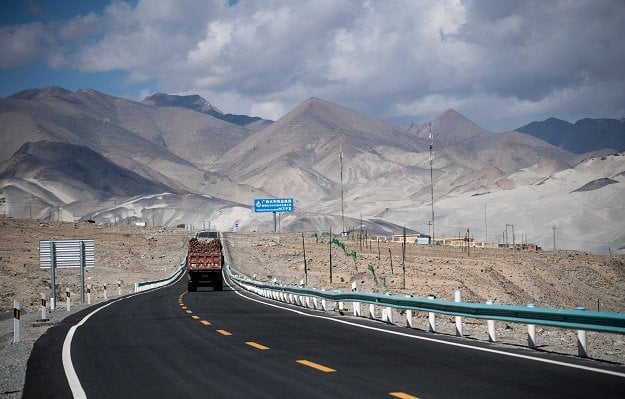
Connectivity improvements include the completion of Eastbay Expressway Phase-I in the IFL mode at a cost of USD179 million, 110km Khuzdar–Basima Road financed through PSDP at USD118.01 million, and New Gwadar International Airport constructed as a grant-funded project worth USD230 million. Additionally, Gwadar Port and Free Zone, developed under the BOT at a cost of USD300 million, has strengthened Pakistan’s maritime and logistics capabilities.
Under the socio-economic development initiatives, several grant-based projects have been completed to support the local communities. These include Gwadar Smart Port City Master Plan worth USD4 million, freshwater treatment facilities under PSDP costing USD130 million, Technical and Vocational Institute in Gwadar supported by a USD10 million grant, and Pak-China Friendship Hospital in Gwadar, built through a USD100 million grant.
Key socio-economic infrastructure projects also encompass 1.2 MGD Gwadar Desalination Plant with a grant of USD13.97 million, provision of 15,000 solar-powered lighting units through a grant of USD0.34 million, and upgradation of an emergency centre at Bolan Medical Complex, Quetta, supported by a grant of USD0.22 million.
Several major projects are currently under implementation in Balochistan’s connectivity network. These include 168km Awaran–Naal Road under PSDP with a cost of USD107.46 million, 103km Nokundi–Mashkhel Road, costing USD47 million, Hoshab–Awaran Section of M-8 (146 km) financed through PSDP at USD161.49 million, and Zhob–Quetta Road (298 km) estimated at USD391 million.
Work is also progressing on the infrastructure of Gwadar Free Zone Phase-II under the BOT model with an estimated investment of USD285 million.
In the industrial infrastructure domain, Bostan SEZ in Quetta, supported by PSDP financing worth USD 9 million, is advancing regional industrialization. Moreover, socio-economic measures include the establishment of a burns centre and the rehabilitation of 36,000 flood-affected houses in Balochistan.
Energy infrastructure expansion continues with the 300MW Gwadar Coal Power Project, costing USD542.32 million under the IPP model.
Meanwhile, the planned DI Khan to Zhob four-lane highway (210 km), spanning Khyber Pakhtunkhwa and Balochistan and currently under the TBD financing category, is expected to significantly improve inter-provincial connectivity.
Looking forward, ambitious projects are in the pipeline to further catalyze growth in the province.
The province is preparing for its first major urban transport system through the Quetta Mass Transit Project, aimed at easing mobility challenges in the provincial capital. To boost maritime capacity, two new PSDP-funded initiatives – dredging of berthing areas and channels (USD27 million) and construction of a breakwater (USD123 million) are expected to enhance operational efficiency at the port.