ISLAMABAD, Nov 25 (APP):Federal Minister for Power Sardar Awais Ahmad Khan Leghari on Wednesday said Pakistan is playing a proactive role in promoting peace and facilitating dialogue amid the US-Iran conflict, while stressing that uninterrupted global energy supplies are essential to economic stability. In an exclusive interview with RT in Moscow, the minister said Pakistan had been positioned to play an important regional role for decades, but its contribution had …
Awais Leghari highlights Pakistan’s diplomatic role in US-Iran conflict, calls for stable energy supplies
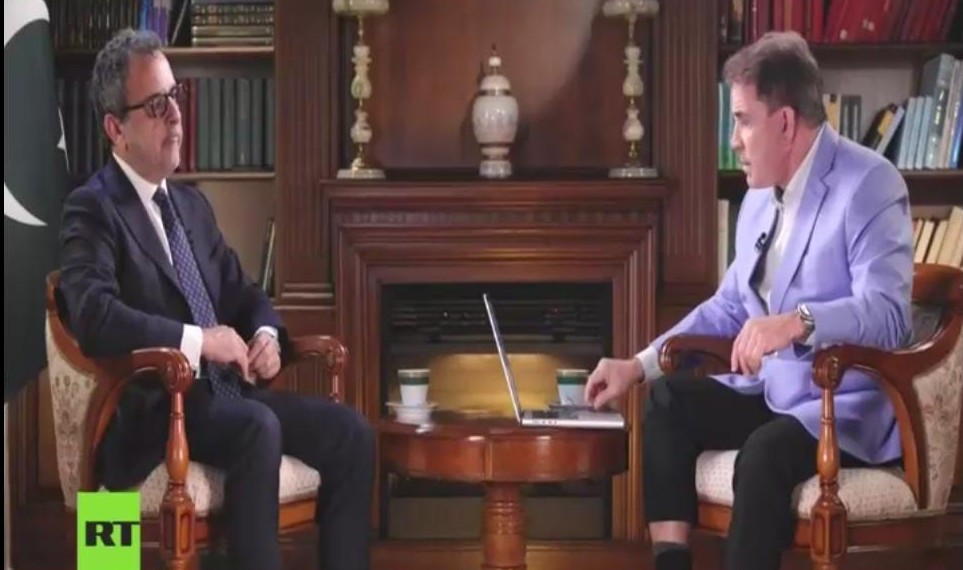
ISLAMABAD, Nov 25 (APP):Federal Minister for Power Sardar Awais Ahmad Khan Leghari on Wednesday said Pakistan is playing a proactive role in promoting peace and facilitating dialogue amid the US-Iran conflict, while stressing that uninterrupted global energy supplies are essential to economic stability.
In an exclusive interview with RT in Moscow, the minister said Pakistan had been positioned to play an important regional role for decades, but its contribution had become more proactive over the past year due to improved coordination among state institutions and the country’s leadership.
He credited Prime Minister Muhammad Shehbaz Sharif and Chief of Defence Forces and Chief of Army Staff, Field Marshal Asim Munir, for strengthening Pakistan’s role, saying all state institutions were working in coordination on foreign policy and economic matters.
Leghari said the US-Iran conflict had sent economic shockwaves across the world, worsening poverty and affecting countries that were on the path to economic recovery.
He said Pakistan had sought to play its role in helping resolve the crisis and had received appreciation from key global players, including the United States, Russia and China.
Emphasising the need for an early end to the conflict, he said uninterrupted energy flows were essential for all countries, whether developed or developing, energy exporters or importers.
“Free access to energy without any blockages” was necessary for global economic stability, he said, adding that the world could not afford further delays in restoring energy flows. He also welcomed engagement among major powers, including Russia, China and the United States, and expressed hope that it would produce an early outcome.
Asked why Pakistan had emerged as a venue for efforts to facilitate US-Iran negotiations, Leghari said the country’s foreign policy outreach over the past two to three years had helped rebuild trust with major international players, including Washington and Tehran.
He said Pakistan was now increasingly recognised as a promoter of peace, he added.
The minister said relations with Iran had also improved over the past few years, enabling Tehran to consider Pakistan a trusted partner for facilitating dialogue. He acknowledged the positive contributions of Saudi Arabia, Qatar, Oman and other regional countries in the diplomatic efforts.
On Pakistan-Russia relations, Leghari said both countries had a strong desire to translate their cordial political ties into higher levels of economic and trade cooperation. He said the Intergovernmental Commission had gained momentum over the past three years, advancing cooperation in energy, the North-South Transport Corridor and human resource development.
He described energy as one of the key pillars of the bilateral engagement and said the two countries were exploring opportunities to take their economic relationship to a new level.
Discussing Pakistan’s energy outlook, the minister said the country was shifting towards indigenous energy resources and had witnessed a significant transition to renewable energy, particularly solar power, in recent years.
He said around 24 per cent of Pakistan’s electricity sector remained dependent on imported energy, while rising fuel prices had accelerated interest in electric vehicles and mobility. He said the shift towards electric two- and three-wheelers was gaining momentum as consumers looked for more economical alternatives.
Leghari said about 56 per cent of electricity generated in Pakistan came from clean energy sources, including hydropower, nuclear, wind and solar. He said hydropower capacity was expected to increase in the coming years.
He maintained that reliable baseload power plants would remain necessary for many years and said Russia could become an important partner in meeting Pakistan’s energy requirements. He also described nuclear power as a clean and reliable source of baseload electricity and said Pakistan was engaged with Russia on potential cooperation.
The minister said the country’s future energy mix would rely on hydropower, solar, wind and nuclear energy, with competitive electricity markets increasingly determining the most efficient and least-cost options for consumers.
He also stressed the need for fair and uninterrupted access to energy and mineral resources, saying certain restrictions on technology and resource flows needed to be reconsidered in the broader interest of humanity.
Referring to the proposed cooperation among the United States, Russia and China to facilitate global energy flows, Leghari said it offered hope to economies across the world. He called for a strong mechanism to protect energy supplies from future political and geopolitical disruptions.
On the revival of Pakistan Steel Mills, the minister said the facility had played a significant role in the country’s industrial development after its establishment with Soviet assistance in the 1960s.
He attributed its decline to insufficient investment in modernisation and operational inefficiencies, saying the prime minister was keen to revive the industrial unit.
Leghari said Pakistan’s Ministry of Industries was working closely with its Russian counterpart and that the revival proposal had gone through initial stages of development. He said the project was likely to be structured as a commercially driven, business-to-business arrangement, expressing hope that it would become one of the early tangible outcomes of stronger economic ties.
The minister said Pakistan was fortunate to maintain strong strategic relations with both China and the United States and believed there was considerable potential to develop a similar partnership with Russia.
He said Pakistan wanted positive relations with all countries and hoped regional powers, including India, would adopt a constructive approach towards regional cooperation and peace.