Federal Minister for Information and Broadcasting Attaullah Tarar on Monday demanded a year-wise account of funds allocated to Khyber Pakhtunkhwa under the National Finance Commission (NFC) framework for counterterrorism, questioning their utilisation amid continuing security challenges in the province.
Atta Tarar seeks year-wise account of KP counterterrorism funds
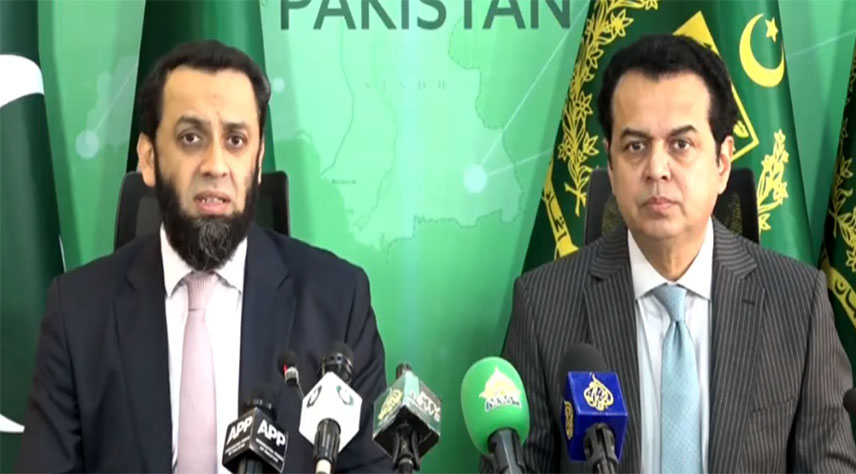
ISLAMABAD, Sep 28 (APP): Federal Minister for Information and Broadcasting Attaullah Tarar on Monday demanded a year-wise account of funds allocated to Khyber Pakhtunkhwa under the National Finance Commission (NFC) framework for counterterrorism, questioning their utilisation amid continuing security challenges in the province.
Addressing a press conference alongside Minister of State for Interior Talal Chaudhry, Tarar said the entire country had provided additional resources to the provincial government specifically for counterterrorism measures, and it must explain how the funds received each year had been spent.
He questioned why Safe City surveillance systems had not been established across the province and why a forensic laboratory had not been set up, forcing samples to be sent to Lahore for examination. He said surveillance cameras could help investigators trace suspects and vehicles used in terrorist attacks.
Recalling the martyrdom of Captain Mubeen and SSP Zahid Gondal in Punjab, Tarar said Safe City cameras had helped investigators trace the facilitators involved in the attacks.
The minister said the provincial government should disclose whether the counterterrorism funds had been spent on strengthening police, improving security infrastructure or other purposes. He asked whether the money had been used for political activities, distributed among members of the provincial assembly or diverted for personal gain.
Atta Tarar said despite governing the province for around 12 and a half years, the Pakistan Tehreek-e-Insaf (PTI)-led government had failed to take adequate ownership of counterterrorism efforts and strengthen the security apparatus.
He also questioned the continued use of non-custom-paid and unregistered vehicles in the province, saying an effective registration system and computerised database could help law-enforcement agencies identify vehicles used in terrorist attacks, including vehicle-borne improvised explosive devices (VBIEDs).
He said vehicle registration could also generate revenue through applicable taxes and duties, which could be used for public welfare and security measures. However, he stated that the provincial government had failed to implement an effective system despite having sufficient time.
The minister further criticised the provincial government’s handling of police preparedness, saying the federal government had offered bulletproof vehicles but the offer had not been accepted. He questioned whether police personnel had been provided with adequate bulletproof jackets, modern weapons and other equipment to confront terrorists.
Atta Tarar said the provincial government had also failed to establish a Counter Terrorism Department (CTD) on the lines of Punjab, where, he said, the department had conducted effective counterterrorism operations.
Expressing concern over the loss of civilian lives, including women and children, and security personnel in terrorist attacks, he referred to incidents in Hangu, Dera Ismail Khan, Kohat and Lakki Marwat.
He said he had visited injured people and met the families of those killed, including the father of police constable Faheemullah, who embraced martyrdom.
The minister said the sacrifices of the people of Khyber Pakhtunkhwa and security personnel required a collective national response. He called for coordinated efforts by the federal government, armed forces and political parties to eliminate terrorism.
He urged the provincial government to convene law and order meetings in affected districts, consult relevant stakeholders and identify the resources required to address security challenges.
Tarar criticised Chief Minister Khyber Pakhtunkhwa Sohail Afridi for prioritising political activities while the province faced serious security challenges. He said the provincial leadership should focus on protecting citizens and take a clear position against terrorism.
He also questioned the provincial government’s response to reported drone activity from Afghanistan towards Kohat and firing from across the Afghan border in Kurram, adding that its leadership had failed to adequately condemn such incidents.
Referring to a ceremony organised by Sohail Afridi, Tarar said two Afghan delegates had not stood from their seats during Pakistan’s national anthem. He said the provincial authorities should not have ignored the incident.
The minister also referred to an image of an Afghan national which, he said, open-source intelligence had identified as having been taken at Pashtunistan Square in Kabul. He said that the individual had participated in terrorist activities and attacked a rescue team providing medical assistance.
Atta Tarar said attacks on rescue personnel were particularly concerning because they were responding to emergencies and assisting the injured.
He said that political and financial interests were influencing the provincial government’s approach to counterterrorism, linking illegal mining, gold extraction, timber, tobacco-related activities and contracts to a political-terror-crime nexus.
He also criticised the provincial leadership for focusing on political protests and demands concerning the health and hospitalisation of the PTI founder while terrorist attacks continued to claim lives.
Responding to a question about possible administrative developments in the province, Atta Tarar said it was premature to comment on what might happen next. However, he maintained that the provincial government had failed to adequately address the security situation.
Comparing the counterterrorism efforts of Balochistan Chief Minister Sarfraz Bugti and KP Chief Minister Sohail Afridi, Tarar praised Bugti’s participation in National Action Plan meetings and the provision of equipment and training to the provincial police.
He said Bugti’s government had also sought experienced police officers from the federal government and equipped its civil and police officers to perform their duties.
Discussing the return and resettlement of militants in settled areas, Atta Tarar criticised the policy adopted during the PTI government’s tenure, saying militants had been brought back despite progress against terrorism under the National Action Plan.
He said terrorism had been brought under control in various areas by 2017 during former prime minister Nawaz Sharif’s government, and said the subsequent resettlement policy had contributed to the present security challenges. He noted that the policy reflected a soft approach towards the Tehreek-e-Taliban Pakistan (TTP) and the Afghan Taliban.
The minister opposed proposed changes to the recruitment process for deputy superintendents of police (DSPs), arguing that recruitment through the relevant public service commissions protected merit and professional standards.
He said assistant superintendents of police were recruited through the Federal Public Service Commission, while provincial public service commissions conducted examinations for relevant provincial police appointments.
Atta Tarar said granting the provincial government direct authority to recruit DSPs could undermine merit and increase political interference in recruitment, transfers and postings.
Referring to the National Action Plan, the minister said the federal government and other provincial governments were pursuing measures involving Federal Board of Revenue reforms, customs modernisation and action against non-custom-paid vehicles within their respective jurisdictions.
He said Prime Minister Shehbaz Sharif had directed to address illegal smuggling and other activities that could provide financial support to terrorist networks.
Atta Tarar maintained that the federal government and armed forces had taken measures to curb smuggling, while the Khyber Pakhtunkhwa government was not showing the same commitment to the National Action Plan.
He said the federal government would continue working with the armed forces and other stakeholders to eliminate terrorism and protect citizens.