ISLAMABAD, Jul 27 (APP):Federal Minister for Information and Broadcasting Attaullah Tarar on Monday said media policies introduced in 2019 were the primary cause of the financial difficulties facing Pakistan's media industry, saying those measures significantly shrank the sector's financial space and their effects continued to be felt years later. Addressing the inauguration ceremony of the National Press Club's website, the minister said it was the government's responsibility to formulate policies …
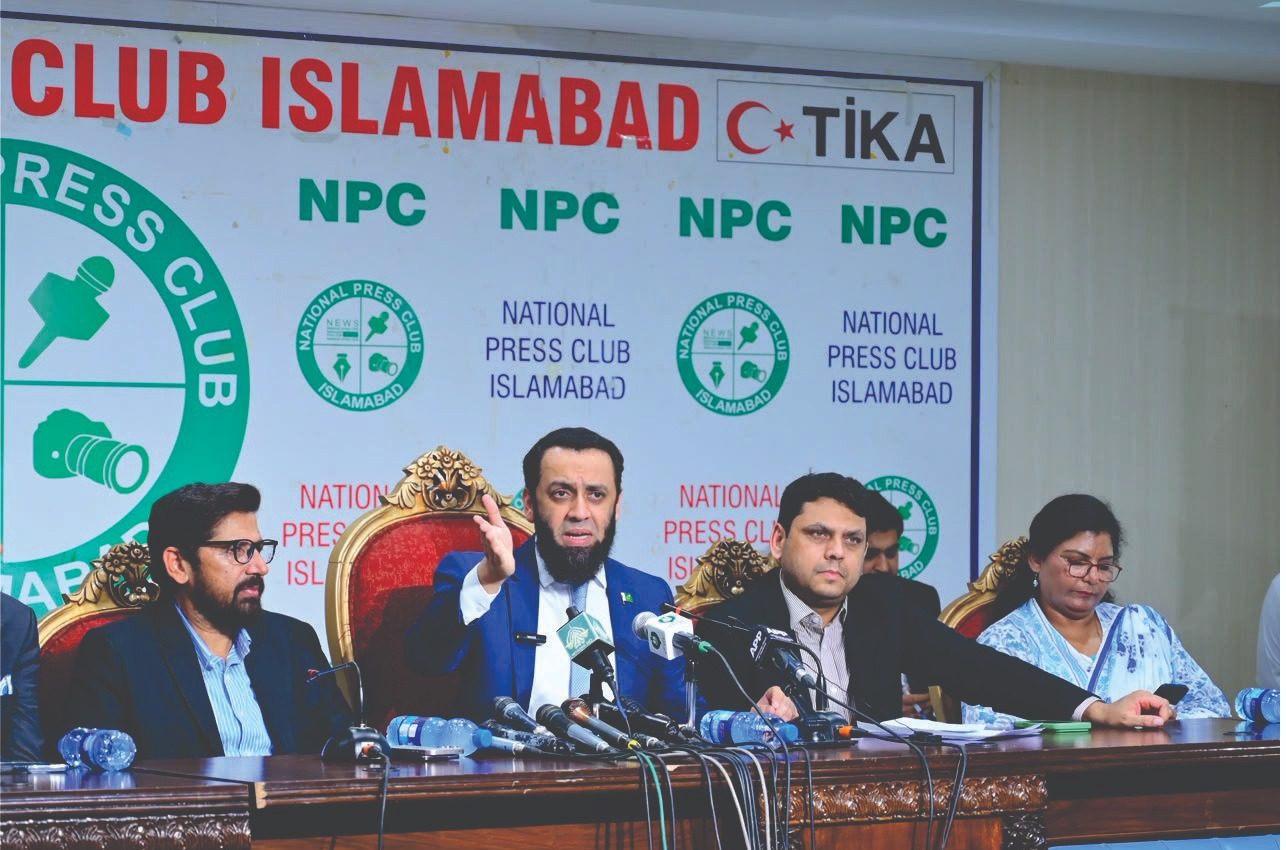
ISLAMABAD, Jul 27 (APP):Federal Minister for Information and Broadcasting Attaullah Tarar on Monday said media policies introduced in 2019 were the primary cause of the financial difficulties facing Pakistan’s media industry, saying those measures significantly shrank the sector’s financial space and their effects continued to be felt years later.
Addressing the inauguration ceremony of the National Press Club’s website, the minister said it was the government’s responsibility to formulate policies that strengthened the media industry and ensured journalists could earn a dignified livelihood.
Referring to the financial challenges confronting media organisations, Tarar said a policy introduced in 2019 had capped federal grants for press clubs at Rs1 million for the National Press Club and Rs500,000 for smaller press clubs.
Questioning the rationale behind the decision, he said there was no justification for imposing such a restriction on the National Press Club. He added that the government had already moved an amendment to remove the cap, stressing that the country’s premier press club, located in the federal capital, should not be subject to such limitations. He said the Ministry of Information and Broadcasting had directed the secretary information to resolve the matter.
The minister also criticised the previous government’s decision to slash official advertising rates for television channels, saying top broadcasters saw their per-minute rates reduced from around Rs300,000 to about Rs185,000, while other channels also faced substantial reductions.
He said the cut in official advertising rates had placed long-term financial pressure on media organisations. Although periodic revisions had since been made, he noted that the sharp reduction implemented in 2019 continued to affect the industry’s financial health six to seven years later.
Tarar maintained that the financial pressures currently facing media organisations stemmed from those earlier policies rather than the present government’s approach.
He said that irrespective of editorial policy, no television channel or newspaper was currently facing suspension of government advertisements. Referring to one newspaper that had previously encountered an issue, he said the matter had been resolved through dialogue and no longer affected the organisation financially.
The minister said the government’s objective was to replace earlier policies with measures that expanded the financial space available to television channels and newspapers, enabling journalists across Pakistan to earn respectable livelihoods.
Highlighting journalists’ welfare, Tarar said the government had consistently urged media owners’ representative bodies, including the Pakistan Broadcasters Association (PBA) and the All Pakistan Newspapers Society (APNS), to prioritise employees’ welfare.
He said the government had sought assurances that whenever outstanding government payments were released to media organisations, employees’ salaries and pending dues would be cleared first. He added that payment procedures had also been streamlined to ensure timely disbursement.
Calling for stronger job protection, the minister said no journalist should face arbitrary dismissal. He urged media organisations and representative bodies to jointly formulate a comprehensive policy on job security, assuring that the government would support its implementation.
Tarar also proposed introducing a compensation mechanism for journalists who lose their lives while performing professional duties, noting that no such system currently existed. He said media organisations should develop a policy in this regard, with the government contributing wherever possible.
On journalists’ healthcare, he directed the Principal Information Officer to finalise proposals for a health card so the government could move the initiative forward.
The minister announced that the Ministry of Information and Broadcasting would establish a digital lab at the National Press Club once suitable space was allocated. The facility, he said, would include a podcast studio and digital content creation infrastructure to enable journalists to record reports, produce videos and create digital content.
Emphasising the growing importance of digital skills, Tarar said the ministry was working with Quaid-e-Azam University, NUST, COMSATS University and NUML University to offer short courses in digital content creation and digital marketing for information officers and nominated journalists, with the ministry bearing the training costs.
He said issues relating to journalists’ residential plots should be resolved through consensus among all stakeholders, assuring that the government would implement any mutually agreed proposal.
The minister also pledged to take up matters relating to the National Press Club building, travel concessions on Pakistan Railways and the Journalists’ Housing Phase-II project with the relevant authorities.
Tarar said the government had previously intervened in employment-related issues involving media organisations, including discussions with Suno TV management that resulted in the reinstatement of 12 employees. He added that assurances had also been obtained that no further layoffs would take place.
Calling for regular engagement with the journalist community, he proposed monthly meetings to discuss challenges facing the media industry and develop practical solutions in consultation with journalists and their representative organisations.
The minister said electronic and print media remained indispensable institutions despite the rapid growth of digital platforms. He stressed that credible journalism, editorial oversight and professional standards were essential for society, adding that protecting and promoting mainstream media remained a key policy of the Ministry of Information and Broadcasting.
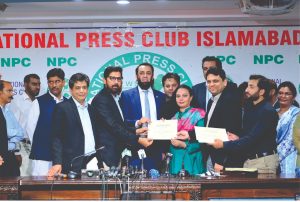
Later, the National Press Club conferred honorary membership on the federal minister and presented him with a commemorative shield. Tarar also formally inaugurated the club’s website.
Principal Information Officer Raisa Adil, National Press Club President Abdul Razzaq Sial, Secretary Dr Furqan Rao, Finance Secretary Abid Abbasi, and journalists and media workers attended the ceremony.