Nearly 20,000 rock-art panels discovered and documented in Saudi Arabia’s AlUla have revealed more than 12,000 years of human life, offering rare insights into ancient hunting, pastoral life, battles, trade and environmental changes in the Arabian Peninsula.
AlUla rock art reveals 12,000 years of human life, 19,802 panels documented
ISLAMABAD, Sep 29 (APP): Nearly 20,000 rock-art panels discovered and documented in Saudi Arabia’s AlUla have revealed more than 12,000 years of human life, offering rare insights into ancient hunting, pastoral life, battles, trade and environmental changes in the Arabian Peninsula.
According to Saudi Press Agency (SPA), the Royal Commission for AlUla (RCU) has launched an awareness campaign highlighting archaeological studies and surveys that have documented 19,802 rock-art panels, containing more than 66,000 animal figures and over 11,000 human figures.
The findings form what RCU described as the largest indexed regional database of rock art in the Arabian Peninsula, providing researchers with a detailed record of changes in human life, climate, wildlife and the environment over thousands of years.
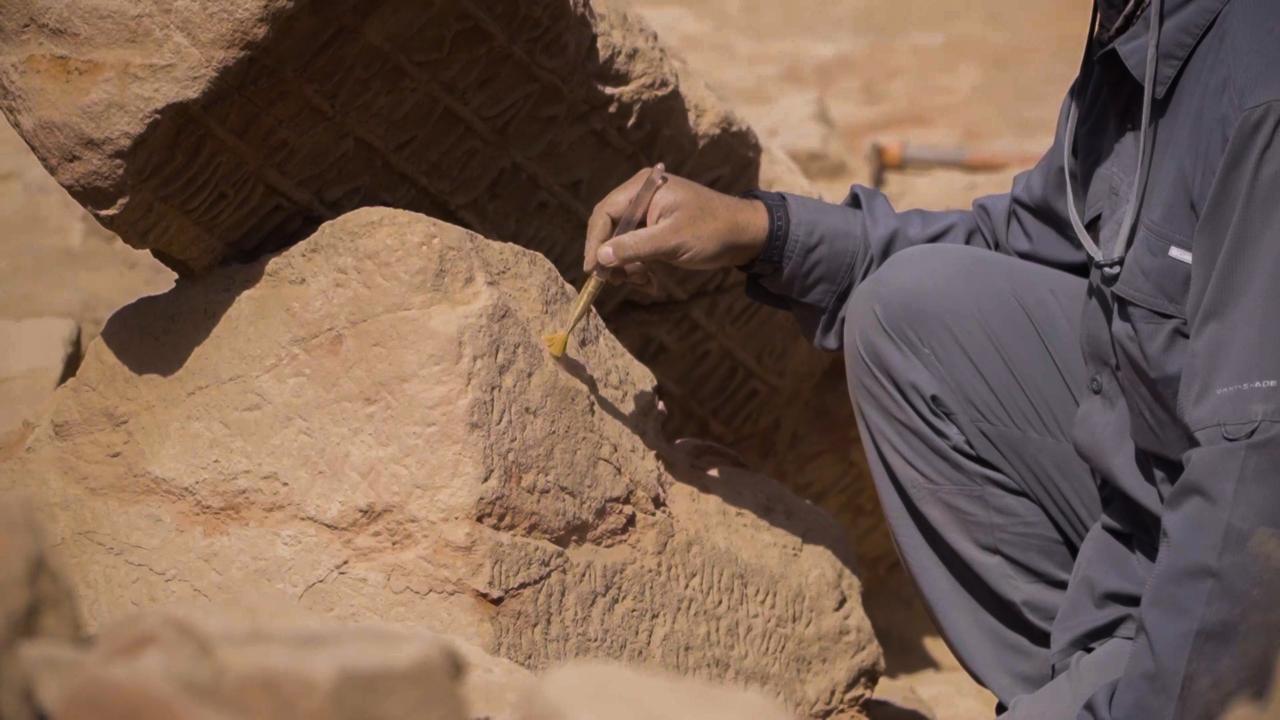
The campaign, which will continue until the end of this year through RCU’s social media platforms, also explains how archaeologists and local AlUla residents locate, document and determine the relative age of ancient carvings.
Researchers study overlapping drawings, carving techniques, subjects and accompanying inscriptions. They also examine the dark layer that gradually develops on rock surfaces, known as rock varnish, to help distinguish older carvings from later ones.
SPA told that the carvings trace major changes in human life — from hunting ibex, oryx and ostriches with bows, arrows and dogs to raising cattle and camels and caring for livestock.
The rock art also provides clues about dramatic environmental changes. Images of wild cattle, African wild asses and lesser kudu indicate that animals once lived in areas that later became much drier.
Researchers linked some of these findings to the wetter phase of the Holocene period, roughly between 8,000 and 4,000 BC, when grasslands and lakes were more widespread across parts of northern Arabia.
Some of the most striking figures relate to warfare and survival. Archaeological surveys documented 14,670 carvings of horses carrying riders, 1,375 battle scenes and 180 scenes showing confrontations with carnivores, including lions, leopards, cheetahs and hyenas.
The carvings also offer evidence of AlUla’s historic importance as a meeting point for travelers and trade routes. Images believed to depict camel and horse caravans, riders, litters and chariots reflect movement through the oasis and its links with ancient urban centers.
Surveys have documented 38 horse-drawn chariot carvings, including 25 in Wadi Al-Naam, potentially making it one of the highest concentrations of chariot rock art in the Arabian Peninsula.
SPA said AlUla’s tradition of recording life on rock did not end in ancient times. Later carvings depict coffee pots, tents, carpets and household vessels, followed eventually by modern vehicles.
Archaeologists have documented 395 carvings of motor vehicles, showing how the rocks continued to serve as a canvas for recording changing lifestyles even into the recent past.
The RCU campaign covers ten major themes ranging from hunting, pastoral life, environmental and climate change to trade, chariots, locally extinct animals, horsemanship, conflict and the continuing tradition of rock expression.