The Supreme Court of Pakistan has ruled that an air crash caused by negligence or a technical malfunction, resulting in loss of life, falls within the category of culpable homicide rather than murder, as such incidents lack the intention or knowledge (mens rea) required for a charge of murder.
Air crash caused by negligence or technical fault amounts to culpable homicide, not murder: SC
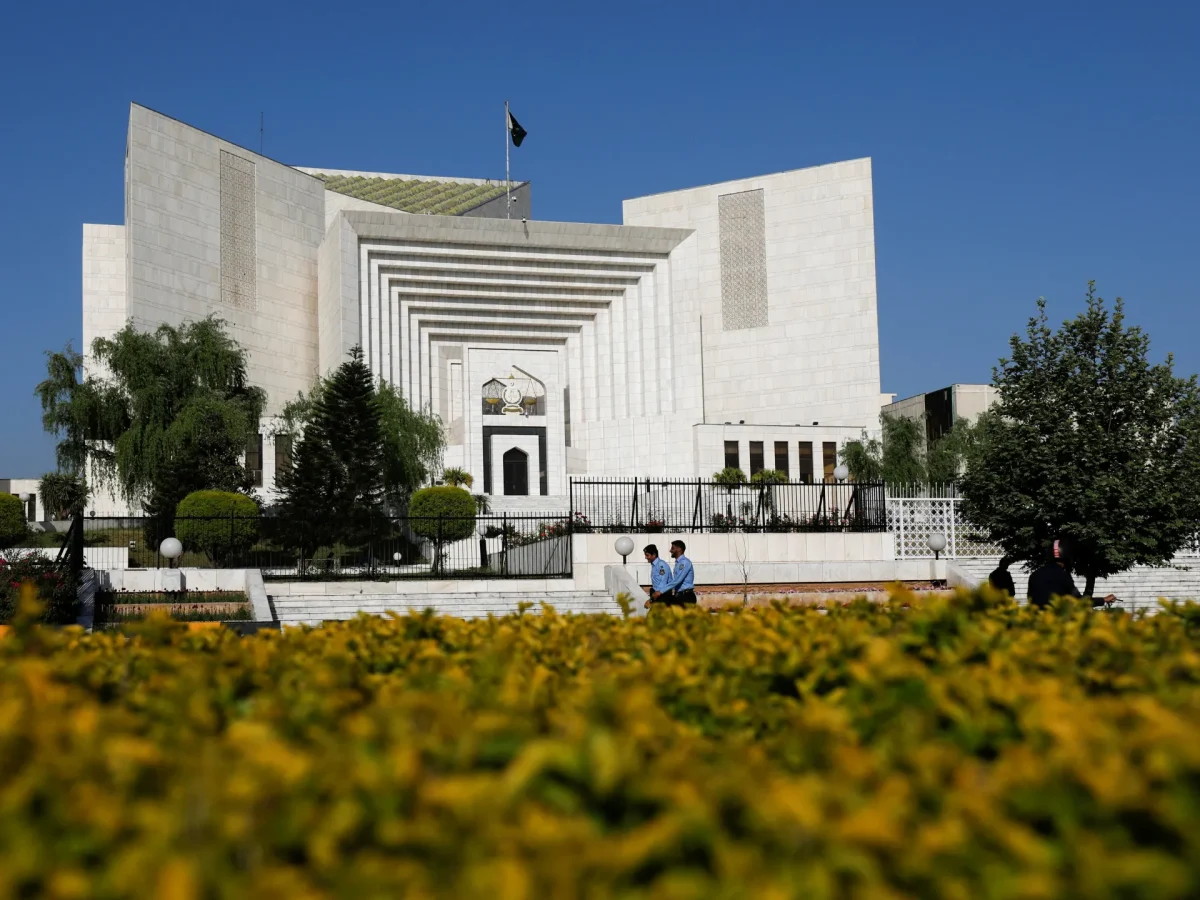
ISLAMABAD, Jun 09 (APP): The Supreme Court of Pakistan has ruled that an air crash caused by negligence or a technical malfunction, resulting in loss of life, falls within the category of culpable homicide rather than murder, as such incidents lack the intention or knowledge (mens rea) required for a charge of murder.
A two-member bench comprising Justice Shahid Bilal Hassan and Justice Shakeel Ahmad allowed an appeal in a case relating to the 2012 Bhoja Air Flight B4-213 crash and set aside the judgment of the Islamabad High Court.
In its written verdict, the court noted that following the crash of Bhoja Air Flight B4-213 on April 20, 2012, cases were registered at Koral Police Station, Islamabad, under various provisions of the Pakistan Penal Code, including Section 302 (murder).
However, after receiving the challan, the trial court first examined the legal question of whether the allegations constituted murder or culpable homicide. The Supreme Court observed that a conviction under Section 302 requires proof of intention to cause death or knowledge that death would be the certain consequence of the accused’s act.
In contrast, the court explained, Sections 321 and 322 dealing with culpable homicide apply where death occurs without any intention to kill and is instead the result of negligence, recklessness, or an unintentional act.
The judgment further observed that air accidents generally occur due to technical failures, operational negligence, human error, or shortcomings in supervisory systems, and therefore do not ordinarily involve the element of intentional killing.
The court held that the Sessions Judge had correctly assessed the available material and rightly concluded that the case, prima facie, fell within the ambit of culpable homicide rather than murder.
Consequently, the decision to transfer the matter to the competent magistrate was in accordance with the law.
The Supreme Court also reiterated that the revisional jurisdiction of a High Court is limited and may only be exercised in cases involving a clear legal error, excess of jurisdiction, or serious procedural irregularity. Since no such defect existed in the trial court’s order, the High Court’s interference was unwarranted.
Accordingly, the Supreme Court allowed the appeal, set aside the Islamabad High Court’s judgment, and restored the order of the trial court.