ISLAMABAD, Oct 14 (APP):Federal Minister for Planning, Development and Special Initiatives Professor Ahsan Iqbal on Wednesday said achieving the $100 billion export target by 2035 was essential for Pakistan to break the cycle of economic dependency, ensure sustainable growth and strengthen its economic independence. Addressing the inaugural session of the 39th International Conference and Annual General Meeting of the Pakistan Society of Development Economists (PSDE), themed “Mission $100 Billion: The …
Achieving export targets essential to breaking dependency trap: Ahsan

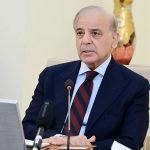
ISLAMABAD, Oct 14 (APP):Federal Minister for Planning, Development and Special Initiatives Professor Ahsan Iqbal on Wednesday said achieving the $100 billion export target by 2035 was essential for Pakistan to break the cycle of economic dependency, ensure sustainable growth and strengthen its economic independence.
Addressing the inaugural session of the 39th International Conference and Annual General Meeting of the Pakistan Society of Development Economists (PSDE), themed “Mission $100 Billion: The National Race for Sustainable Export-led Prosperity,” he said Pakistan must shift from consumption-driven growth to production- and export-led growth to avoid recurring economic crises.
“If Pakistan succeeds in exporting $100 billion by 2035, then we will reach the level of economic independence. But if we fail to do this, then we will never be able to break the cycle of dependency traps,” he said.
The minister said a country unable to generate sufficient income to meet its needs had to rely on borrowing, which eventually constrained its decision-making, slowed development and left the aspirations of its youth vulnerable to recurring balance-of-payments crises.
Comparing Pakistan’s export performance with that of other countries, he said its goods exports stood at approximately $32 billion in calendar year 2024, compared with $47 billion for Bangladesh, $330 billion for Malaysia and $404 billion for Vietnam.
He said Pakistan’s goods exports stood at around $6 billion in 1990, compared with $2.5 billion for Vietnam. By 2024, Vietnam’s exports had surged to $404 billion, underscoring the need for Pakistan to reassess its economic choices and production strategy.
Ahsan Iqbal said Pakistan had repeatedly experienced a cycle in which economic growth increased imports, put pressure on the exchange rate and eventually necessitated restrictive measures to restore stability.
Referring to the 6 per cent economic growth recorded in 2022, he said it was accompanied by record imports of $80 billion and a trade deficit of $50 billion, illustrating the risks of consumption-led expansion.
“There are only two ways of growth. Either you get it through consumption, or you get it through production and export,” he said, adding that production- and export-led growth offered a sustainable alternative.
He said the government’s URAAN Pakistan framework prioritised exports to strengthen the country’s capacity to generate foreign exchange and maintain economic stability over the next five, 10 and 20 years.
The minister stressed that Pakistan needed to organise economic development around competitive industrial clusters, complete value chains and integration into global supply chains.
Such clusters, he said, could connect businesses with skilled workers, universities, technology providers, testing laboratories, financial institutions, logistics networks and international buyers.
He said Pakistan must align domestic production with international demand, meet global standards and ensure reliability to win and retain export orders.
Highlighting opportunities in agriculture, manufacturing, services, information technology, the blue economy and creative industries, he called for greater value addition, improved branding, technology adoption and stronger links with international markets.
Citing Pakistani carpets sold at substantially higher prices in international markets under foreign brands, he said the country needed to develop its own designs, brands and value-added products to capture a greater share of export earnings.
The minister emphasised that research should focus on practical solutions to identify promising industries and markets, attract investors and determine the policy reforms required to achieve the export target.
He said Pakistan possessed the human talent, business capabilities, resources and strategic geographic location needed to compete globally, but these strengths had to be translated into productive capacity and internationally competitive exports.
Pakistan Institute of Development Economics (PIDE) Vice Chancellor and PSDE President Dr Nadeem Javaid said Pakistan’s exports of goods and services as a share of GDP declined from around 16 per cent in the late 1990s to approximately 10.4 per cent in 2024, limiting its ability to capitalise on opportunities in international markets.
He said high energy costs, tariffs, financing constraints, logistical challenges, skills gaps and regulatory uncertainty, coupled with incentives favouring protected domestic markets and low-value-added activities, undermined export competitiveness.
Citing China, Vietnam, Bangladesh and India, he highlighted the importance of integrating firms into global production networks, upgrading products, improving quality, advancing technology and promoting value addition.
He said weak export capacity fuelled recurring cycles of growth, rising imports, foreign exchange pressures and stabilisation programmes, adding that stabilisation alone could not ensure sustainable growth.
Emphasising structural reforms, he said policies must reward productivity, skills development and technological upgrading rather than protection and exemptions, enabling Pakistani firms to compete sustainably in international markets.
The two-day conference, being held from October 14 to 15, is organised by PSDE in collaboration with PIDE and the Ministry of Planning, Development and Special Initiatives.